
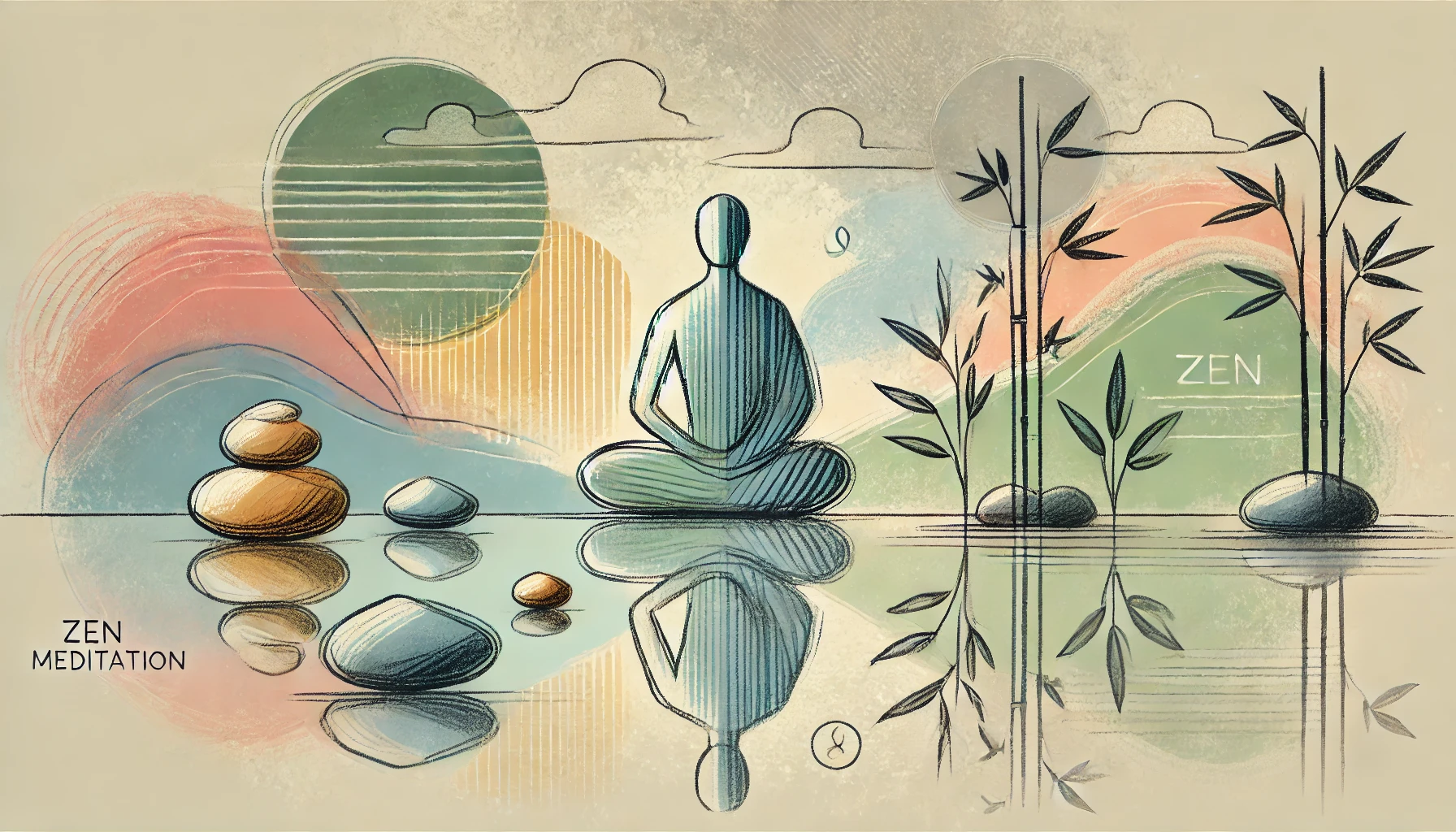
Zen meditation, also known as Zazen, is a form of seated meditation that originates from the Zen Buddhist tradition. It is a practice centered on cultivating mindfulness, awareness, and insight through direct experience, with a strong emphasis on posture, breathing, and non-reactive observation of the present moment. While there are many forms of meditation, Zen meditation stands out for its simplicity and rigorous discipline. Unlike other practices that may focus on relaxation, mantras, or visualizations, Zen meditation is about sitting in stillness, observing your thoughts, and connecting with the essence of your being without any mental distractions or external tools.
In this blog, we’ll explore what Zen meditation is, how it differs from other popular meditation practices, and how its unique approach can help deepen your understanding of yourself and the world around you.
1. What Is Zen Meditation (Zazen)?
- Definition: Zen meditation, or Zazen, is a core practice in Zen Buddhism that emphasizes sitting in stillness and being fully present with whatever arises in the mind or body. The word “Zazen” translates to “seated meditation” in Japanese.
- Goal: The ultimate goal of Zazen is to achieve a state of mental clarity, awareness, and insight into the true nature of reality. It is about seeing things as they truly are, without the filters of mental chatter or preconceived ideas.
- Direct Experience: Unlike meditation practices that focus on achieving a particular state of mind (e.g., relaxation, bliss, or transcendence), Zen meditation is about directly experiencing the present moment without seeking a specific outcome.
2. How Zen Meditation Works
- Posture: Zen meditation places great importance on posture. The traditional position involves sitting cross-legged in the lotus or half-lotus position on a cushion (zafu), with the spine straight, chin slightly tucked, and hands resting in a specific mudra (hand position) near the lower abdomen. This posture creates a sense of groundedness and alertness.
- Breathing: Focused breathing is a key component of Zazen. Practitioners breathe deeply and rhythmically, often focusing on the exhalation to anchor themselves in the present moment. This practice helps calm the mind and maintain focus.
- Non-Reactivity: Zazen encourages practitioners to simply observe their thoughts without judgment or attachment. As thoughts arise, they are acknowledged but not dwelled upon. This practice helps develop non-reactivity and detachment from habitual thought patterns.
- Koans: In some branches of Zen, practitioners work with koans—paradoxical questions or statements used to challenge logical thinking and provoke direct insight into reality. However, koans are not always used in Zazen practice.
3. How Zen Meditation Differs from Other Forms of Meditation
1. Focus on Posture and Stillness
- Zen Meditation: In Zen meditation, posture is critical. The practice emphasizes maintaining a specific, upright posture throughout the session, which is seen as essential for cultivating mindfulness and alertness. The stillness of the body reflects the desired stillness of the mind.
- Other Practices: Many other meditation practices, such as mindfulness meditation or Transcendental Meditation (TM), place less emphasis on posture. In these practices, sitting in a comfortable position is important, but the focus is more on the breath, mantra, or visualization rather than maintaining a strict physical posture.
2. Lack of External Focus
- Zen Meditation: In Zazen, there is no use of mantras, visualizations, or external objects of focus. The practice centers on pure awareness and observing the present moment as it is. The goal is not to focus on a particular word, image, or concept but to simply be in the present without distractions.
- Other Practices: Other forms of meditation, such as mantra meditation or guided meditation, often involve focusing on a specific word, phrase, sound, or visualization to help center the mind. In TM, for example, a mantra is silently repeated to transcend ordinary thought and reach a deep state of relaxation.
3. No Explicit Goal of Relaxation or Bliss
- Zen Meditation: The aim of Zen meditation is not to achieve relaxation or bliss but to cultivate awareness and insight. While relaxation may be a byproduct, it is not the primary goal. Zazen is about facing reality as it is, even if it is uncomfortable or challenging.
- Other Practices: Many meditation practices, such as guided relaxation meditation or body scan meditation, have an explicit focus on relaxation and stress relief. In Loving-Kindness Meditation (Metta), for example, the goal is to cultivate feelings of love and compassion toward yourself and others, often leading to a state of emotional well-being.
4. The Role of the Teacher and Koans
- Zen Meditation: In certain schools of Zen, particularly Rinzai Zen, the use of koans is an essential part of the practice. A Zen teacher gives students these enigmatic riddles or statements to ponder, with the intention of helping them break free from logical thinking and attain a direct experience of reality.
- Other Practices: In most other forms of meditation, such as mindfulness meditation or TM, there is no use of koans. Teachers may guide students through the basics of the practice, but they do not provide philosophical or paradoxical questions to solve.
5. Silent Observation vs. Guided Techniques
- Zen Meditation: Zazen is primarily practiced in silence, with practitioners sitting quietly for extended periods of time, often in a Zen temple or meditation hall. There is little to no verbal guidance during the session, which allows practitioners to focus entirely on their internal experience.
- Other Practices: Many forms of meditation, such as guided meditation, involve listening to a teacher or recording that leads the practitioner through a series of steps or visualizations. These practices often offer more external structure and direction than Zazen.
4. Benefits of Zen Meditation
1. Cultivates Deep Awareness and Insight
- Zazen fosters a heightened sense of self-awareness by encouraging practitioners to observe their thoughts, feelings, and sensations without judgment. Over time, this practice leads to deep insight into the nature of the self and reality, helping to dissolve ego-based perceptions.
- Zen meditation is particularly effective at helping practitioners develop mental clarity, equanimity, and a profound understanding of impermanence.
2. Develops Discipline and Patience
- The strict focus on posture and stillness in Zen meditation requires a great deal of discipline and patience. Practitioners learn to sit with discomfort, restlessness, or boredom, which ultimately cultivates greater mental resilience and patience in daily life.
- Zen meditation encourages the ability to endure difficulties without reacting, which can lead to greater emotional stability and resilience.
3. Enhances Focus and Concentration
- By practicing stillness and deep focus on the breath or body, Zen meditation strengthens concentration and the ability to stay present in the moment. This heightened focus can improve attention and productivity in both personal and professional settings.
- Over time, Zazen helps to train the mind to be more aware and less scattered, reducing mental distractions.
4. Promotes Emotional Balance
- Zen meditation encourages practitioners to observe their emotions without attachment or aversion. By sitting with whatever arises in the mind, practitioners become less reactive and more balanced, even in the face of stress or emotional turmoil.
- The practice of non-reactivity helps to cultivate emotional balance, making it easier to manage negative emotions like anger, anxiety, or frustration.
5. Provides a Path to Spiritual Growth
- For those seeking spiritual growth, Zen meditation offers a path to awakening or enlightenment. Through the practice of sitting in stillness and observing the mind, practitioners can experience moments of deep insight or satori (sudden enlightenment), leading to a deeper understanding of the nature of existence.
- Zazen is often seen as a practice that goes beyond mental health benefits, offering the potential for profound spiritual transformation.
5. How to Practice Zen Meditation: A Beginner’s Guide
1. Find a Quiet Space
- Choose a quiet, peaceful space where you can sit undisturbed. Zen meditation is traditionally practiced in a Zen hall, but you can practice anywhere that is comfortable and free from distractions.
2. Sit in the Right Posture
- Sit on a cushion or chair with your legs crossed (in the lotus or half-lotus position) or in a kneeling position if that’s more comfortable. Keep your back straight, hands resting in your lap with palms facing up, and eyes slightly open, gazing downward at a 45-degree angle.
3. Focus on Your Breath
- Begin by focusing on your breath, noticing the sensation of the air entering and leaving your nostrils. You may also focus on the movement of your abdomen as you breathe. Keep your breathing deep and rhythmic.
4. Observe Thoughts Without Attachment
- As thoughts or sensations arise, simply observe them without judgment or attachment. Let them come and go, like clouds passing in the sky. If your mind wanders, gently bring your attention back to your breath.
5. Practice Non-Reactivity
- Throughout the meditation, practice non-reactivity by accepting whatever arises without trying to change or control it. The goal is to sit with whatever comes up, whether it’s pleasant or uncomfortable, with a sense of detachment.
6. Start with Short Sessions
- For beginners, start with 10-15 minutes of practice and gradually work your way up to longer sessions. Over time, you may increase your sitting time to 30-60 minutes, depending on your comfort level and goals.
Conclusion: Why Zen Meditation Matters
Zen meditation (Zazen) offers a unique and profound path to mindfulness, self-awareness, and spiritual insight. Unlike other forms of meditation, which may focus on relaxation or guided techniques, Zen meditation emphasizes stillness, posture, and direct experience of the present moment. By cultivating discipline, non-reactivity, and deep awareness, Zen meditation helps you develop mental clarity, emotional balance, and a deeper understanding of the nature of reality. Whether you are seeking inner peace or spiritual growth, Zen meditation provides a powerful tool for self-transformation and enlightenment.