
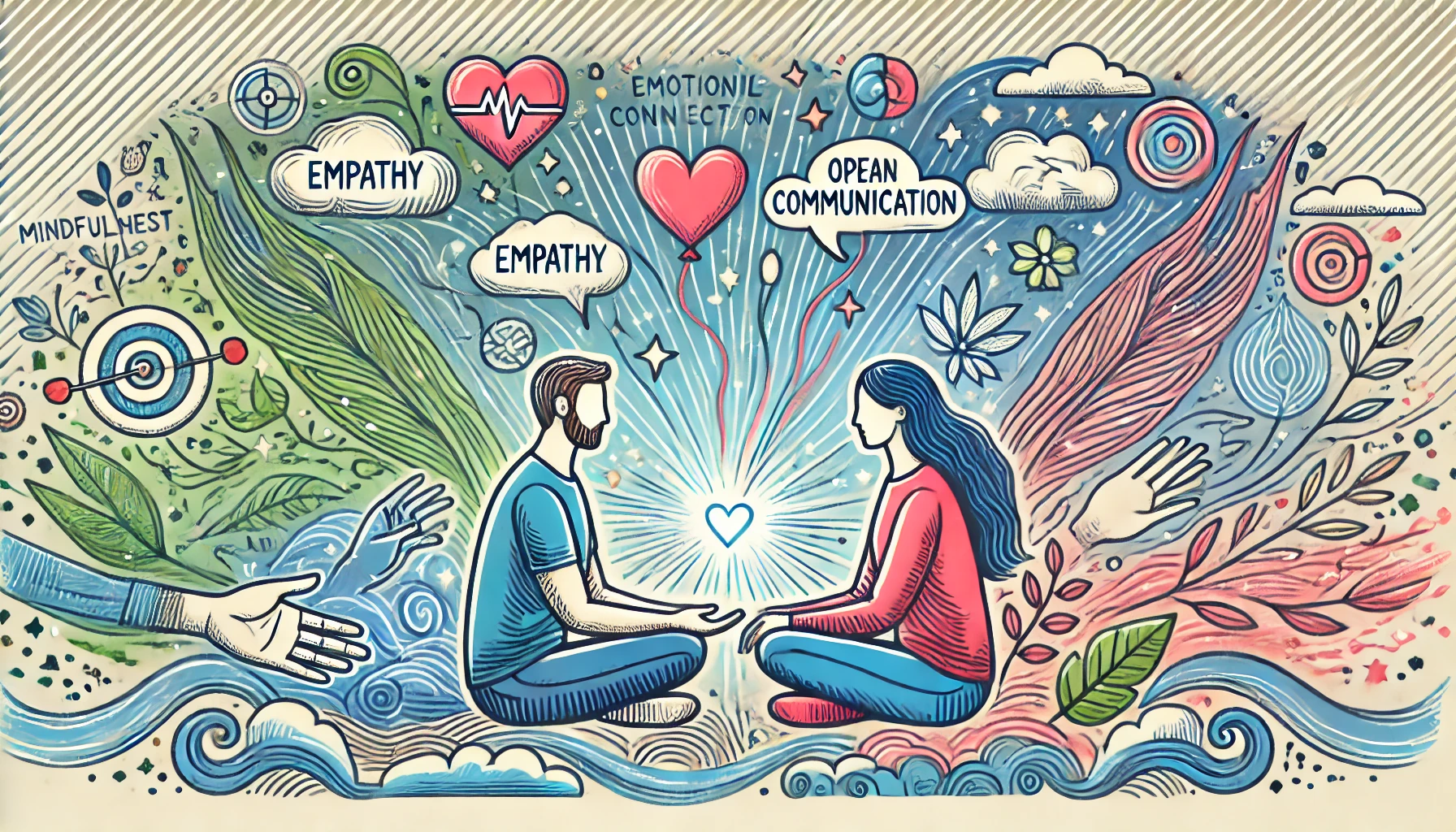
In today’s fast-paced, technology-driven world, maintaining healthy relationships and clear communication can be challenging. People often struggle with being present, listening actively, and responding thoughtfully due to distractions, stress, and emotional reactivity. Mindfulness offers a powerful solution for improving relationships and communication by encouraging greater awareness, empathy, and emotional regulation. Mindfulness, the practice of being fully present in the moment without judgment, helps individuals connect more deeply with themselves and others, fostering stronger, more meaningful relationships.
By enhancing self-awareness and empathy, mindfulness improves communication, reduces conflict, and promotes understanding. Research shows that couples, friends, and colleagues who practice mindfulness experience better relationship satisfaction, improved emotional intelligence, and reduced negative communication patterns. This blog will explore how mindfulness can transform relationships and communication, backed by scientific evidence and practical insights.
1. Enhances Active Listening
- Mindfulness teaches individuals to focus on the present moment, which improves their ability to actively listen during conversations.
- Research shows that mindful listening helps reduce distractions, allowing individuals to give their full attention to the speaker without thinking about how to respond or becoming preoccupied with their own thoughts.
- Mindfulness encourages non-judgmental awareness, helping listeners receive information without jumping to conclusions or making assumptions.
- This enhanced listening fosters deeper understanding and connection, as individuals feel heard and valued when their partner or friend listens attentively.
- Active listening through mindfulness also prevents misunderstandings, as it promotes clarity and ensures both parties are fully engaged in the conversation.
2. Reduces Emotional Reactivity
- Mindfulness improves emotional regulation, helping individuals pause and reflect before responding impulsively to emotional triggers during conversations or conflicts.
- Studies show that mindfulness reduces emotional reactivity by strengthening the brain’s prefrontal cortex, the area responsible for emotional control and decision-making.
- By observing emotions without becoming overwhelmed by them, mindfulness allows individuals to respond to disagreements with greater calm and thoughtfulness.
- This reduction in reactivity prevents heated arguments or defensive responses, fostering a more constructive and respectful communication dynamic.
- Mindfulness also reduces stress and anxiety, which can often fuel emotional outbursts, helping individuals communicate more effectively under pressure.
3. Fosters Empathy and Understanding
- Mindfulness increases empathy by encouraging individuals to be more present and attuned to the emotions of others, fostering a deeper connection and understanding.
- Studies show that mindfulness enhances activity in brain regions associated with empathy, such as the anterior insula and anterior cingulate cortex, helping individuals relate to others’ emotions more effectively.
- By promoting non-judgmental awareness, mindfulness helps individuals listen to and understand their partner’s or friend’s perspective without becoming defensive or critical.
- This increased empathy fosters stronger emotional bonds, as individuals feel supported and understood in their relationships.
- Mindfulness encourages compassionate communication, helping individuals respond to others with kindness and care, even during difficult conversations.
4. Encourages Non-Judgmental Communication
- Mindfulness promotes non-judgmental awareness, helping individuals communicate without criticizing, blaming, or making assumptions about the other person’s intentions or feelings.
- By focusing on the present moment, mindfulness reduces the tendency to bring past grievances or judgments into conversations, allowing for more open and honest communication.
- Studies show that couples who practice mindfulness together experience reduced negative communication patterns, such as criticism or defensiveness, and improved conflict resolution.
- Mindfulness encourages individuals to approach conversations with curiosity and openness, allowing them to explore the other person’s perspective without jumping to conclusions.
- This non-judgmental approach creates a safe space for both parties to express themselves freely, leading to more productive and meaningful conversations.
5. Improves Conflict Resolution
- Mindfulness helps individuals approach conflicts with a calm, balanced mindset, reducing the likelihood of escalating arguments or resorting to hurtful communication tactics.
- Research shows that mindfulness improves cognitive flexibility, allowing individuals to see problems from different perspectives and find creative solutions to conflicts.
- Mindfulness encourages emotional regulation, preventing anger or frustration from dominating the conversation and allowing for more constructive dialogue.
- By fostering empathy and understanding, mindfulness helps individuals approach conflicts with compassion, making it easier to find common ground and resolve disagreements.
- This ability to manage conflicts mindfully strengthens relationships by promoting mutual respect, collaboration, and understanding.
6. Increases Emotional Intelligence
- Emotional intelligence (EQ) is the ability to recognize, understand, and manage one’s own emotions, as well as empathize with others. Mindfulness enhances EQ by fostering emotional self-awareness and regulation.
- Studies show that mindfulness increases activity in brain regions responsible for emotional regulation and empathy, both of which are key components of emotional intelligence.
- By observing their emotions without judgment, individuals who practice mindfulness become more aware of their emotional triggers and patterns, which helps them communicate more effectively.
- Mindfulness also promotes empathy, an essential part of EQ, by encouraging individuals to tune in to the emotions and needs of others during conversations.
- This increased emotional intelligence leads to healthier relationships, as individuals are better able to manage their emotions and respond thoughtfully to the emotions of others.
7. Cultivates Patience and Understanding
- Mindfulness teaches patience by encouraging individuals to slow down, breathe, and fully engage with the present moment, which is essential for effective communication and relationship-building.
- The practice helps individuals remain calm and composed during difficult conversations, allowing them to listen without interrupting or becoming frustrated.
- Studies show that mindfulness improves attention and focus, helping individuals stay engaged in conversations and understand the other person’s needs more fully.
- Mindfulness promotes a non-reactive mindset, which allows individuals to give others the time and space to express themselves without rushing to conclusions or judgment.
- This patience fosters deeper connection and understanding, as it creates a safe and supportive environment for open communication.
8. Reduces Stress and Improves Emotional Availability
- Stress and emotional overwhelm can make it difficult to be present and engaged in relationships. Mindfulness helps reduce stress by calming the mind and body, making individuals more emotionally available.
- Studies show that mindfulness reduces cortisol levels, the stress hormone, which helps individuals stay relaxed and focused during conversations and interactions.
- By promoting relaxation and mental clarity, mindfulness helps individuals remain emotionally available to their partner or friend, even during difficult times.
- Mindfulness encourages self-care, helping individuals recognize when they need to recharge emotionally before engaging in important conversations.
- This reduced stress and increased emotional availability leads to healthier, more supportive relationships where both parties feel heard and understood.
9. Strengthens Connection and Intimacy
- Mindfulness fosters a deeper sense of connection and intimacy by encouraging individuals to be fully present with their partner or friend during conversations and interactions.
- Research shows that couples who practice mindfulness together report higher levels of relationship satisfaction and emotional intimacy.
- Mindfulness encourages individuals to focus on their partner’s or friend’s emotions, thoughts, and needs, fostering a deeper emotional connection and mutual understanding.
- By promoting empathy and non-judgment, mindfulness helps individuals create a safe, open environment where intimacy and trust can flourish.
- This strengthened connection enhances the overall quality of relationships, making them more fulfilling and resilient over time.
10. Encourages Gratitude and Appreciation
- Mindfulness fosters gratitude by encouraging individuals to focus on the present moment and appreciate their partner’s or friend’s qualities, actions, and presence.
- Studies show that practicing mindfulness can increase feelings of gratitude, which strengthens relationships by fostering appreciation and positivity.
- By staying present and attentive, mindfulness helps individuals recognize and value the small, meaningful moments in their relationships, such as a kind word or gesture.
- Mindfulness encourages individuals to express gratitude openly, which enhances communication and deepens emotional bonds.
- This focus on gratitude and appreciation helps reduce feelings of resentment or dissatisfaction, promoting a more positive and supportive relationship dynamic.
Conclusion
Mindfulness offers a powerful and effective approach to improving relationships and communication. By fostering active listening, reducing emotional reactivity, and promoting empathy, mindfulness helps individuals connect more deeply with others and communicate more effectively. Whether in personal relationships, friendships, or professional interactions, mindfulness encourages non-judgmental awareness, emotional regulation, and empathy, all of which are key to building healthy, fulfilling relationships.
As research continues to support the benefits of mindfulness for relationships and communication, incorporating mindfulness into your daily life can lead to lasting improvements in how you connect with others. Whether through meditation, mindful breathing, or simply being present during conversations, mindfulness can help you strengthen your relationships, reduce conflict, and communicate with greater clarity and compassion.