
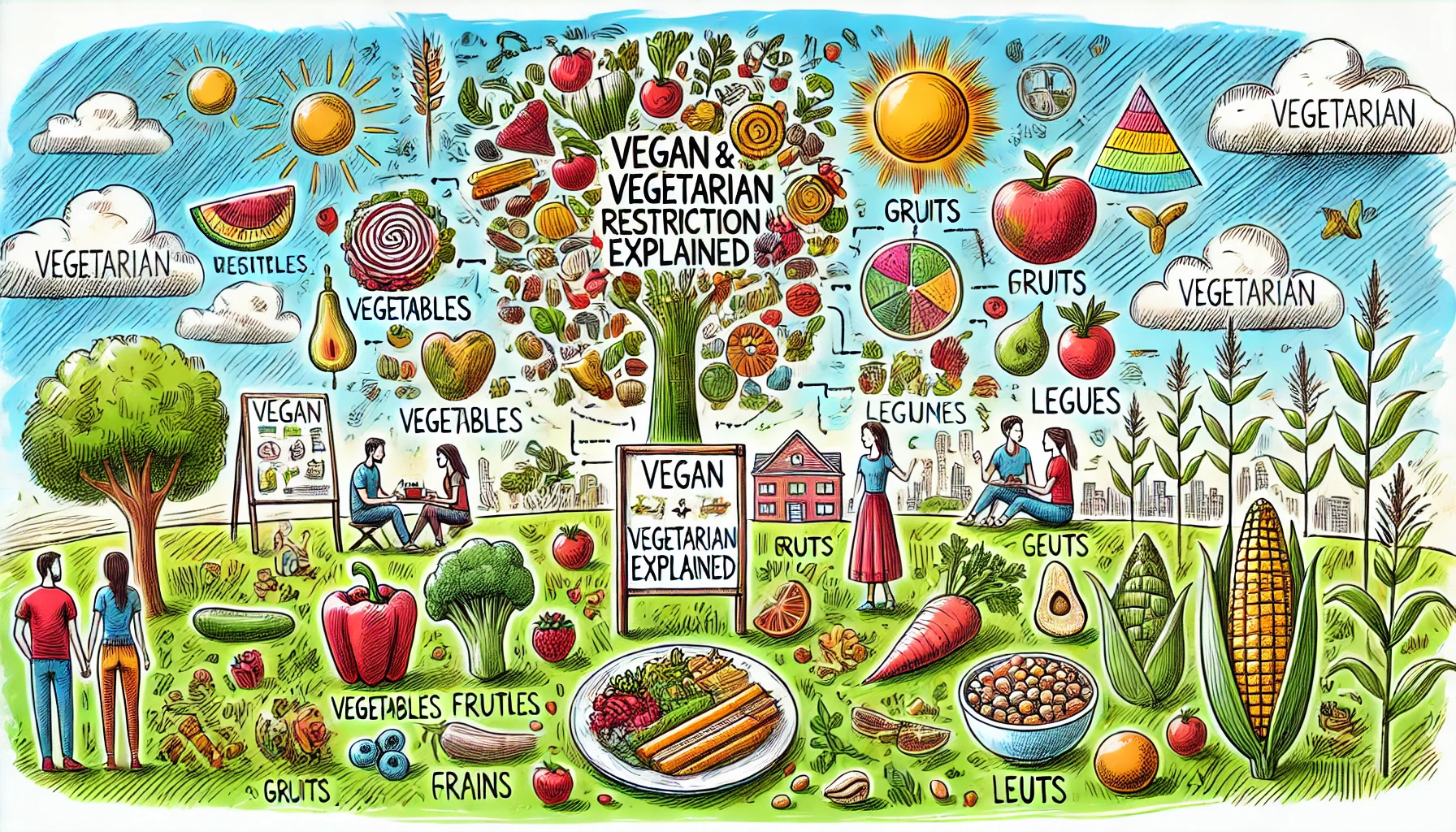
Adopting a vegan or vegetarian diet involves understanding and adhering to specific dietary restrictions while ensuring nutritional balance and variety. Whether driven by health, ethical, or environmental reasons, these diets exclude certain animal products and focus on plant-based foods. This comprehensive guide will explain the differences between vegan and vegetarian diets, outline their respective dietary restrictions, and provide practical tips and recipes to help you maintain a balanced and enjoyable diet.
Vegan and vegetarian diets can offer numerous health benefits, including improved heart health, lower risk of chronic diseases, and better weight management. However, ensuring adequate intake of essential nutrients is crucial. By understanding the core principles of these diets and learning how to make informed food choices, you can thrive on a plant-based diet. Let’s delve into the specifics of vegan and vegetarian dietary restrictions and explore how to navigate them effectively.
1. Understanding Vegan and Vegetarian Diets
Vegan Diet
- Definition: A vegan diet excludes all animal products, including meat, dairy, eggs, and honey. It is strictly plant-based.
- Allowed Foods: Fruits, vegetables, grains, legumes, nuts, seeds, and plant-based alternatives.
- Nutrient Considerations: Vegans need to pay attention to their intake of protein, vitamin B12, iron, calcium, vitamin D, and omega-3 fatty acids.
Vegetarian Diet
- Definition: A vegetarian diet excludes meat, poultry, and fish but may include dairy and eggs, depending on the type.
- Lacto-vegetarian: Includes dairy products but excludes eggs.
- Ovo-vegetarian: Includes eggs but excludes dairy products.
- Lacto-ovo vegetarian: Includes both dairy products and eggs.
- Allowed Foods: Fruits, vegetables, grains, legumes, nuts, seeds, dairy products, and eggs.
- Nutrient Considerations: Vegetarians need to ensure they get enough protein, vitamin B12 (if excluding eggs), iron, calcium, and omega-3 fatty acids.
2. Protein Sources
Vegan Protein Sources
- Legumes: Beans, lentils, chickpeas, and peas are excellent sources of protein and fiber.
- Tofu and Tempeh: Made from soybeans, these are versatile and protein-rich.
- Seitan: Also known as wheat gluten, seitan is a high-protein meat substitute.
- Nuts and Seeds: Almonds, chia seeds, flaxseeds, hemp seeds, and pumpkin seeds provide protein and healthy fats.
- Grains: Quinoa, amaranth, and buckwheat are notable for their higher protein content.
Vegetarian Protein Sources
- Dairy Products: Milk, cheese, yogurt, and cottage cheese are rich in protein and calcium.
- Eggs: A versatile and nutrient-dense source of protein.
- Legumes: Beans, lentils, chickpeas, and peas are great for protein and fiber.
- Nuts and Seeds: Almonds, chia seeds, flaxseeds, hemp seeds, and pumpkin seeds.
- Grains: Quinoa, amaranth, and buckwheat.
3. Essential Nutrients and Their Sources
Vitamin B12
- Vegan Sources: Fortified plant milks, nutritional yeast, and B12 supplements.
- Vegetarian Sources: Dairy products and eggs.
Iron
- Vegan Sources: Lentils, chickpeas, beans, tofu, spinach, and fortified cereals. Pair with vitamin C-rich foods to enhance absorption.
- Vegetarian Sources: Same as vegan sources, plus eggs.
Calcium
- Vegan Sources: Fortified plant milks, tofu, almonds, sesame seeds, and leafy greens.
- Vegetarian Sources: Dairy products, leafy greens, and fortified plant milks.
Vitamin D
- Vegan Sources: Fortified plant milks, fortified orange juice, mushrooms exposed to sunlight, and supplements.
- Vegetarian Sources: Fortified dairy products, eggs, fortified plant milks, and supplements.
Omega-3 Fatty Acids
- Vegan Sources: Flaxseeds, chia seeds, hemp seeds, walnuts, and algae-based supplements.
- Vegetarian Sources: Same as vegan sources, plus eggs.
4. Practical Tips for Maintaining a Balanced Diet
- Diverse Diet: Ensure a variety of foods to cover all nutrient bases. Incorporate different fruits, vegetables, grains, legumes, nuts, and seeds.
- Meal Planning: Plan meals to include a balance of protein, carbohydrates, and healthy fats. Batch cooking can save time and ensure nutritious meals are always available.
- Label Reading: Always read labels to ensure products are free from animal-derived ingredients (for vegans) and to check for hidden animal products (for vegetarians).
- Supplements: Consider supplements for nutrients that are hard to obtain from diet alone, such as vitamin B12, vitamin D, and omega-3s.
- Cook at Home: Preparing meals at home ensures control over ingredients and adherence to dietary restrictions.
5. Sample Recipes
Vegan Breakfast: Smoothie Bowl
Ingredients:
- 1 cup frozen mixed berries
- 1 banana
- 1/2 cup almond milk (or any plant-based milk)
- 1 tablespoon chia seeds
- 1 tablespoon almond butter
- Fresh fruit, granola, and coconut flakes for topping
Instructions:
- Blend the frozen berries, banana, almond milk, chia seeds, and almond butter until smooth.
- Pour into a bowl and top with fresh fruit, granola, and coconut flakes.
Vegetarian Breakfast: Veggie Omelet
Ingredients:
- 2 eggs
- 1/4 cup milk (dairy or plant-based)
- 1/4 cup diced bell peppers
- 1/4 cup spinach, chopped
- 1/4 cup mushrooms, sliced
- Salt and pepper to taste
- Olive oil for cooking
Instructions:
- Whisk the eggs and milk together in a bowl. Season with salt and pepper.
- Heat olive oil in a non-stick skillet over medium heat.
- Sauté the bell peppers, spinach, and mushrooms until tender.
- Pour the egg mixture over the vegetables and cook until set. Fold and serve.
Vegan Lunch: Quinoa Salad
Ingredients:
- 1 cup quinoa, cooked
- 1 can chickpeas, drained and rinsed
- 1 cucumber, diced
- 1 red bell pepper, diced
- 1/4 cup red onion, finely chopped
- 1/4 cup fresh parsley, chopped
- Juice of 1 lemon
- 2 tablespoons olive oil
- Salt and pepper to taste
Instructions:
- In a large bowl, combine the cooked quinoa, chickpeas, cucumber, bell pepper, red onion, and parsley.
- In a small bowl, whisk together the lemon juice, olive oil, salt, and pepper.
- Pour the dressing over the salad and toss to combine.
- Serve chilled or at room temperature.
Vegetarian Lunch: Caprese Sandwich
Ingredients:
- 2 slices whole-grain bread
- 1 tomato, sliced
- 1/4 cup fresh mozzarella, sliced
- Fresh basil leaves
- Balsamic glaze
- Olive oil
- Salt and pepper to taste
Instructions:
- Drizzle olive oil on the bread slices and toast until golden brown.
- Layer the tomato slices, mozzarella, and basil leaves on one slice of bread.
- Drizzle with balsamic glaze and season with salt and pepper.
- Top with the other slice of bread and serve.
Vegan Dinner: Lentil Curry
Ingredients:
- 1 cup dried lentils, rinsed
- 1 can coconut milk
- 1 can diced tomatoes
- 1 onion, chopped
- 3 cloves garlic, minced
- 1 tablespoon curry powder
- 1 teaspoon cumin
- 1 teaspoon turmeric
- Salt and pepper to taste
- Fresh cilantro for garnish
Instructions:
- In a large pot, sauté the onion and garlic until soft.
- Add the curry powder, cumin, and turmeric, and cook for another minute.
- Add the lentils, coconut milk, diced tomatoes, salt, and pepper.
- Bring to a boil, then reduce heat and simmer for 20-25 minutes, or until lentils are tender.
- Garnish with fresh cilantro and serve with rice or naan.
Vegetarian Dinner: Veggie Stir-Fry
Ingredients:
- 1 cup broccoli florets
- 1 red bell pepper, sliced
- 1 carrot, julienned
- 1/2 cup snow peas
- 1/2 cup tofu, cubed
- 2 tablespoons soy sauce
- 1 tablespoon sesame oil
- 1 tablespoon olive oil
- 1 clove garlic, minced
- 1 teaspoon ginger, grated
- Cooked rice for serving
Instructions:
- Heat olive oil in a large skillet over medium-high heat.
- Add the garlic and ginger, and sauté until fragrant.
- Add the tofu and cook until golden brown.
- Add the broccoli, bell pepper, carrot, and snow peas, and stir-fry until tender-crisp.
- Drizzle with soy sauce and sesame oil, and toss to coat.
- Serve over cooked rice.
Conclusion
Navigating vegan and vegetarian dietary restrictions involves understanding the specific limitations and ensuring a balanced intake of essential nutrients. By focusing on a variety of plant-based foods and making informed choices, you can maintain a nutritious and enjoyable diet. Use the provided tips and recipes as a starting point to create balanced meals that align with your dietary preferences. Embrace the diversity of plant-based eating and enjoy the health benefits it offers.