
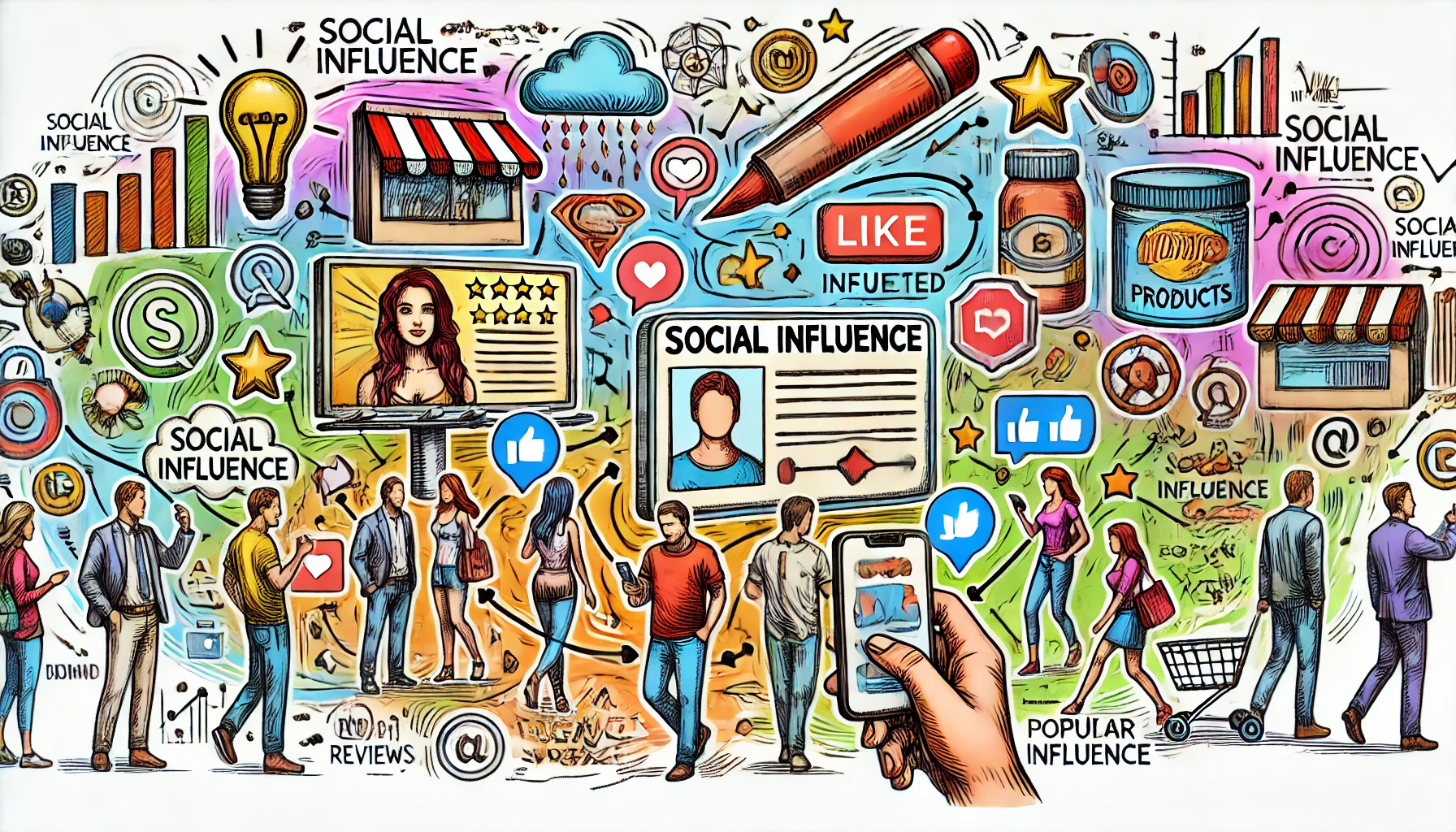
Social influence has become an essential element in marketing and advertising, shaping the way brands connect with consumers and how people make purchasing decisions. As individuals look to their peers, influencers, and even strangers online for guidance, the power of social influence becomes clear. Whether it’s through product recommendations, social media endorsements, or customer reviews, companies are increasingly leveraging social influence to create trust, build brand loyalty, and drive sales.
In an age where traditional advertising methods are often perceived with skepticism, the authenticity that social influence offers has proven invaluable to marketers. By tapping into human psychology — specifically, the need for social approval and belonging — marketers can effectively position their products and services as must-have items in consumers’ lives. From word-of-mouth marketing to influencer partnerships, this blog explores the role of social influence in shaping consumer behavior through marketing and advertising strategies.
1. The Power of Word-of-Mouth Marketing
- Word-of-mouth marketing (WOM) is one of the most effective forms of social influence in marketing. It occurs when satisfied customers share their positive experiences with others, either in person or online.
- WOM marketing thrives because people tend to trust recommendations from friends and family over traditional advertising, making these referrals more persuasive.
- Companies often encourage word-of-mouth by providing exceptional customer service, creating shareable experiences, or offering referral incentives.
- Social media amplifies WOM marketing, as individuals can easily share their experiences with hundreds or thousands of followers, spreading awareness quickly.
- Studies show that word-of-mouth marketing can influence up to 50% of all purchasing decisions, demonstrating its power in shaping consumer behavior.
2. Social Proof as a Key Marketing Tool
- Social proof refers to the idea that people look to others to determine how to behave, particularly when they are uncertain about a decision. In marketing, social proof can take the form of reviews, testimonials, or endorsements.
- Product reviews on websites like Amazon, Yelp, and TripAdvisor are powerful forms of social proof, influencing potential buyers by showing them what others think of a product or service.
- Testimonials from satisfied customers or influencers provide validation, making potential customers feel more confident in their purchase decision.
- The more people who appear to endorse a product or service, the more desirable it becomes, as social proof creates a sense of popularity and trustworthiness.
- Marketers leverage social proof by highlighting best-selling products, showcasing customer reviews, or using case studies to demonstrate the effectiveness of a product.
3. The Role of Influencers in Marketing
- Influencer marketing has become one of the most popular ways to harness social influence in advertising. Influencers, with their large and loyal followings, have the ability to sway consumer opinions and purchasing decisions.
- Influencers are seen as more relatable than celebrities, and their recommendations often feel more authentic because they cultivate personal connections with their audience.
- Micro-influencers, who may have smaller followings but highly engaged communities, can be especially effective for niche markets, offering targeted marketing opportunities.
- Sponsored posts, product placements, and affiliate marketing are common strategies brands use to collaborate with influencers, allowing them to tap into the influencer’s trust and credibility.
- The success of influencer marketing lies in the idea that consumers see influencers as peers, whose opinions and lifestyle choices they wish to emulate.
4. Peer Influence in Consumer Decision-Making
- Peer influence plays a critical role in consumer decision-making, as individuals often look to their social circles when deciding which products to buy.
- Consumers are more likely to purchase items that align with the preferences of their peers, as it fosters a sense of belonging and shared identity.
- Peer influence is especially prominent in the context of social media, where people can see what their friends are buying, wearing, or recommending.
- This influence can be subtle, such as noticing a friend’s new gadget or restaurant recommendation, or more direct, with friends encouraging one another to try a new product or service.
- Marketers can capitalize on peer influence by creating campaigns that encourage social sharing, offering group discounts, or launching referral programs that reward users for bringing their friends on board.
5. User-Generated Content (UGC) and Its Impact
- User-generated content (UGC) refers to any form of content — such as images, videos, reviews, or testimonials — created by consumers, rather than the brand itself.
- UGC is a powerful marketing tool because it serves as social proof, showing potential customers that real people are using and enjoying a product or service.
- Brands often encourage UGC by creating hashtag campaigns, asking customers to share their experiences online, or running contests that incentivize content creation.
- UGC is particularly influential because it feels more authentic than branded content, allowing potential buyers to see how a product fits into everyday life.
- Marketers use UGC to increase engagement and foster a sense of community, making consumers feel more connected to the brand and its other customers.
6. The Influence of Online Reviews and Ratings
- Online reviews have become a key factor in purchasing decisions, as they provide firsthand accounts of product quality and customer service.
- Consumers often read multiple reviews before making a decision, and the overall star rating can heavily influence whether they proceed with a purchase.
- Positive reviews build trust, while negative reviews can deter potential buyers, making it crucial for businesses to actively manage their online reputation.
- Platforms like Google Reviews, Yelp, and industry-specific review sites provide opportunities for businesses to engage with customers and showcase their commitment to satisfaction.
- Many consumers view reviews as more trustworthy than traditional advertisements, as they come from fellow consumers who have no vested interest in the brand’s success.
7. Scarcity and the Fear of Missing Out (FOMO)
- Scarcity marketing leverages the idea that limited availability or exclusivity makes a product more desirable. This strategy taps into the fear of missing out (FOMO), a psychological trigger that drives people to take action quickly.
- Limited-time offers, flash sales, and exclusive product releases create a sense of urgency, pushing consumers to buy before they lose the opportunity.
- Social influence plays a role in this, as individuals see others rushing to make a purchase, amplifying their own sense of urgency.
- Brands often combine scarcity marketing with social proof, showcasing how many people have already purchased or how many items are left in stock, further driving the fear of missing out.
- FOMO is particularly powerful in the context of social media, where users can see real-time updates about popular products or limited releases.
8. The Role of Emotional Influence in Advertising
- Emotional marketing uses content that appeals to a consumer’s emotions — such as happiness, fear, or nostalgia — to create a strong connection with a brand.
- Social influence amplifies emotional marketing, as individuals often share content that resonates emotionally with them, spreading the message to their friends and followers.
- Emotional connections foster brand loyalty, as consumers are more likely to purchase from brands that make them feel good, align with their values, or offer a sense of belonging.
- Marketers often use emotionally charged stories or advertisements to create a bond between the brand and the consumer, encouraging them to advocate for the brand within their social circles.
- Emotional influence can also lead to viral marketing, where content is shared widely due to its ability to evoke a strong emotional response.
9. Community-Building Through Social Media Engagement
- Community-building is an increasingly popular strategy for brands looking to leverage social influence. By creating online communities, brands foster a sense of belonging among their customers.
- Social media platforms like Facebook, Instagram, and Reddit offer spaces for these communities, where consumers can interact with each other and the brand, share their experiences, and offer advice.
- These communities provide valuable social proof, as potential buyers see real customers engaging with the brand and each other, which increases trust.
- Brands can engage with these communities by hosting live Q&A sessions, responding to comments, or encouraging discussions about their products.
- A strong community can turn casual customers into brand advocates, who then influence their friends and followers to join the community and support the brand.
10. The Importance of Authenticity in Social Influence Marketing
- Authenticity is critical to the success of social influence marketing, as consumers are quick to detect and reject inauthentic marketing messages.
- Brands that try to artificially manufacture social influence, such as by using fake reviews or misleading endorsements, often face backlash and lose consumer trust.
- Authenticity in social influence marketing means using real customer testimonials, honest reviews, and transparent influencer partnerships.
- Consumers are more likely to trust and support brands that are transparent about their values, product quality, and customer service.
- Authentic social influence marketing builds long-term relationships with customers, who are more likely to become loyal advocates for the brand.
In conclusion, social influence plays a central role in modern marketing and advertising strategies. From word-of-mouth marketing to influencer partnerships, peer influence, and user-generated content, businesses have a wide range of tools to tap into the power of social influence. By understanding the psychology behind consumer behavior and leveraging the authentic voices of satisfied customers, brands can build trust, foster loyalty, and drive sales in an increasingly connected world.