
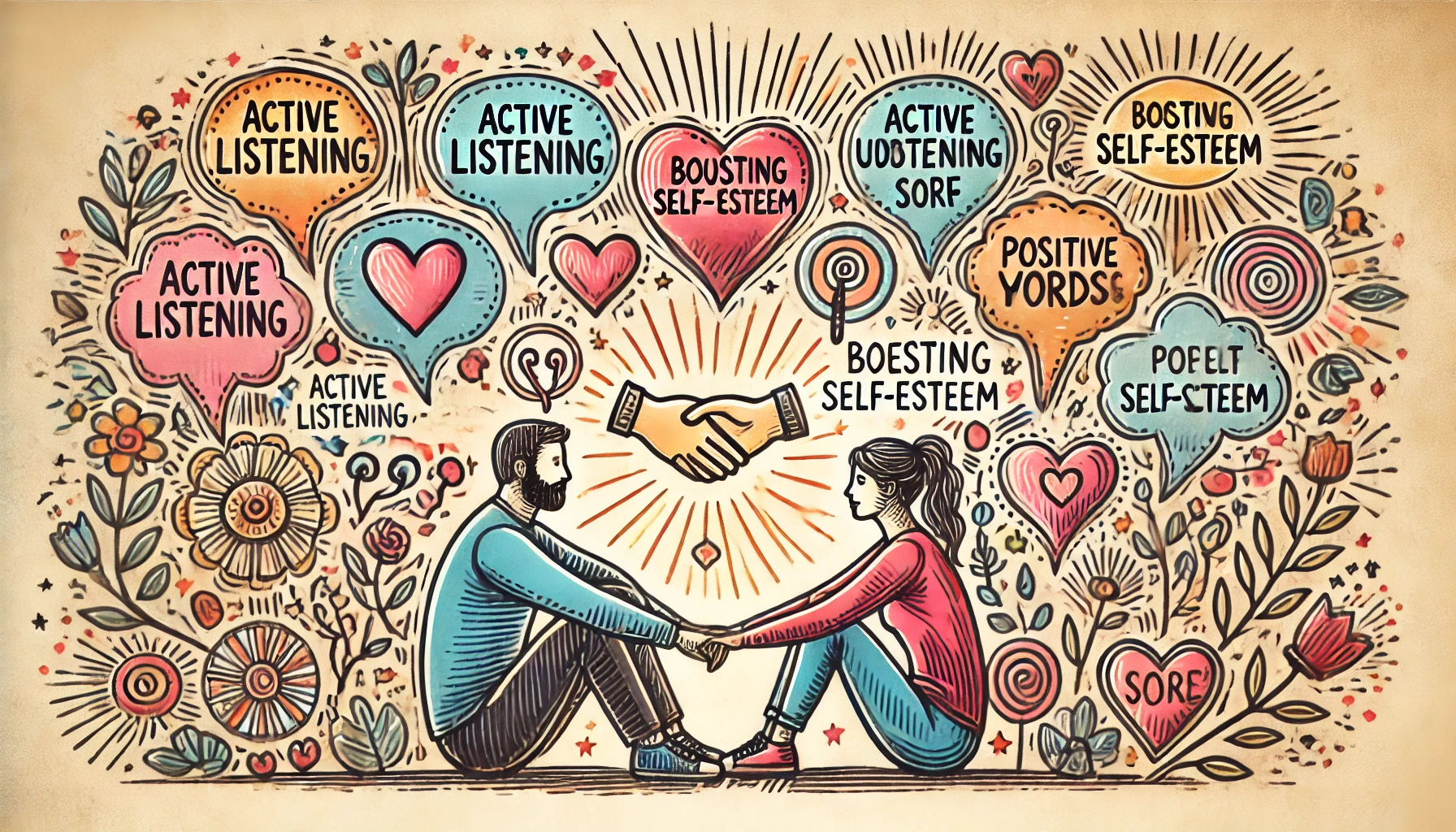
Communication plays a pivotal role in boosting self-esteem within relationships. Effective communication creates a space for partners to express their thoughts, feelings, and needs openly and honestly, which strengthens emotional intimacy and mutual respect. When communication is clear, positive, and supportive, it enhances both partners’ self-esteem by fostering understanding, validation, and reassurance. Conversely, poor communication can lead to misunderstandings, insecurity, and emotional disconnection, undermining self-worth and creating tension within the relationship.
Self-esteem is closely tied to how we perceive ourselves and how we feel valued by those around us—particularly in close relationships. Healthy communication patterns in relationships allow both partners to feel heard, appreciated, and respected, which strengthens their sense of self-worth. In this blog, we’ll explore how communication can be used to boost self-esteem in relationships and promote emotional well-being for both partners.
1. Open Communication Builds Trust and Security
- Trust is a cornerstone of self-esteem in relationships, and open communication fosters that trust by allowing both partners to express their thoughts and emotions without fear of judgment.
- When you can communicate openly with your partner, it creates a sense of security, knowing that your feelings and opinions are valued and respected.
- Open communication reduces the likelihood of misunderstandings and misinterpretations, which can damage self-esteem by making you feel unheard or misunderstood.
- When partners feel safe to share their vulnerabilities, it enhances emotional intimacy and reinforces the belief that they are loved and accepted for who they are.
- Building trust through open communication helps both partners feel more confident and secure in the relationship, which naturally boosts self-esteem.
2. Validation of Feelings Strengthens Self-Worth
- One of the most impactful ways communication boosts self-esteem in relationships is through the validation of each other’s feelings.
- When a partner acknowledges and validates your emotions—whether it’s joy, sadness, frustration, or excitement—it reinforces the message that your feelings are important and legitimate.
- Validation helps prevent feelings of dismissal or neglect, which can harm self-esteem by making you feel unimportant or overlooked.
- Simply saying, “I understand why you feel that way” or “It makes sense that you’re upset about this” can have a powerful impact on self-worth, showing that you’re seen and heard.
- By consistently validating each other’s emotions, partners can create an emotionally supportive environment where both feel valued and respected.
3. Constructive Feedback Encourages Growth Without Criticism
- Communication that includes constructive feedback helps improve both individual and relationship dynamics without tearing down self-esteem.
- Instead of focusing on criticism or blame, constructive feedback addresses issues in a way that encourages growth and improvement while maintaining respect for your partner’s feelings.
- For example, instead of saying, “You never listen to me,” you might say, “I feel unheard when we don’t take time to fully understand each other during conversations. Can we try to listen more actively?”
- Constructive feedback reinforces the idea that you can grow and evolve within the relationship without feeling diminished or attacked, boosting self-esteem through empowerment and mutual support.
- This approach helps partners navigate challenges while maintaining a sense of self-worth, knowing that feedback is aimed at strengthening the relationship, not undermining their value.
4. Affirming Words and Positive Reinforcement Build Confidence
- Verbal affirmation is a key component of boosting self-esteem in relationships. Positive reinforcement through compliments, praise, and appreciation reminds your partner of their strengths and contributions.
- Simple affirmations like “I appreciate how thoughtful you are” or “You’re such a great listener” can have a profound effect on self-esteem by reinforcing positive qualities.
- Regularly expressing gratitude and admiration helps your partner feel valued, which in turn builds their confidence and sense of worth within the relationship.
- Positive communication creates a feedback loop where both partners feel uplifted and encouraged, leading to a healthier, more affirming relationship dynamic.
- By focusing on your partner’s strengths and acknowledging their efforts, you contribute to an environment where both individuals feel appreciated and confident.
5. Active Listening Promotes Mutual Respect
- Active listening is a powerful form of communication that boosts self-esteem by demonstrating that you genuinely care about your partner’s thoughts and feelings.
- When you listen attentively without interrupting or dismissing their concerns, it shows that their perspective matters, which reinforces their self-worth.
- Active listening involves not only hearing the words your partner says but also understanding the emotions behind them, showing empathy and support.
- This form of communication helps reduce feelings of isolation or frustration, as it confirms that your partner’s opinions and experiences are valid and worthy of attention.
- By practicing active listening, you foster a relationship built on mutual respect, where both partners feel valued, understood, and confident in expressing themselves.
6. Addressing Conflicts Respectfully Preserves Self-Esteem
- Conflicts are inevitable in any relationship, but how they are communicated and resolved plays a significant role in preserving self-esteem.
- Addressing conflicts respectfully—without yelling, name-calling, or blaming—allows both partners to express their concerns without feeling attacked or devalued.
- When conflicts are approached as opportunities for growth rather than personal criticism, it becomes easier for partners to maintain their self-esteem during challenging times.
- Focus on using “I” statements, such as “I feel upset when…” rather than “You always…” This reduces defensiveness and keeps the conversation focused on resolving the issue.
- Respectful communication during conflict helps both partners feel heard and respected, ensuring that their self-worth remains intact even when disagreements arise.
7. Encouragement and Support Foster Personal Growth
- Communication that includes encouragement and support for personal goals, hobbies, or challenges boosts self-esteem by showing that your partner believes in your abilities and potential.
- When your partner expresses confidence in your skills or offers emotional support during tough times, it reinforces the belief that you are capable and worthy of success.
- Statements like “I’m proud of you for pursuing that goal” or “You handled that situation so well” can make a significant difference in how someone views themselves.
- Encouragement helps both partners grow individually while strengthening the relationship, creating an atmosphere where self-esteem is continually nurtured.
- By offering support and celebrating achievements together, you foster a relationship that promotes mutual growth and emotional well-being.
8. Honest Communication Reduces Anxiety and Doubt
- Clear and honest communication reduces the uncertainty and anxiety that can undermine self-esteem in relationships.
- When partners are transparent about their feelings, expectations, and concerns, it reduces the likelihood of miscommunication, which often leads to self-doubt or insecurity.
- Knowing that your partner will communicate openly with you helps build confidence in the relationship and in yourself, as you can trust that any issues will be addressed constructively.
- Honest communication also encourages vulnerability, allowing both partners to share their fears or insecurities without judgment, which can strengthen emotional bonds and self-esteem.
- By fostering an open, honest dialogue, both partners feel more secure and valued, leading to a stronger sense of self-worth.
9. Nonverbal Communication Reinforces Emotional Connection
- Nonverbal communication, such as physical touch, eye contact, and body language, plays a crucial role in boosting self-esteem and maintaining emotional intimacy.
- Simple gestures like a reassuring hug, holding hands, or maintaining eye contact during conversations signal to your partner that they are important and valued.
- Nonverbal communication strengthens emotional bonds by providing physical affirmation, which complements verbal expressions of love and support.
- Positive nonverbal cues help reduce feelings of isolation or disconnection, reinforcing the belief that your partner cares about your emotional and physical well-being.
- By consistently using positive nonverbal communication, you enhance your partner’s self-esteem by reinforcing their sense of emotional security in the relationship.
10. Humor and Laughter Build Emotional Resilience
- Humor and laughter are often overlooked in communication, but they play an essential role in boosting self-esteem and emotional resilience within relationships.
- Sharing light-hearted moments and laughing together creates a sense of joy and connection, which strengthens self-esteem by reducing stress and tension.
- Humor can help diffuse conflicts, allowing partners to approach disagreements with a sense of perspective rather than feeling overwhelmed or criticized.
- Playful communication also reinforces a sense of safety and emotional security, as both partners can relax and enjoy each other’s company without fear of judgment.
- By incorporating humor and laughter into your communication, you create a more positive relationship dynamic where both partners feel uplifted and confident.
Conclusion
Communication is an essential tool for boosting self-esteem in relationships. Through open dialogue, validation of feelings, constructive feedback, and active listening, partners can create a supportive environment where both individuals feel valued and respected. Positive reinforcement, respectful conflict resolution, and encouragement foster mutual growth and confidence, helping to strengthen emotional bonds and individual self-worth. By practicing honest, empathetic, and affirming communication, both partners can enhance their self-esteem while building a healthier, more fulfilling relationship.