
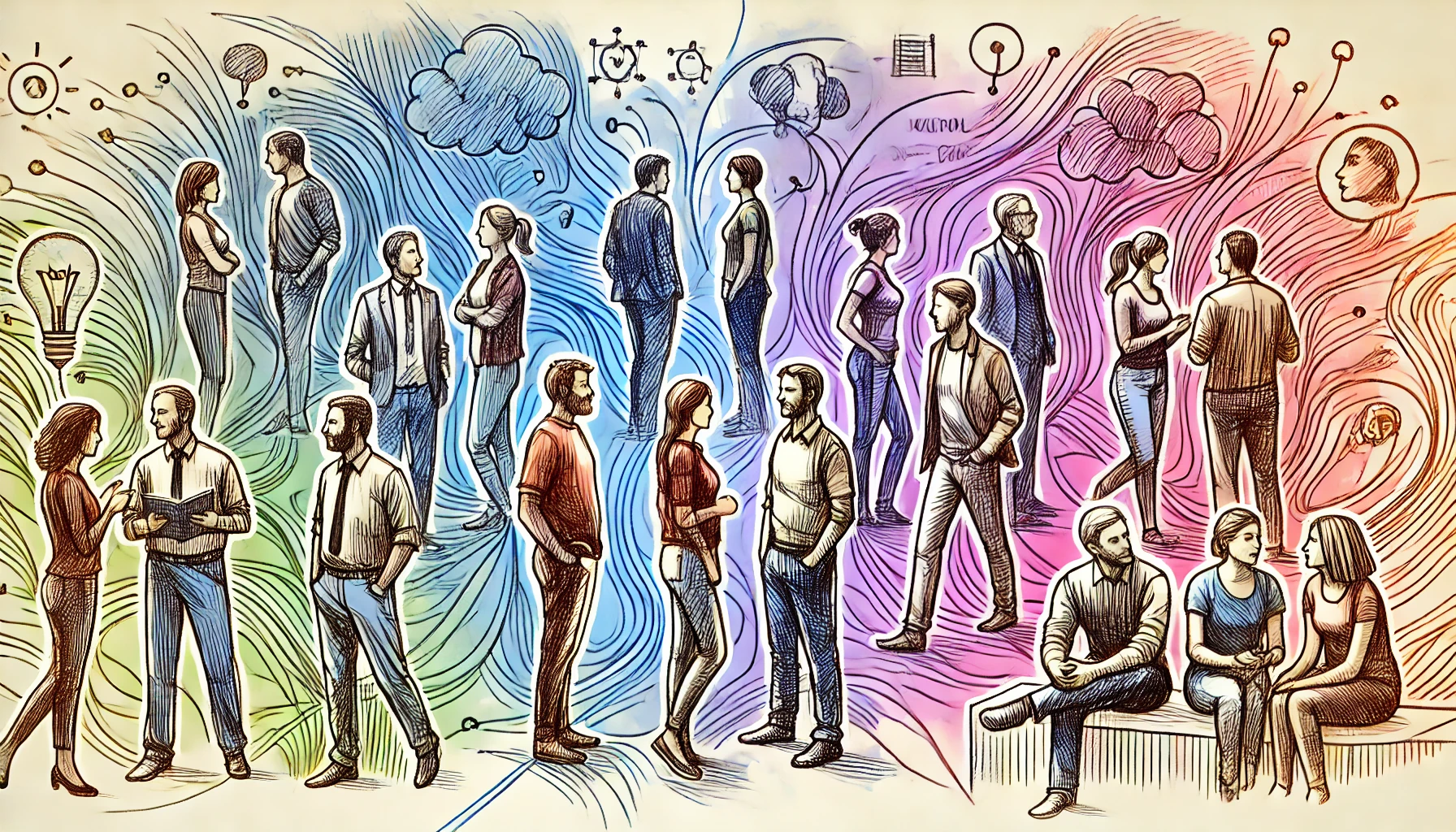
Humans are social creatures, and group behavior has long fascinated psychologists, sociologists, and behavioral scientists. Whether in professional teams, social gatherings, or online communities, individuals tend to act differently when they are part of a group. The field of group dynamics delves into understanding these behavioral changes, examining how group settings influence attitudes, decisions, and actions. The psychological mechanisms at play are complex, involving factors such as conformity, peer pressure, social identity, and even the diffusion of responsibility. By investigating these concepts, we can uncover the reasons why people’s behavior shifts when they are in a collective.
The study of group dynamics reveals that people may act more aggressively, altruistically, or passively, depending on their group context. For example, behaviors that might seem uncharacteristic of an individual when they are alone can surface in a group setting due to external social cues and pressures. Understanding why this happens can provide insights into everyday situations like workplace collaboration, political movements, or even mob behavior. In this blog, we will explore ten key psychological principles behind group dynamics and offer insights into why humans behave differently when part of a group.
1. Social Facilitation
- Social facilitation refers to how individuals tend to perform better on simple tasks when in the presence of others.
- This phenomenon happens because being observed by others can increase arousal, which enhances the ability to perform tasks that are well-practiced.
- However, on complex or unfamiliar tasks, performance may suffer, as the increased pressure to perform can lead to anxiety.
- The presence of others often triggers a competitive mindset, pushing individuals to exert more effort.
- Sports competitions, classroom settings, and work environments are common places where social facilitation is evident.
2. Social Loafing
- Social loafing occurs when individuals exert less effort when working in a group compared to when working alone.
- In a group, people often feel their contributions are less noticeable, leading to a diffusion of responsibility.
- This can lead to reduced accountability and, consequently, diminished effort in collaborative tasks.
- It’s more likely to occur in large groups where individual contributions are harder to track.
- Strategies like assigning specific roles and emphasizing individual accountability can reduce the tendency for social loafing.
3. Conformity
- Conformity refers to the act of matching attitudes, beliefs, and behaviors to group norms.
- One of the most famous experiments in this area, the Asch Conformity Experiments, demonstrated that individuals often conform to a group’s incorrect consensus to avoid standing out.
- People conform due to the desire for acceptance and fear of rejection or criticism.
- Conformity can be helpful in maintaining social order, but it can also lead to poor decision-making in situations requiring independent thought.
- It plays a significant role in trends, fashion, and even moral decisions.
4. Deindividuation
- Deindividuation happens when individuals in a group lose their sense of personal responsibility and identity.
- This loss of self-awareness often leads to behavior that individuals wouldn’t typically exhibit alone, such as aggression or lawlessness.
- This concept helps explain mob behavior, where normally rational individuals might engage in violence or vandalism.
- The anonymity provided by being part of a group contributes to this phenomenon.
- Reducing anonymity and encouraging individual responsibility can mitigate deindividuation.
5. Groupthink
- Groupthink is a psychological phenomenon where the desire for harmony and conformity in a group leads to irrational decision-making.
- In groupthink situations, members prioritize consensus over critical evaluation of alternative viewpoints.
- It often results in poor outcomes because dissenting opinions are suppressed to maintain group unity.
- High-stakes situations like political decisions, corporate strategies, or jury deliberations are prone to groupthink.
- Encouraging open dialogue and critical discussion can help prevent groupthink by valuing diverse opinions.
6. Diffusion of Responsibility
- In group settings, individuals often feel less personally responsible for outcomes, assuming that others will take action.
- This diffusion of responsibility can lead to inaction, such as in emergency situations, where no one steps up to help because everyone assumes someone else will.
- The bystander effect is a well-known example, where individuals are less likely to offer help when others are present.
- Training people to take individual responsibility and teaching proactive behavior can counteract this effect.
- This principle is also relevant in organizational settings where tasks may fall through the cracks without clear ownership.
7. Social Identity Theory
- Social identity theory suggests that a person’s sense of who they are is based, in part, on the groups to which they belong.
- People often derive self-esteem from their group memberships, whether they are based on nationality, religion, or even workplace teams.
- This identification can lead to in-group favoritism and out-group bias, where members of a different group are treated with suspicion or hostility.
- These dynamics are seen in situations of intergroup conflict, competition, or cooperation.
- Fostering inclusive environments can reduce the negative impact of social identity biases.
8. Peer Pressure
- Peer pressure is the direct influence on individuals by their peers to act in certain ways.
- While peer pressure is often associated with negative behaviors like substance abuse or bullying, it can also have positive effects, such as encouraging people to excel in academics or sports.
- The need to fit in and gain social approval is a powerful motivator behind peer pressure.
- Adolescents are particularly susceptible to peer pressure, but it remains influential in adult social and professional environments.
- Building self-confidence and promoting individual values can help resist the harmful effects of peer pressure.
9. Leadership Influence
- Leadership in groups has a significant impact on behavior, with effective leaders being able to inspire, guide, and unify group members.
- The presence of a strong leader can shape the group’s goals, decisions, and dynamics, often aligning individual efforts toward a common objective.
- Different leadership styles, such as authoritarian, democratic, or laissez-faire, can lead to varying group behaviors and outcomes.
- Good leaders promote open communication, fairness, and accountability, while poor leadership can exacerbate issues like groupthink or social loafing.
- Leadership training and development programs are essential in cultivating leaders who can positively influence group dynamics.
10. Group Polarization
- Group polarization occurs when group discussions lead to more extreme positions than those held by individual members.
- This shift happens because group members often reinforce each other’s opinions, leading to a more radical collective stance.
- Polarization can occur in social, political, or organizational contexts, contributing to heightened division and conflict.
- It can also lead to innovation and strong advocacy if the group’s direction is positive and constructive.
- Encouraging diverse perspectives and fostering a culture of critical thinking can help mitigate the negative effects of polarization.
Conclusion
The psychology of group dynamics highlights the complexities of human behavior when individuals come together in groups. From positive effects like enhanced performance in social facilitation to more problematic behaviors like groupthink or social loafing, group settings bring out different facets of behavior that might not be evident when people are alone. Understanding these dynamics can help in creating better-functioning teams, promoting individual responsibility, and fostering leadership that enhances group outcomes. By being aware of how group influences shape behavior, we can navigate social environments more effectively, whether in the workplace, in social contexts, or in larger societal settings.