
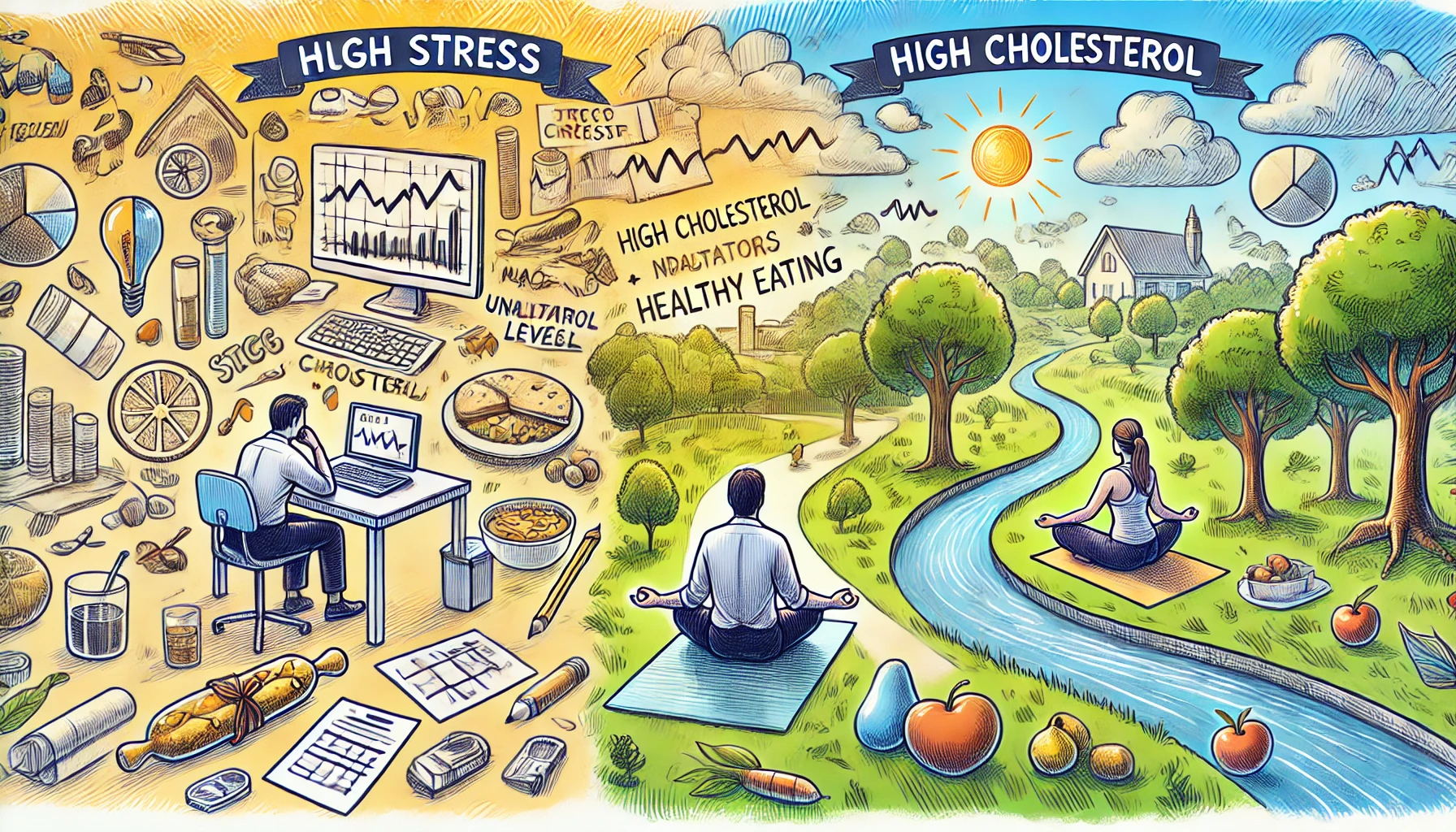
Stress is a common part of modern life, but its impact on health, particularly cholesterol levels, can be significant. Chronic stress can lead to unhealthy behaviors and physiological changes that raise cholesterol levels and increase the risk of heart disease. Understanding the connection between stress and cholesterol is crucial for managing both effectively and maintaining overall cardiovascular health.
In this blog, we will explore the impact of stress on cholesterol levels. We will cover ten main points, each providing detailed insights and practical tips on how stress affects cholesterol and strategies to manage stress for better heart health.
1. The Connection Between Stress and Cholesterol
- Stress Response: When you’re stressed, your body releases hormones like cortisol and adrenaline, which prepare your body for a “fight or flight” response.
- Hormonal Effects: These hormones can increase the production of cholesterol and triglycerides, as they prepare the body for rapid energy use.
- Liver Function: Under stress, the liver produces more glucose and cholesterol to provide energy, potentially raising cholesterol levels in the blood.
- Inflammation: Chronic stress can lead to inflammation, which contributes to the buildup of plaque in the arteries.
- Heart Health: Persistent stress can exacerbate other risk factors for heart disease, such as high blood pressure and unhealthy lifestyle choices.
2. Unhealthy Coping Mechanisms
- Comfort Eating: Many people turn to high-fat, sugary, or salty foods for comfort, which can increase cholesterol levels.
- Smoking: Stress may lead to smoking, which lowers HDL (good) cholesterol and increases LDL (bad) cholesterol.
- Alcohol Consumption: Increased alcohol intake as a stress reliever can raise triglyceride levels and contribute to higher cholesterol.
- Sedentary Lifestyle: Stress can lead to physical inactivity, which negatively impacts cholesterol and overall cardiovascular health.
- Sleep Disturbance: Poor sleep due to stress can further exacerbate cholesterol levels and overall health.
3. Cortisol and Cholesterol Levels
- Cortisol Production: Chronic stress leads to prolonged cortisol production, which can increase LDL cholesterol and lower HDL cholesterol.
- Visceral Fat: High cortisol levels are associated with increased visceral fat, which is linked to higher cholesterol levels.
- Insulin Resistance: Cortisol can cause insulin resistance, leading to higher blood sugar and triglyceride levels.
- Metabolic Syndrome: Chronic stress and high cortisol levels contribute to metabolic syndrome, which includes high cholesterol, high blood pressure, and high blood sugar.
- Management: Managing stress is crucial to controlling cortisol levels and maintaining healthy cholesterol levels.
4. Stress-Induced Inflammation
- Inflammatory Response: Stress triggers an inflammatory response in the body, which can lead to the buildup of arterial plaque.
- Plaque Formation: Inflammation can cause plaque to become unstable, increasing the risk of heart attacks and strokes.
- C-Reactive Protein: Stress can raise levels of C-reactive protein (CRP), an inflammatory marker associated with heart disease.
- Chronic Inflammation: Long-term inflammation from chronic stress can damage blood vessels and contribute to atherosclerosis.
- Anti-Inflammatory Diet: Eating an anti-inflammatory diet rich in fruits, vegetables, and healthy fats can help combat stress-induced inflammation.
5. Mind-Body Connection
- Psychological Impact: Mental stress can have a physical impact on the body, including raising cholesterol levels.
- Holistic Approach: Addressing both mental and physical health is essential for managing cholesterol and reducing heart disease risk.
- Mindfulness Practices: Mindfulness practices like meditation, yoga, and deep breathing exercises can help reduce stress and improve overall health.
- Mental Health Support: Seeking support from a therapist or counselor can help manage stress and its impact on cholesterol levels.
- Healthy Mindset: Adopting a positive and proactive mindset can help manage stress more effectively.
6. Healthy Eating to Combat Stress
- Balanced Diet: Eating a balanced diet rich in whole foods helps manage stress and supports healthy cholesterol levels.
- Omega-3 Fatty Acids: Foods high in omega-3 fatty acids, such as fatty fish, flaxseeds, and walnuts, have anti-inflammatory properties and can help reduce stress.
- Fiber-Rich Foods: Soluble fiber from oats, beans, fruits, and vegetables can help lower LDL cholesterol.
- Antioxidant-Rich Foods: Berries, leafy greens, and nuts are rich in antioxidants that combat oxidative stress.
- Hydration: Staying hydrated helps maintain energy levels and reduces stress.
7. Physical Activity as a Stress Reliever
- Exercise Benefits: Regular physical activity helps reduce stress, improve mood, and manage cholesterol levels.
- Endorphin Release: Exercise stimulates the release of endorphins, which are natural mood lifters.
- Aerobic Exercise: Activities like walking, running, swimming, and cycling are effective for reducing stress and improving heart health.
- Consistency: Aim for at least 150 minutes of moderate-intensity exercise per week.
- Relaxation Techniques: Incorporate relaxation exercises such as yoga or tai chi to complement aerobic activities.
8. Importance of Sleep
- Sleep Quality: Good quality sleep is crucial for managing stress and maintaining healthy cholesterol levels.
- Sleep Disorders: Stress can lead to sleep disorders like insomnia, which negatively impact cholesterol and heart health.
- Sleep Hygiene: Establish a regular sleep routine, create a comfortable sleep environment, and avoid screens before bedtime.
- Relaxation Before Bed: Engage in relaxing activities before bed, such as reading or taking a warm bath, to improve sleep quality.
- Adequate Rest: Aim for 7-9 hours of sleep per night to support overall health and well-being.
9. Effective Stress Management Techniques
- Mindfulness and Meditation: Practicing mindfulness and meditation can help reduce stress and improve heart health.
- Breathing Exercises: Deep breathing exercises can calm the nervous system and reduce stress.
- Time Management: Effective time management and setting realistic goals can help reduce stress.
- Hobbies and Interests: Engaging in hobbies and activities you enjoy can provide a healthy distraction from stress.
- Social Support: Building and maintaining strong social connections can help buffer the effects of stress.
10. Regular Health Check-Ups
- Routine Monitoring: Regular check-ups with your healthcare provider can help monitor cholesterol levels and overall health.
- Early Detection: Early detection of high cholesterol allows for timely intervention and management.
- Personalized Advice: Your healthcare provider can offer personalized advice on managing stress and cholesterol.
- Medication Management: If needed, your doctor can prescribe medications to help manage cholesterol levels effectively.
- Comprehensive Care: A comprehensive approach to health includes addressing both physical and mental aspects of well-being.
Stress has a significant impact on cholesterol levels and overall heart health. By understanding the connection between stress and cholesterol, and implementing effective stress management techniques, you can improve your cardiovascular health and reduce the risk of heart disease. Combine these strategies with a healthy diet, regular exercise, and routine check-ups for optimal results.