
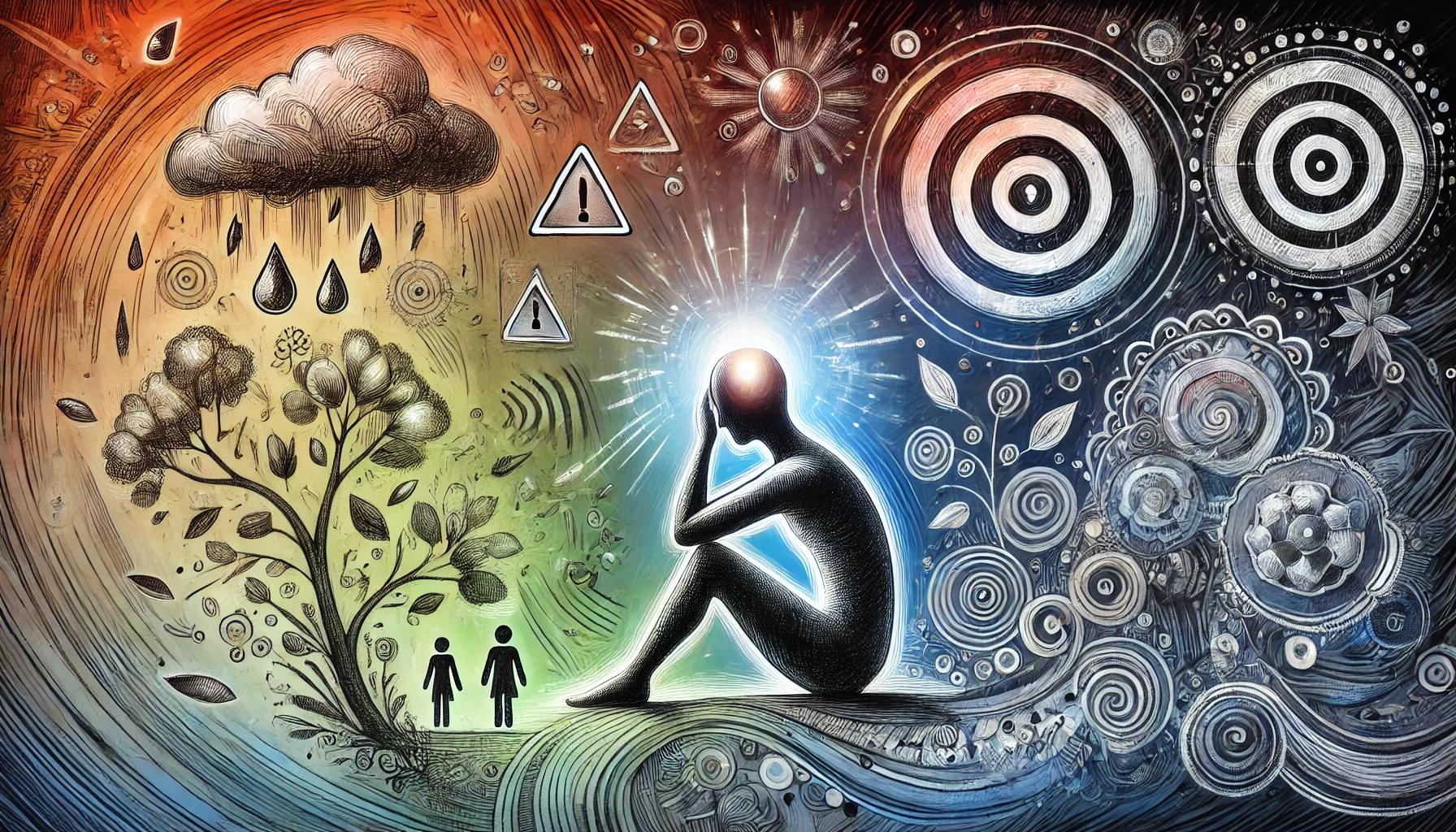
Depression is often viewed solely as a debilitating mental health disorder that disrupts the lives of those affected. However, some researchers propose that depression might have an evolutionary purpose, serving as a warning signal or a mechanism for coping with certain environmental and social challenges. This perspective does not diminish the severe impact of depression on individuals but seeks to understand why such a seemingly disadvantageous condition might have persisted throughout human evolution. Exploring this concept can provide a deeper understanding of depression and its role in human history.
The idea that depression could have an evolutionary function suggests that, under certain circumstances, depressive symptoms may have offered some adaptive advantages. These advantages could have included promoting introspection, conserving energy, or facilitating social withdrawal to avoid further harm. By examining depression from an evolutionary standpoint, we can gain insight into its complex nature and why it may still be present in the modern human experience.
Depression as an Adaptive Mechanism
- Promoting Reflection and Problem-Solving
- One hypothesis is that depression encourages introspection and problem-solving by forcing individuals to slow down and focus on their internal thoughts and feelings.
- This reflective state may help individuals analyze complex social or environmental problems, leading to more thoughtful decision-making.
- Depression might have allowed early humans to withdraw from their usual activities temporarily, giving them the space to contemplate life-threatening situations or significant personal conflicts.
- The rumination associated with depression could have helped individuals develop solutions to avoid future dangers or failures.
- While excessive rumination can be detrimental, in small doses, it might have served an adaptive purpose by enhancing survival through careful planning and analysis.
- Energy Conservation During Hard Times
- Depression often results in decreased energy levels and motivation, which may have been adaptive during periods of resource scarcity or environmental stress.
- By reducing physical activity and social interactions, individuals could conserve energy and resources, which would have been crucial for survival during times of food shortage or illness.
- This state of low energy could have helped early humans avoid unnecessary risks or conserve strength until conditions improved.
- Energy conservation might also have been beneficial during times of emotional distress, allowing individuals to recuperate from psychological trauma or loss.
- This theory suggests that the lethargy and inactivity associated with depression could have been a protective mechanism in harsh or uncertain environments.
Social and Communicative Functions of Depression
- Eliciting Social Support
- Depression may have served as a signal to others that an individual was in distress and needed support, fostering social cohesion and empathy within groups.
- The visible signs of depression, such as crying, withdrawal, or lack of interest in usual activities, could have prompted others to offer help or comfort.
- In tightly-knit social groups, showing vulnerability might have encouraged cooperation and mutual aid, which were essential for survival in early human communities.
- By communicating distress through depressive behaviors, individuals could attract attention and support from group members, increasing their chances of recovery.
- This social support function highlights the potential role of depression in strengthening social bonds and promoting group resilience.
- Avoiding Social Conflict
- Depression might have served as a strategy to avoid conflict or competition within social hierarchies, allowing individuals to withdraw from potentially harmful situations.
- By displaying submissive behaviors, individuals could signal a non-threatening stance, reducing the likelihood of aggression or exclusion from the group.
- This withdrawal could have been beneficial in preventing escalation of conflicts, particularly in resource-limited environments where competition was intense.
- The tendency to ruminate and focus on personal shortcomings during depression might have been a way to internalize social norms and avoid future mistakes.
- In this sense, depression could have acted as a social regulatory mechanism, helping individuals navigate complex group dynamics and maintain harmony.
Depression as a Response to Loss or Defeat
- Coping with Loss
- Experiencing loss, whether of a loved one, status, or resources, is a universal human experience. Depression may have evolved as a way to cope with such losses.
- The symptoms of depression, such as sadness, withdrawal, and a focus on the past, might have helped individuals process grief and adjust to their new reality.
- This period of mourning and introspection could have allowed individuals to come to terms with their loss and eventually re-engage with life.
- In evolutionary terms, this process of grieving might have promoted long-term emotional stability by encouraging individuals to accept change and loss.
- While prolonged depression is maladaptive, a temporary depressive response to loss could have been a natural and adaptive part of the healing process.
- Signaling Submission After Defeat
- Depression might have evolved as a way to signal submission following a social defeat, reducing the risk of further aggression from more dominant individuals.
- By displaying signs of depression, such as low energy and withdrawal, individuals could indicate their acceptance of a lower status, thereby avoiding further conflict.
- This response could have helped maintain social order and hierarchy within groups, minimizing the potential for ongoing disputes.
- In animal behavior studies, similar patterns are observed where defeated animals show submissive behaviors to prevent further attacks, which could parallel depressive behaviors in humans.
- This evolutionary perspective suggests that depression may have been a protective response to social defeat, allowing individuals to avoid harm and survive within the group.
Depression and Modern Society
- Mismatch Theory
- The mismatch theory suggests that while depression may have been adaptive in our ancestral environment, modern society has changed in ways that make these adaptations less beneficial.
- In contemporary life, the constant stressors, social isolation, and the fast-paced environment can exacerbate depressive symptoms rather than provide opportunities for reflection or support.
- The lack of communal living and supportive social networks in modern society can leave individuals with depression feeling isolated and without the social cohesion that might have been present in ancestral times.
- Our current environment often requires high levels of productivity and social interaction, making the energy-conserving aspects of depression more maladaptive.
- Understanding this mismatch can help explain why depression is so prevalent in today’s world and why traditional coping mechanisms may no longer be as effective.
- Implications for Treatment
- Recognizing the potential evolutionary roots of depression can influence how we approach treatment and support for those affected by it.
- Therapies such as mindfulness and acceptance-based approaches can help individuals develop a healthier relationship with their thoughts and emotions, reducing the harmful effects of rumination.
- Social support and community-building interventions may be effective in addressing the social and communicative aspects of depression, providing individuals with the connection they need.
- Understanding depression’s possible adaptive functions can lead to more compassionate and holistic treatment strategies that acknowledge the condition’s complexity.
- By framing depression as a response to environmental and social factors, rather than solely a disorder, we can better address the underlying causes and provide more effective care.
Critiques and Considerations
- Critiques of the Evolutionary Perspective
- Some critics argue that framing depression as an evolutionary adaptation could risk minimizing the suffering and functional impairment it causes.
- While certain aspects of depressive behavior might have been adaptive in the past, the severe, chronic forms of depression seen today may not fit neatly into this framework.
- The evolutionary perspective should not be used to justify or romanticize depression, as it remains a serious mental health issue that requires treatment.
- Additionally, depression is a multifactorial condition influenced by genetics, biology, environment, and individual psychology, making it difficult to attribute to a single evolutionary cause.
- Despite these critiques, exploring the evolutionary aspects of depression can still offer valuable insights into its complexity and potential functions.
- Balancing Evolutionary Insights with Modern Understanding
- While the evolutionary perspective provides intriguing insights into why depression might exist, it’s essential to balance this with current clinical knowledge and treatment approaches.
- Modern understanding of depression emphasizes its neurobiological, psychological, and social dimensions, all of which play crucial roles in its development and management.
- A comprehensive approach to depression should integrate evolutionary insights with evidence-based treatments such as psychotherapy, medication, and lifestyle changes.
- Recognizing the potential evolutionary roots of depression can enhance empathy and reduce stigma, helping individuals feel understood in their experiences.
- Ultimately, the goal is to improve the quality of life for those affected by depression, regardless of its origins.
Conclusion
The evolutionary perspective on depression suggests that this condition may have served adaptive purposes in our ancestral environment, such as promoting reflection, conserving energy, and navigating social dynamics. While these insights provide a fascinating lens through which to understand depression, it’s crucial to acknowledge the complexity of the condition in modern society. Today, depression often poses significant challenges that go beyond its potential evolutionary functions, requiring comprehensive and compassionate treatment approaches.
Understanding depression’s possible evolutionary roots can help us view the condition with greater empathy and reduce the stigma surrounding it. However, it’s important to focus on the individual’s experience and the need for effective support and interventions. By integrating evolutionary insights with current clinical practices, we can offer a more nuanced and holistic approach to understanding and treating depression.