
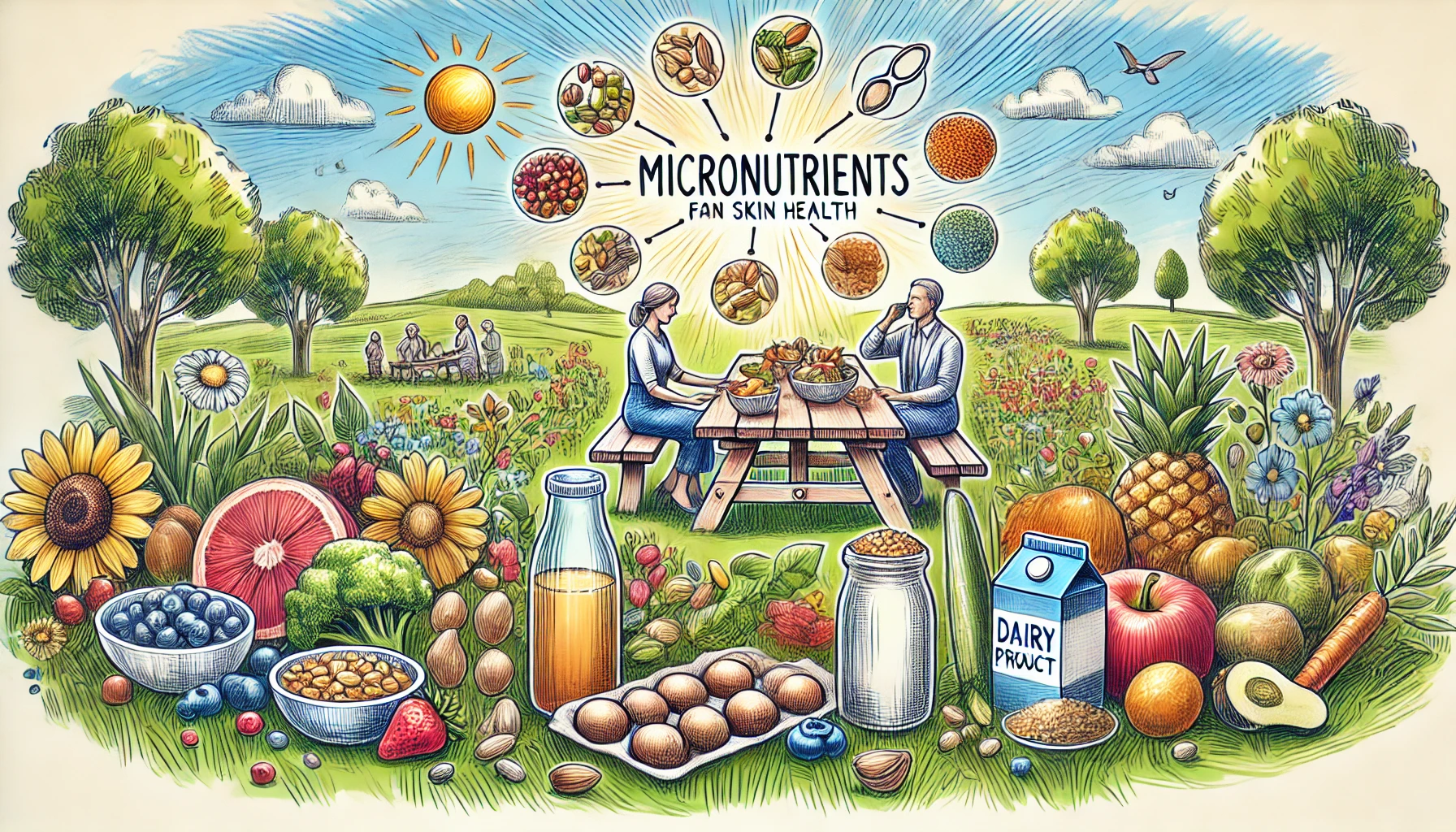
Micronutrients, including vitamins and minerals, are essential for maintaining healthy skin. They play crucial roles in skin cell regeneration, repair, and overall appearance. Adequate intake of these nutrients can help prevent common skin issues such as dryness, acne, and premature aging. This guide explores the connection between micronutrients and skin health, detailing the key vitamins and minerals involved, their benefits, and how to ensure you get enough through your diet.
Introduction
Healthy skin is not just about the products you apply externally; it also depends significantly on your diet. Micronutrients support various functions in the skin, from collagen synthesis to protection against UV damage. Understanding which vitamins and minerals are beneficial for your skin and incorporating them into your daily routine can enhance your skin’s health and appearance.
Key Micronutrients for Skin Health
1. Vitamin A
- Role: Vitamin A is crucial for skin cell production and repair. It helps reduce acne and smooths out wrinkles by promoting cell turnover.
- Sources: Carrots, sweet potatoes, spinach, kale, and liver.
- Benefits: Prevents dry, flaky skin and reduces signs of aging.
- Incorporation Tips: Include colorful vegetables like carrots and sweet potatoes in your meals, and consider adding leafy greens to salads and smoothies.
2. Vitamin C
- Role: Vitamin C is essential for collagen production, which helps maintain skin elasticity and firmness. It also has antioxidant properties that protect the skin from free radical damage.
- Sources: Citrus fruits, strawberries, bell peppers, broccoli, and kiwi.
- Benefits: Brightens skin, reduces wrinkles, and helps heal damaged skin.
- Incorporation Tips: Start your day with a glass of orange juice or add strawberries to your breakfast cereal. Include bell peppers and broccoli in your salads or stir-fries.
3. Vitamin E
- Role: Vitamin E is an antioxidant that protects the skin from oxidative stress and UV damage. It also helps maintain skin moisture.
- Sources: Nuts, seeds, vegetable oils, and leafy greens.
- Benefits: Protects against sun damage, moisturizes skin, and reduces inflammation.
- Incorporation Tips: Snack on almonds or sunflower seeds, and use vegetable oils like olive oil in your cooking. Add a handful of spinach to your smoothies.
4. Vitamin D
- Role: Vitamin D plays a role in skin cell growth and repair, and its anti-inflammatory properties can help with skin conditions such as psoriasis.
- Sources: Sunlight exposure, fatty fish (salmon, mackerel), fortified dairy products, and egg yolks.
- Benefits: Promotes skin cell growth and repair, reduces inflammation.
- Incorporation Tips: Spend some time outdoors to get natural sunlight, include fatty fish in your diet, and consume fortified dairy products.
5. B Vitamins
- Role: B vitamins, including B3 (niacin), B5 (pantothenic acid), and B7 (biotin), are essential for maintaining healthy skin. They help with cell metabolism and regeneration.
- Sources: Whole grains, meat, fish, eggs, dairy products, leafy greens, and legumes.
- Benefits: Reduce inflammation, improve skin barrier function, and prevent dryness and irritation.
- Incorporation Tips: Include a variety of whole grains, lean meats, and leafy greens in your diet. Consider biotin supplements if needed.
6. Zinc
- Role: Zinc is essential for wound healing and helps reduce inflammation and sebum production, which can reduce acne.
- Sources: Meat, shellfish, legumes, seeds, and nuts.
- Benefits: Reduces acne, supports wound healing, and regulates oil production.
- Incorporation Tips: Add seeds and nuts to your snacks, include beans and lentils in soups and salads, and eat seafood regularly.
7. Selenium
- Role: Selenium protects the skin from oxidative damage and infections, supporting overall skin health.
- Sources: Brazil nuts, seafood, eggs, and whole grains.
- Benefits: Protects against sun damage, reduces the risk of infections, and supports skin elasticity.
- Incorporation Tips: Snack on a few Brazil nuts, include eggs in your breakfast, and eat whole grains like brown rice and oats.
Practical Tips for Ensuring Adequate Micronutrient Intake
1. Eat a Balanced Diet
- Variety: Include a wide range of fruits, vegetables, whole grains, lean proteins, and healthy fats in your diet to cover all nutrient bases.
- Colorful Plates: Aim for colorful plates with different fruits and vegetables to ensure a range of vitamins and minerals.
- Whole Foods: Focus on whole, unprocessed foods to maximize nutrient intake.
2. Plan Meals Around Key Nutrients
- Breakfast: Include a source of vitamin C (e.g., citrus fruits or strawberries) and a B vitamin-rich food (e.g., whole grain cereal).
- Lunch: Aim for a combination of leafy greens (vitamin A and E) and lean proteins (zinc and B vitamins).
- Dinner: Incorporate fatty fish (vitamin D) and a variety of vegetables (vitamin A, C, and E).
3. Consider Fortified Foods and Supplements
- Fortified Foods: Choose fortified foods to help meet your nutrient needs, especially for vitamins D and B12.
- Supplements: Consider supplements if you have specific dietary restrictions, increased nutrient needs, or difficulty meeting requirements through diet alone. Always consult with a healthcare provider before starting any supplement regimen.
4. Hydration
- Water: Drink plenty of water throughout the day to stay hydrated and support skin health.
- Hydrating Foods: Include water-rich foods like cucumbers, watermelon, and oranges in your diet.
Sample Day of Micronutrient-Rich Eating for Skin Health
Breakfast:
- Greek yogurt with mixed berries (vitamin C, antioxidants) and a sprinkle of chia seeds (omega-3s, zinc).
Lunch:
- Spinach salad with grilled chicken, cherry tomatoes, avocado (vitamin E), and a citrus vinaigrette (vitamin C).
Snack:
- A handful of almonds (vitamin E, magnesium) and an orange (vitamin C).
Dinner:
- Baked salmon (omega-3s, vitamin D) with roasted sweet potatoes (vitamin A) and steamed broccoli (vitamin C, calcium).
Snack:
- A piece of dark chocolate (iron, magnesium) and a cup of green tea (antioxidants).
Conclusion
Micronutrients play a vital role in maintaining healthy skin. By ensuring adequate intake of essential vitamins and minerals through a balanced diet, you can support skin cell regeneration, repair, and overall skin health. Focus on incorporating a variety of nutrient-dense foods, stay hydrated, and consider supplementation when necessary to meet your specific needs. This approach will help you achieve and maintain radiant, healthy skin.