
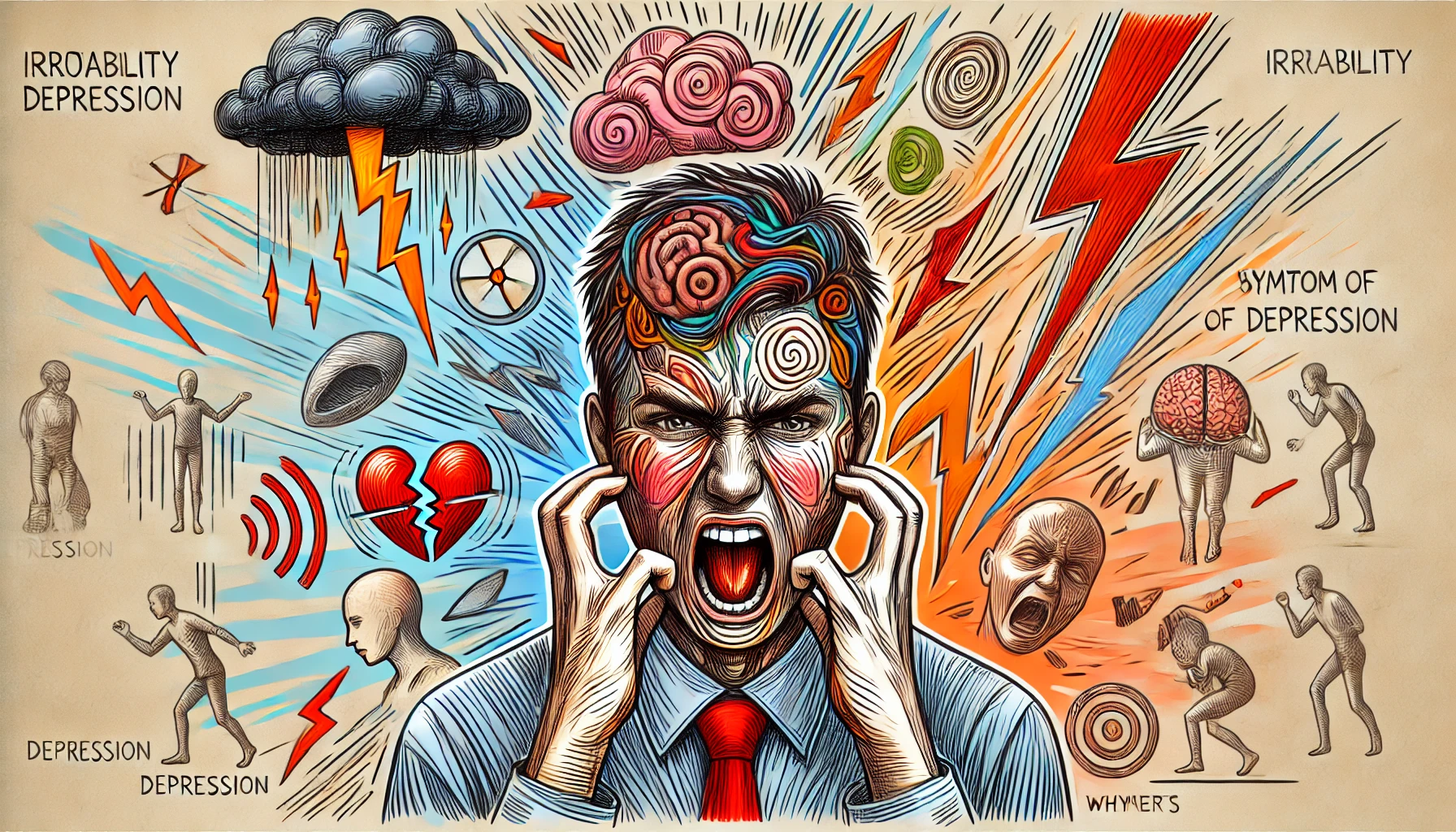
When people think of depression, they often picture sadness, hopelessness, or a lack of energy. However, one lesser-known but significant symptom is irritability. For many individuals, especially men, depression may manifest as a short temper, frustration, or irritability rather than the stereotypical image of someone who is always feeling down. This mood instability can be confusing for those experiencing it and for the people around them, as it doesn’t always align with the more widely recognized symptoms of depression.
Irritability can impact relationships, work, and overall quality of life, making it essential to understand why it happens and how to manage it. In this blog, we’ll explore the connection between depression and irritability, its causes, and practical strategies for coping with this symptom.
1. How Depression Leads to Irritability
- Emotional overload is a common cause of irritability in depression. Individuals often feel overwhelmed by their negative emotions, and this constant mental strain can make them more easily frustrated by minor inconveniences.
- Depression is associated with low levels of serotonin, a neurotransmitter that helps regulate mood and stress. This deficiency can make individuals more prone to irritability, as they are less able to manage emotional stressors.
- Fatigue and poor sleep, which often accompany depression, can worsen irritability. The lack of rest makes it harder to control emotions, leading to increased impatience and frustration.
- Irritability may also stem from a feeling of powerlessness. When people are unable to control their emotional state or situation, they can become frustrated, which often manifests as irritability.
- The mental exhaustion caused by depression leaves individuals with little emotional bandwidth, so they may react more strongly to minor annoyances than they otherwise would.
2. The Role of Stress and Anxiety
- Depression is often accompanied by chronic stress and anxiety, which contribute significantly to irritability.
- Individuals may feel on edge or constantly anxious, leading to quick mood shifts and heightened reactions to stressors.
- Ruminating on negative thoughts and worries can make even small challenges feel overwhelming, triggering irritability in response to daily tasks or interactions.
- Physical symptoms of anxiety, such as muscle tension or headaches, can add to the discomfort and stress, making it even harder to stay calm and patient.
- The combination of mental and physical stress creates a cycle where the individual feels constantly agitated, unable to find relief.
3. Irritability vs. Anger in Depression
- Irritability differs from anger in that it tends to be persistent and simmering, while anger is often a more intense, explosive emotion.
- Irritability is often a subtle, ongoing feeling of frustration, while anger may arise in specific situations or moments of heightened stress.
- Small things, such as a slight inconvenience or a minor disagreement, can provoke irritability, leading to an emotional response that feels disproportionate to the situation.
- Individuals with depression may feel angry at themselves or their circumstances, and this internal anger can manifest as irritability in their interactions with others.
- While anger is more visible and dramatic, irritability is often more insidious, affecting day-to-day interactions in a gradual but persistent way.
4. The Impact of Irritability on Relationships
- Irritability can strain relationships with family, friends, and colleagues, as individuals may become easily frustrated or short-tempered with those around them.
- Miscommunication often occurs, as loved ones may misinterpret the irritability as anger or a personal attack, leading to conflict or distancing.
- Emotional withdrawal can result when individuals feel guilty about their irritability or believe they are a burden to others, further isolating them.
- The unpredictability of irritability makes it hard for others to understand how to respond, which can lead to tension in relationships.
- Over time, irritability can cause individuals to avoid social interactions, as they may fear lashing out or becoming frustrated with others, contributing to social isolation and worsening depression.
5. Biological Factors Behind Irritability in Depression
- The brain’s chemical imbalances play a significant role in irritability during depression. Low levels of serotonin and dopamine affect mood regulation and emotional responses.
- Serotonin deficiency can reduce the brain’s ability to manage stress and emotional overload, making irritability a more frequent response to stimuli.
- Cortisol, the body’s primary stress hormone, is often elevated in individuals with depression, which keeps the body in a state of heightened stress and tension.
- The brain’s prefrontal cortex, responsible for emotional regulation, may function less effectively during depression, leading to reduced impulse control and emotional stability.
- Chronic inflammation, which has been linked to depression, can also contribute to irritability by affecting the brain’s neurochemical balance and stress response system.
6. Gender Differences in Irritability and Depression
- Men are more likely to exhibit irritability as a primary symptom of depression, often showing anger or frustration rather than sadness.
- Social expectations and gender norms may lead men to suppress feelings of sadness, which then manifest as irritability or emotional outbursts.
- Women, while also susceptible to irritability during depression, may more commonly express symptoms through sadness, fatigue, or anxiety.
- These differences in emotional expression can lead to misdiagnosis or a delay in seeking help, as irritability may not always be recognized as a sign of depression, especially in men.
- Understanding that depression doesn’t always look the same in everyone is essential for recognizing symptoms like irritability as part of the disorder.
7. How Irritability Can Affect Daily Functioning
- Irritability can make even simple tasks feel overwhelming, as minor inconveniences can trigger frustration and disrupt focus or productivity.
- Work performance may suffer, as individuals become easily frustrated with colleagues or tasks, leading to poor communication or mistakes.
- Decision-making can become more challenging, as irritability clouds judgment and creates impatience, making it harder to weigh options carefully.
- The persistent feeling of being on edge can reduce the ability to enjoy daily activities or hobbies, contributing to a deeper sense of dissatisfaction.
- Over time, irritability can create a sense of learned helplessness, where individuals feel they have no control over their emotions or their environment.
8. The Emotional Impact of Irritability
- Irritability doesn’t just affect those around the individual; it also has a profound impact on the person experiencing it.
- Individuals may feel guilt or shame after lashing out at loved ones, leading to further feelings of inadequacy or worthlessness, which are already common in depression.
- Self-blame is common, as individuals recognize their irritability but feel powerless to control it, creating a cycle of frustration and guilt.
- This emotional turmoil can deepen feelings of hopelessness or despair, as the individual feels increasingly disconnected from their usual emotional responses.
- Low self-esteem often accompanies the guilt and frustration, as the individual may feel they are failing in their personal and professional roles due to their irritability.
9. Coping Strategies for Managing Irritability
- Mindfulness and deep-breathing exercises can help individuals regain control over their emotional responses in moments of heightened irritability.
- Cognitive-behavioral therapy (CBT) is highly effective in helping individuals recognize the thought patterns that lead to irritability and develop healthier coping mechanisms.
- Journaling or keeping track of emotional triggers can help individuals identify situations that provoke irritability, allowing them to anticipate and manage these responses better.
- Physical activity, such as walking or yoga, can release endorphins and reduce the physical tension that often accompanies irritability, providing relief from stress.
- Learning to communicate openly with loved ones about feelings of irritability can reduce misunderstandings and help build a supportive environment.
10. When to Seek Professional Help
- If irritability is significantly affecting your relationships, work, or overall quality of life, it’s important to seek professional help.
- Therapists and counselors can provide valuable insights into the causes of irritability and offer strategies for managing it as part of a comprehensive treatment plan for depression.
- Medications, such as antidepressants, may be helpful in balancing neurotransmitter levels and improving mood regulation, which can reduce irritability.
- Group therapy or support groups can offer a safe space to share experiences and learn from others who are dealing with similar symptoms.
- It’s essential to remember that irritability is a treatable symptom of depression, and seeking help is the first step toward regaining emotional control and improving well-being.
Conclusion
Irritability is a common but often overlooked symptom of depression, affecting not only the individual but also their relationships and daily life. Understanding why irritability happens, its causes, and how to manage it is essential for those struggling with depression. By recognizing irritability as a symptom, rather than a personal failing, individuals can seek help and develop coping strategies to improve their emotional regulation. Whether through therapy, mindfulness, or medication, addressing irritability is an important step in the journey toward managing depression and improving overall mental health.