
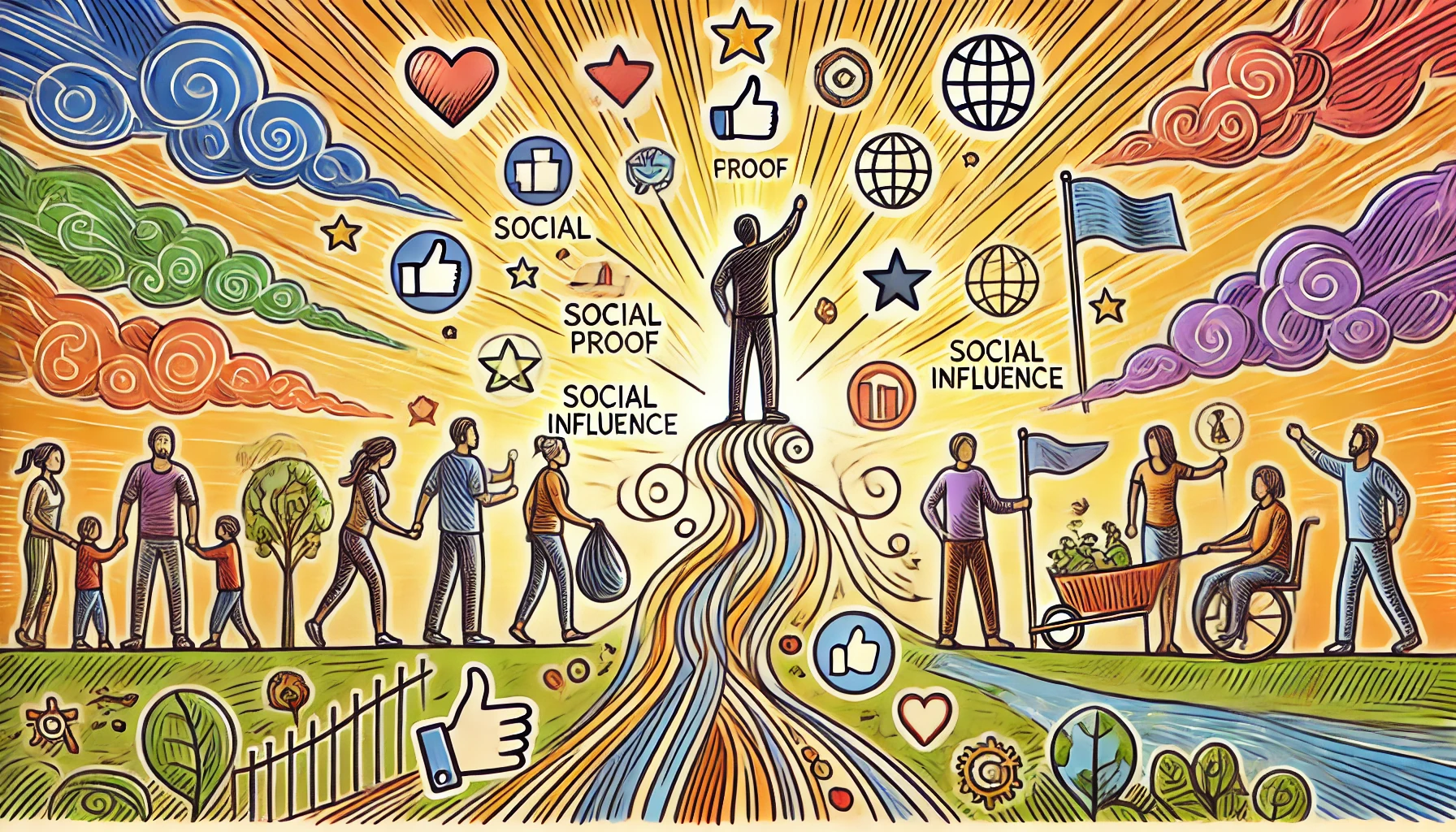
Social influence, when harnessed positively, can be a powerful tool for promoting social good. From raising awareness about important causes to encouraging ethical behavior and fostering community engagement, social influence can inspire individuals and groups to take meaningful action. By leveraging mechanisms like peer influence, social norms, and role modeling, organizations, leaders, and everyday individuals can motivate others to adopt behaviors that benefit society.
Whether it’s promoting environmental sustainability, improving public health, or supporting charitable causes, using social influence effectively requires a deep understanding of human behavior and social dynamics. This blog explores how social influence can be used to promote social good, the key psychological principles behind it, and practical strategies for driving positive change.
1. The Power of Social Norms in Shaping Behavior
- Social norms are unwritten rules that govern how people behave in society. They can be a powerful force for promoting social good when aligned with ethical and beneficial behaviors, such as recycling, volunteering, or voting.
- Descriptive norms highlight what most people are doing, while injunctive norms emphasize what people should be doing. Both can be leveraged to encourage positive actions. For example, when people learn that “most of your neighbors recycle,” they are more likely to do the same.
- Public awareness campaigns that focus on pro-social norms, such as anti-littering or energy conservation, can effectively influence individuals to change their behavior by showing that these actions are socially approved.
- Positive reinforcement of social norms, such as recognizing and rewarding individuals who exemplify good behavior, can further strengthen their impact.
- To promote social good, it’s essential to create a culture where positive behaviors are the norm, encouraging people to follow the lead of others who are already making a difference.
2. Using Peer Influence for Positive Change
- Peer influence is a powerful driver of behavior, particularly in group settings. People are more likely to engage in positive behaviors when they see their peers doing the same, whether it’s participating in a charity run, joining a social movement, or practicing healthy habits.
- Positive peer pressure can be used to encourage desirable behaviors like exercising regularly, reducing plastic waste, or quitting smoking. When individuals feel that their friends or colleagues are adopting positive behaviors, they are more inclined to follow suit.
- Support groups and community initiatives can harness peer influence by creating environments where individuals encourage and support each other in achieving common goals, such as in weight-loss programs or addiction recovery groups.
- Peer mentorship can be an effective way to use social influence for good. By pairing individuals with positive role models who embody the desired behavior, mentors can guide others toward making better decisions.
- Organizations and communities can create team challenges or group incentives that motivate individuals to take collective action, such as group volunteer projects or sustainability challenges, where everyone works together toward a common goal.
3. Leveraging Role Models and Influencers
- Role models have a significant impact on how people behave, especially when they are seen as relatable, trustworthy, and admirable. By promoting positive behaviors, role models can inspire others to act in ways that benefit society.
- Celebrities, social media influencers, and community leaders can use their platforms to advocate for social good by raising awareness about important causes, such as environmental protection, mental health, or social justice.
- Influencer marketing for good has gained traction as influencers collaborate with organizations to promote ethical consumerism, charitable donations, or community engagement. By aligning with influencers who share a cause’s values, organizations can reach wider audiences.
- Local role models, such as teachers, religious leaders, or small business owners, can also have a profound effect on their communities by demonstrating pro-social behaviors like volunteerism or philanthropy.
- To maximize impact, it’s essential to choose role models whose values and behaviors resonate with the target audience, ensuring that the message of social good is authentic and inspiring.
4. Encouraging Collective Action and Group Behavior
- Collective action can be a powerful force for social good, as it brings people together to work toward a common cause. Large-scale movements like climate strikes, community clean-up efforts, or fundraising events are driven by the influence of group behavior.
- Group dynamics often encourage individuals to participate in social causes they may not have pursued on their own. When people see others taking action, they are more likely to join in, whether it’s donating to a charity, attending a rally, or signing a petition.
- Social movements like #MeToo, Black Lives Matter, or Fridays for Future are prime examples of how social influence within groups can spark widespread change by uniting individuals under a shared cause.
- By creating group challenges, organizations can promote positive behaviors on a collective scale. For example, companies can challenge employees to reduce their carbon footprint or schools can encourage students to participate in community service projects.
- Community-building efforts, such as neighborhood associations, civic engagement projects, or online forums, can foster a sense of belonging and responsibility, encouraging individuals to contribute to social good.
5. Promoting Ethical Consumerism Through Social Influence
- Ethical consumerism is increasingly driven by social influence, as consumers look to peers, influencers, and businesses for guidance on making responsible purchasing decisions.
- Sustainable products, fair-trade goods, and socially responsible brands gain traction when people see others supporting these causes. Companies that highlight their ethical practices through social proof, such as “100% sustainable” or “made with fair labor,” can influence consumer behavior.
- Influencers and celebrities play a pivotal role in promoting ethical consumerism by endorsing products that align with social values, such as cruelty-free cosmetics, eco-friendly fashion, or zero-waste products.
- Peer recommendations and word-of-mouth are also key drivers of ethical purchasing. When people hear that their friends or family are choosing socially responsible brands, they are more likely to follow suit.
- Corporate social responsibility (CSR) initiatives that emphasize transparency, community support, and sustainability further reinforce positive consumer choices by aligning business practices with social good.
6. Utilizing Social Proof to Promote Positive Behaviors
- Social proof is a psychological phenomenon where people look to others’ actions to determine what is acceptable or desirable. It is a powerful tool for encouraging positive behaviors, especially in contexts where individuals are unsure of how to act.
- Online reviews, testimonials, and success stories can serve as social proof for positive behaviors. For example, seeing others share their experiences with charitable donations, healthy living, or environmental conservation can inspire new participants to join.
- Crowd behavior can also be leveraged to promote social good, as individuals are more likely to donate to a cause or participate in an event when they see that many others are doing the same.
- Campaigns that highlight collective achievements, such as “500,000 people have donated to this cause,” can create a sense of social proof, motivating others to contribute as well.
- Organizations can use user-generated content (UGC), where individuals share their own stories of positive action, to build a community of social proof that encourages others to follow.
7. The Role of Social Influence in Health and Well-Being
- Social influence is widely used in public health campaigns to promote healthier behaviors, such as regular exercise, vaccination, and smoking cessation.
- Peer-led health initiatives encourage individuals to make better choices by showcasing the health benefits experienced by others in their community. For example, fitness challenges or healthy eating campaigns leverage peer influence to inspire participation.
- Health influencers and role models who advocate for mental well-being, physical fitness, or disease prevention can have a significant impact on the health choices of their followers.
- Public health campaigns that focus on social norms, such as “most people in your area are vaccinated,” effectively encourage positive health behaviors by normalizing them.
- Workplace wellness programs that promote group activities, such as walking challenges or mindfulness workshops, harness social influence to improve the health and well-being of employees.
8. Fostering Environmental Responsibility Through Social Influence
- Environmental sustainability is one of the most pressing global issues, and social influence can be a critical tool in promoting behaviors that reduce environmental harm, such as recycling, conserving water, or reducing carbon emissions.
- Peer pressure in eco-conscious communities can encourage individuals to adopt sustainable practices, such as using reusable bags, reducing plastic consumption, or biking to work. When people see their neighbors or friends living sustainably, they are more likely to do the same.
- Environmental influencers and green businesses can inspire larger audiences to make eco-friendly choices by sharing tips on reducing waste, conserving energy, or supporting ethical brands.
- Public campaigns that showcase collective environmental efforts, such as “80% of households in this city recycle,” use social proof to drive participation in sustainability initiatives.
- Social media challenges, such as plastic-free July or zero-waste lifestyle challenges, create opportunities for individuals to engage in environmentally responsible behavior alongside others, reinforcing the importance of collective action.
9. Encouraging Civic Engagement and Political Participation
- Civic engagement, including voting, participating in local government, and advocating for social causes, can be strongly influenced by social networks and community involvement.
- Voter turnout campaigns that emphasize high participation rates, such as “Your friends are voting, are you?” use social influence to encourage political participation.
- Community leaders, such as local activists, can inspire others to get involved in civic issues by modeling active participation in town hall meetings, protests, or neighborhood improvement projects.
- Peer influence is particularly effective in getting young people engaged in politics. When they see their friends or role models involved in political campaigns, they are more likely to participate themselves.
- Collective action movements, such as climate activism or social justice campaigns, thrive on social influence, as individuals are inspired to join when they see others making a difference.
10. Strategies for Effectively Harnessing Social Influence for Social Good
- Identify and engage key influencers: Collaborate with influencers, community leaders, and role models who can authentically promote your cause and inspire others to take action.
- Highlight social proof: Showcase the positive actions and contributions of others to create a sense of collective momentum and encourage more people to get involved.
- Leverage peer networks: Encourage group participation and create community-based initiatives that use peer influence to drive positive behavior.
- Create relatable, actionable goals: Simplify complex social issues into relatable actions, such as reducing plastic use or participating in local clean-up efforts, making it easy for individuals to contribute.
- Promote positive social norms: Publicize behaviors that align with your cause to make them the norm, such as emphasizing the widespread adoption of sustainable practices or healthy living.
In conclusion, social influence is a powerful tool that can be leveraged to promote social good across a variety of contexts. By tapping into social norms, peer influence, role models, and collective action, organizations and individuals can inspire meaningful, lasting change. Whether it’s encouraging ethical consumerism, fostering community engagement, or promoting public health, using social influence effectively requires a thoughtful approach that resonates with people’s values and motivations.