
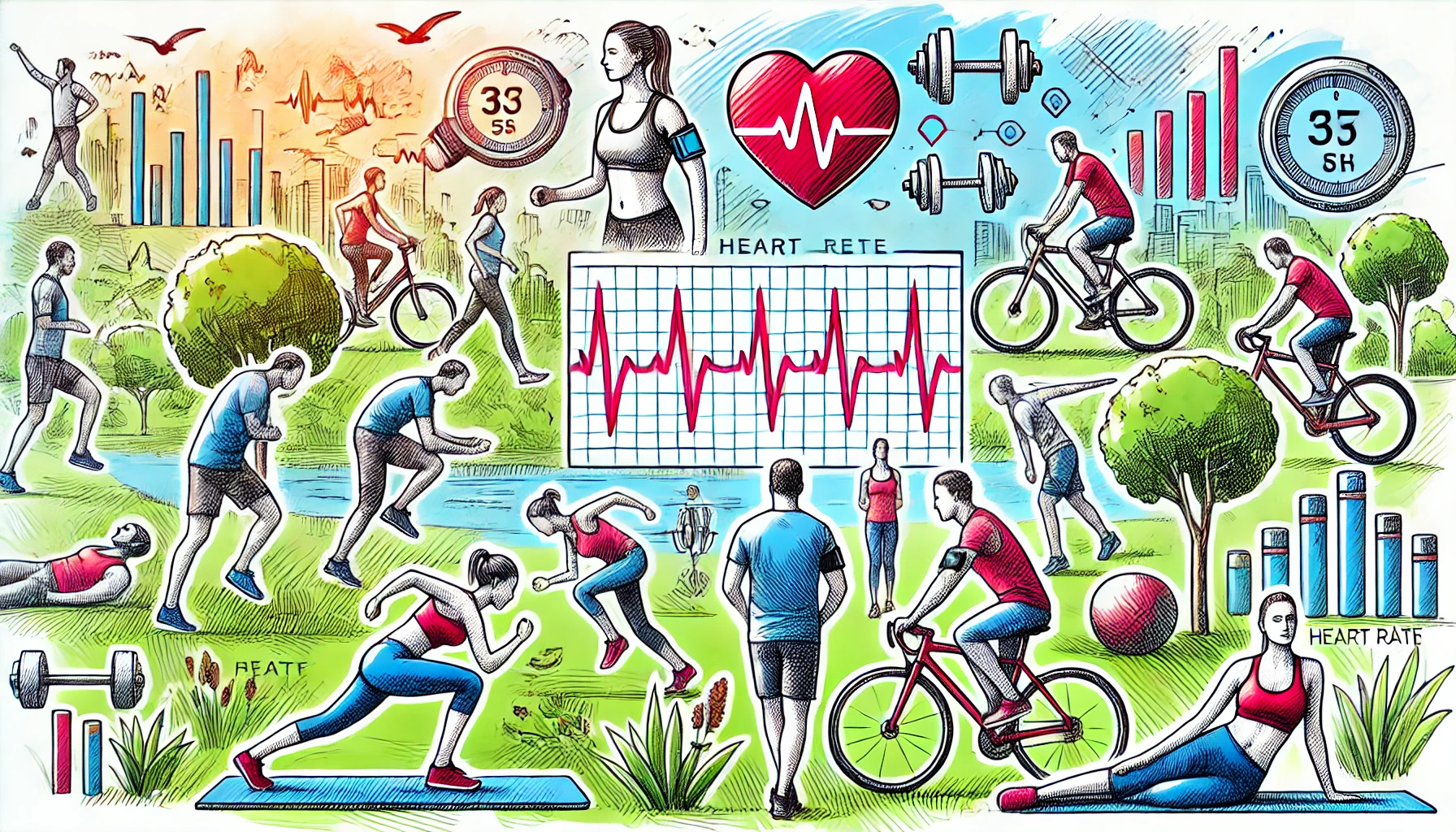
Tracking your heart rate during exercise can help optimize your workouts, improve cardiovascular fitness, and achieve your fitness goals. Different types of exercise affect your heart rate in various ways, and understanding how to monitor and interpret your heart rate can enhance your training effectiveness. This guide explores how to track your heart rate during different types of exercise, the benefits of heart rate monitoring, and practical tips for accurate tracking.
Why Track Your Heart Rate?
- Optimize Intensity: Ensures you are exercising within your target heart rate zones for maximum benefits.
- Monitor Progress: Tracks improvements in cardiovascular fitness over time.
- Prevent Overtraining: Helps avoid overexertion by keeping your heart rate within safe limits.
- Personalized Training: Tailors your workouts to your fitness level and goals.
- Motivation: Provides real-time feedback and motivation during workouts.
Tools for Heart Rate Monitoring
- Chest Straps: Provide accurate heart rate readings through electrocardiogram (ECG) sensors.
- Wrist-Based Monitors: Use optical sensors to measure heart rate from the wrist, available in smartwatches and fitness trackers.
- Fitness Apps: Smartphone apps that sync with heart rate monitors to track and analyze data.
- Integrated Equipment: Many gym machines have built-in heart rate monitors.
Heart Rate Zones
- Zone 1: Very Light (50-60% of Maximum Heart Rate)
- Warm-up, cool-down, recovery
- Zone 2: Light (60-70% of Maximum Heart Rate)
- Fat burning, building aerobic base
- Zone 3: Moderate (70-80% of Maximum Heart Rate)
- Improving cardiovascular fitness
- Zone 4: Hard (80-90% of Maximum Heart Rate)
- Enhancing anaerobic capacity, speed
- Zone 5: Maximum (90-100% of Maximum Heart Rate)
- Peak performance, high-intensity training
Calculating Your Maximum Heart Rate (MHR)
- Formula: 220 – age
- Example: For a 30-year-old, MHR = 220 – 30 = 190 bpm
Tracking Heart Rate During Different Exercises
1. Cardio Workouts (Running, Cycling, Swimming)
- Aim: Improve cardiovascular fitness and endurance.
- How to Track:
- Use a chest strap or wrist-based heart rate monitor.
- Check your heart rate periodically to stay within your target zones.
- For running and cycling, maintain a steady pace in Zone 2-3.
- For swimming, use waterproof heart rate monitors and aim for Zone 2-4 depending on your workout intensity.
2. High-Intensity Interval Training (HIIT)
- Aim: Improve anaerobic capacity, burn fat, increase endurance.
- How to Track:
- Use a chest strap for accurate readings during high-intensity bursts.
- Alternate between high-intensity intervals (Zone 4-5) and rest periods (Zone 1-2).
- Monitor your recovery heart rate to gauge fitness improvements.
3. Strength Training
- Aim: Build muscle, improve strength.
- How to Track:
- Use a wrist-based heart rate monitor for convenience.
- Track your heart rate during sets to ensure you’re reaching your desired intensity (usually Zone 2-3).
- Monitor your heart rate during rest periods to ensure adequate recovery.
4. Yoga and Pilates
- Aim: Improve flexibility, core strength, and mental focus.
- How to Track:
- Use a wrist-based heart rate monitor for comfort.
- Track your heart rate to ensure it stays in Zone 1-2, indicating a calm, steady pace.
- Use heart rate data to focus on breathing and relaxation techniques.
5. Sports and Group Fitness Classes
- Aim: Enhance overall fitness, enjoy social interaction.
- How to Track:
- Use a chest strap or wrist-based monitor.
- Track your heart rate during different phases of the activity to stay within your target zones.
- For sports like basketball or soccer, expect frequent shifts between Zones 3-5.
- For group classes like Zumba or spin, aim for Zones 2-4 depending on the class intensity.
Tips for Accurate Heart Rate Tracking
- Proper Fit: Ensure your heart rate monitor fits snugly and correctly according to the manufacturer’s instructions.
- Warm-Up: Start with a proper warm-up to gradually increase your heart rate.
- Consistent Tracking: Track your heart rate regularly to understand your baseline and improvements.
- Stay Hydrated: Dehydration can affect heart rate readings, so drink plenty of water.
- Avoid Stimulants: Caffeine and other stimulants can elevate heart rate, affecting accuracy.
- Check Battery Life: Ensure your device is charged or has fresh batteries to avoid interruptions.
Interpreting Your Heart Rate Data
- Resting Heart Rate (RHR): Lower RHR indicates better cardiovascular fitness. Track your RHR over time to monitor improvements.
- Recovery Heart Rate: How quickly your heart rate returns to normal after exercise indicates fitness levels. Faster recovery is a sign of improved fitness.
- Training Zones: Staying within the appropriate zones during workouts ensures optimal benefits and prevents overtraining.
- Trends: Look for trends in your heart rate data to adjust your training plan and set new fitness goals.
Conclusion
Tracking your heart rate during different types of exercise is essential for optimizing your workouts and improving cardiovascular fitness. By using the right tools and understanding how to interpret heart rate data, you can tailor your exercise intensity to meet your fitness goals, prevent overtraining, and monitor progress effectively. Whether you are running, lifting weights, or practicing yoga, heart rate monitoring can enhance your training and contribute to better overall health.