
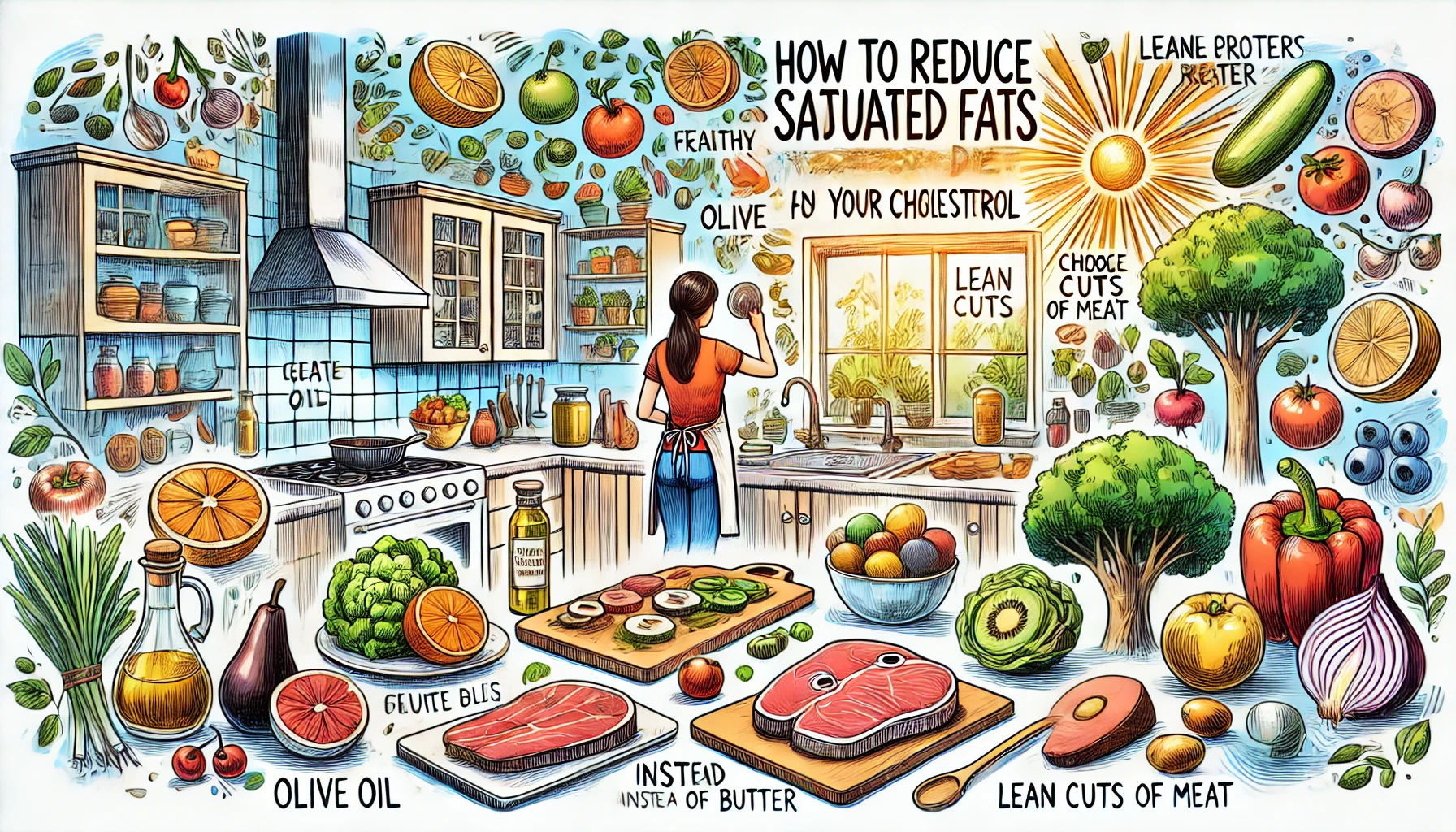
Reducing saturated fats in your diet is a key step in managing cholesterol levels and improving heart health. Saturated fats, found primarily in animal products and some plant oils, can raise bad cholesterol (LDL) and increase the risk of heart disease and stroke. By making informed dietary choices, you can effectively lower your intake of saturated fats and support better cardiovascular health.
In this blog, we will explore how to reduce saturated fats in your diet for better cholesterol. We will cover ten main points, each providing practical tips and insights on making healthier food choices. By following these guidelines, you can take proactive steps to improve your cholesterol levels and overall well-being.
1. Choose Lean Cuts of Meat
- Lean Options: Opt for lean cuts of meat such as chicken breast, turkey, and lean cuts of beef or pork (like tenderloin or sirloin).
- Trimming Fat: Trim visible fat from meats before cooking to reduce saturated fat content.
- Portion Control: Keep portion sizes in check—3-4 ounces per serving is sufficient.
- Cooking Methods: Use healthier cooking methods like grilling, baking, broiling, or steaming instead of frying.
- Processed Meats: Avoid processed meats like sausages, hot dogs, and bacon, which are high in saturated fats.
2. Substitute with Plant-Based Proteins
- Legumes and Beans: Incorporate beans, lentils, chickpeas, and peas into your diet as protein sources.
- Soy Products: Use soy products like tofu and tempeh as meat substitutes in various dishes.
- Nuts and Seeds: Snack on nuts and seeds or add them to salads and yogurts for protein and healthy fats.
- Whole Grains: Include whole grains like quinoa and farro, which provide protein and fiber.
- Variety: Aim to include plant-based proteins in at least a few meals each week to reduce meat consumption.
3. Choose Low-Fat or Fat-Free Dairy
- Milk Options: Switch to low-fat or fat-free milk instead of whole milk.
- Yogurt and Cheese: Choose low-fat or fat-free versions of yogurt and cheese.
- Cooking with Dairy: Use low-fat or fat-free dairy products in cooking and baking.
- Calcium Intake: Ensure you’re still getting enough calcium and vitamin D from your dairy choices.
- Plant-Based Alternatives: Consider plant-based dairy alternatives like almond milk, soy milk, or oat milk, which are often lower in saturated fats.
4. Use Healthy Cooking Oils
- Healthy Fats: Replace butter, lard, and coconut oil with healthier oils like olive oil, canola oil, or avocado oil.
- Moderation: Use oils sparingly to avoid adding excess calories.
- Flavor Enhancers: Enhance flavor with herbs, spices, lemon juice, and vinegar instead of relying on high-fat dressings or sauces.
- Cooking Methods: Use oils for sautéing, roasting, and grilling, but avoid deep frying.
- Storage: Store oils in a cool, dark place to preserve their quality and nutritional benefits.
5. Increase Intake of Fruits and Vegetables
- Daily Servings: Aim for at least 5 servings of fruits and vegetables each day to provide fiber and essential nutrients.
- Variety: Include a variety of colors and types to ensure a range of vitamins and minerals.
- Snacks: Choose fruits and vegetables as snacks instead of high-fat, processed options.
- Meals: Fill half your plate with fruits and vegetables at each meal.
- Preparation: Enjoy them raw, steamed, roasted, or grilled, and avoid adding butter or creamy sauces.
6. Opt for Whole Grains Over Refined Grains
- Fiber-Rich Foods: Choose whole grains like brown rice, quinoa, barley, and whole wheat products instead of refined grains.
- Breakfast Options: Start your day with whole grain cereals or oatmeal.
- Bread and Pasta: Switch to whole grain bread and pasta for added fiber and nutrients.
- Balanced Diet: Incorporate whole grains into meals to support overall health and cholesterol management.
- Portion Control: Be mindful of portion sizes to maintain a balanced diet.
7. Limit High-Fat Processed Foods
- Avoid Trans Fats: Eliminate trans fats from your diet by avoiding foods with hydrogenated oils, such as margarine and some baked goods.
- Processed Snacks: Reduce consumption of high-fat snacks like chips, cookies, and pastries.
- Label Reading: Check nutrition labels to identify and avoid foods high in saturated fats and trans fats.
- Healthier Alternatives: Choose healthier snack options like fresh fruit, nuts, whole grain crackers, or yogurt.
- Homemade Snacks: Prepare snacks at home to control the ingredients and reduce unhealthy fats.
8. Cook at Home More Often
- Control Ingredients: Cooking at home allows you to control the ingredients and reduce saturated fat intake.
- Healthy Recipes: Experiment with heart-healthy recipes that use lean proteins, whole grains, and plenty of fruits and vegetables.
- Batch Cooking: Prepare meals in batches and freeze portions for quick, healthy meals during the week.
- Healthy Substitutes: Use healthy substitutes in recipes, such as applesauce or mashed bananas instead of butter in baking.
- Meal Planning: Plan your meals ahead of time to ensure you have all the ingredients for healthy dishes.
9. Mindful Eating When Dining Out
- Menu Choices: Choose dishes that feature lean proteins, whole grains, and vegetables.
- Cooking Methods: Opt for grilled, baked, steamed, or roasted options instead of fried foods.
- Sauces and Dressings: Request sauces and dressings on the side, and choose vinaigrettes over creamy dressings.
- Portion Sizes: Be mindful of portion sizes and consider sharing a dish or taking half home.
- Healthy Starters: Start with a salad or vegetable-based appetizer to fill up on healthy foods first.
10. Regular Monitoring and Professional Guidance
- Regular Check-Ups: Schedule regular check-ups with your healthcare provider to monitor your cholesterol levels and overall health.
- Professional Advice: Work with a dietitian or nutritionist to develop a personalized plan for reducing saturated fats and managing cholesterol.
- Tracking Progress: Keep a food diary to track your intake of saturated fats and make necessary adjustments.
- Continuous Learning: Stay informed about new research and dietary guidelines for cholesterol management.
- Support Systems: Join support groups or online communities for additional motivation and advice.
Reducing saturated fats in your diet is a key strategy for improving cholesterol levels and supporting heart health. By making informed dietary choices and incorporating healthier alternatives, you can effectively manage your cholesterol and enjoy a healthier lifestyle. Combine these dietary changes with regular physical activity and other healthy habits for optimal results.