
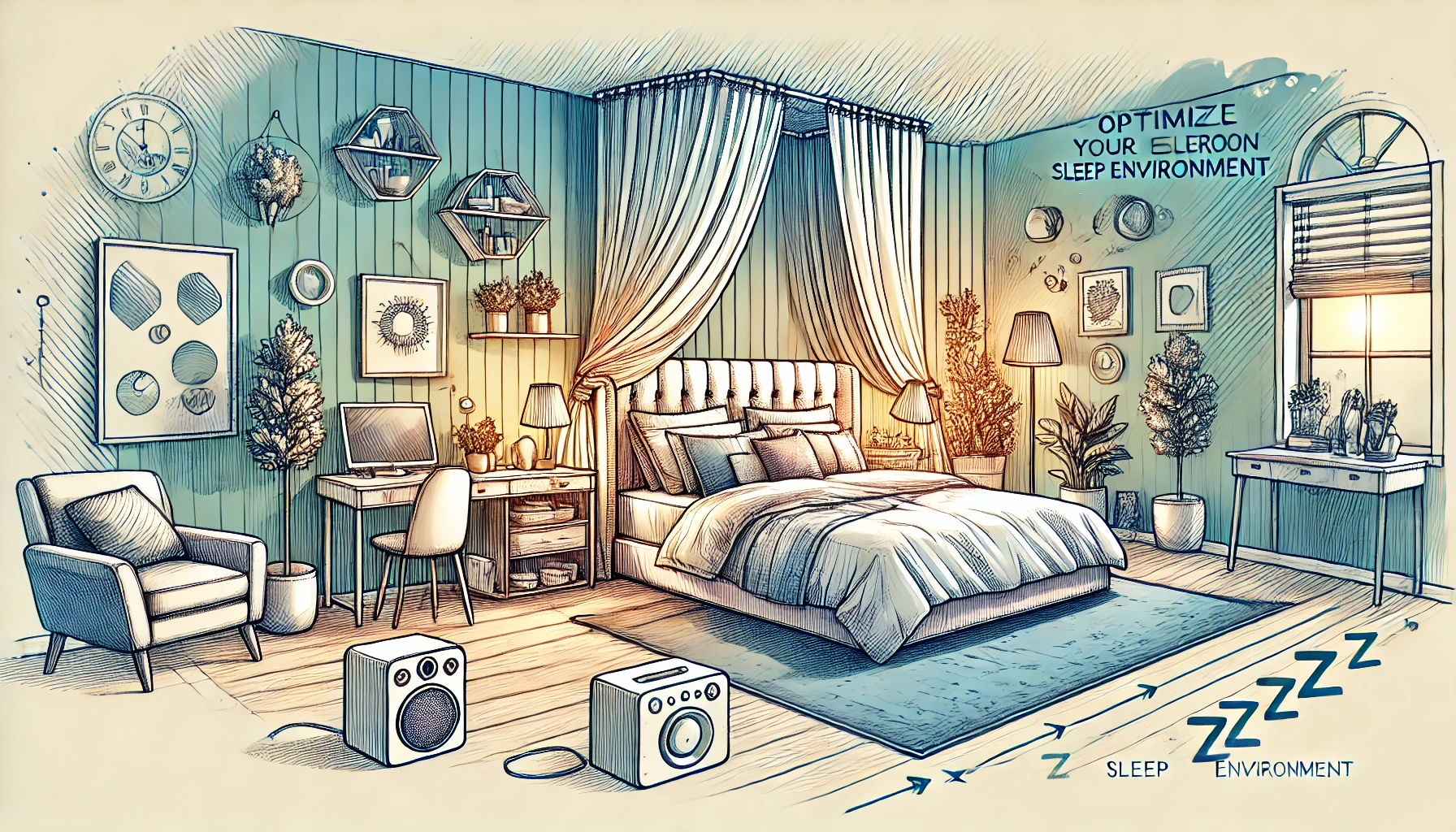
Creating an optimal sleep environment is crucial for improving sleep quality and overall well-being. A well-designed sleep space can help you fall asleep faster, stay asleep longer, and wake up feeling more refreshed. This blog will explore practical steps to optimize your sleep environment, providing insights and tips to help you achieve a restful and rejuvenating night’s sleep.
1. Control Lighting
- Darkness: Ensure your bedroom is dark by using blackout curtains or shades to block out external light.
- Dimmable Lights: Use dimmable lights in your bedroom to reduce brightness in the evening, signaling to your body that it’s time to wind down.
- Nightlights: If you need a nightlight, choose one with a red or amber hue, as these colors are less likely to interfere with sleep.
- Electronic Devices: Minimize the use of electronic devices that emit blue light, or use blue light filters in the evening.
- Natural Light: Allow natural light to enter your room in the morning to help regulate your circadian rhythm.
2. Regulate Temperature
- Ideal Temperature: Keep your bedroom cool, ideally between 60-67°F (15-19°C), to facilitate better sleep.
- Bedding: Use breathable, moisture-wicking bedding to help regulate body temperature.
- Mattress and Pillow: Choose a mattress and pillows that provide comfort and support, and that help with temperature regulation.
- Fans and Heaters: Use fans, air conditioning, or heaters as needed to maintain a comfortable room temperature.
- Ventilation: Ensure your bedroom is well-ventilated to keep the air fresh and prevent overheating.
3. Minimize Noise
- White Noise Machines: Use a white noise machine or fan to drown out disruptive sounds and create a consistent auditory environment.
- Earplugs: Wear earplugs if you are sensitive to noise or if your sleep environment is noisy.
- Soundproofing: Consider adding soundproofing elements like heavy curtains, carpets, or acoustic panels to reduce external noise.
- Quiet Hours: Establish quiet hours in your home during your sleep time to minimize disturbances.
- Calm Music: Play calming music or nature sounds at a low volume to help relax and mask background noise.
4. Choose Comfortable Bedding
- Mattress: Invest in a high-quality mattress that suits your sleep preferences and provides adequate support.
- Pillows: Select pillows that support your head and neck, and that align with your sleeping position.
- Sheets and Blankets: Use soft, breathable sheets and blankets that are comfortable and appropriate for the season.
- Cleanliness: Wash your bedding regularly to maintain a clean and hygienic sleep environment.
- Layering: Layer your bedding so you can easily adjust your comfort level throughout the night.
5. Optimize Your Bedroom Layout
- Clutter-Free: Keep your bedroom clutter-free to create a calm and serene atmosphere.
- Functional Furniture: Arrange furniture to create a functional and aesthetically pleasing layout that promotes relaxation.
- Bed Position: Position your bed in a way that feels comfortable and conducive to sleep, such as facing away from direct light sources.
- Decor: Use calming and neutral colors for your bedroom decor to create a soothing environment.
- Personal Touches: Add personal touches like photos, artwork, or plants to make your bedroom a pleasant and inviting space.
6. Limit Electronics
- Device-Free Zone: Keep electronic devices like TVs, computers, and smartphones out of the bedroom to reduce distractions and blue light exposure.
- Alarm Clocks: Use a traditional alarm clock instead of your phone to avoid the temptation of late-night screen time.
- Charging Stations: Set up a charging station outside the bedroom to keep devices away from your sleep space.
- Night Mode: If you must have electronics in the bedroom, use night mode or blue light filters in the evening.
- Entertainment Alternatives: Opt for non-electronic forms of relaxation before bed, such as reading a book or practicing mindfulness.
7. Incorporate Aromatherapy
- Essential Oils: Use essential oils known for their calming properties, such as lavender, chamomile, and cedarwood.
- Diffuser: Place an essential oil diffuser in your bedroom to disperse calming scents throughout the night.
- Pillow Spray: Use a pillow spray with soothing essential oils to enhance your sleep environment.
- Bath Soak: Take a warm bath with essential oils before bed to help relax and prepare for sleep.
- Aromatherapy Candles: Light aromatherapy candles in the evening to create a calming atmosphere.
8. Maintain Cleanliness
- Dust and Allergens: Keep your bedroom free of dust and allergens by cleaning regularly and using air purifiers.
- Pets: Consider keeping pets out of the bedroom if they disrupt your sleep or contribute to allergies.
- Fresh Air: Open windows periodically to let in fresh air and reduce stuffiness.
- Launder Bedding: Wash sheets, pillowcases, and blankets regularly to maintain a clean sleep environment.
- Declutter: Regularly declutter and organize your bedroom to create a serene and peaceful space.
9. Establish a Relaxing Bedtime Routine
- Consistent Schedule: Go to bed and wake up at the same time every day to regulate your internal clock.
- Relaxation Techniques: Incorporate relaxation techniques such as deep breathing, meditation, or progressive muscle relaxation into your bedtime routine.
- Gentle Activities: Engage in gentle activities like reading, stretching, or listening to calming music before bed.
- Aromatherapy: Use aromatherapy to enhance relaxation and signal to your body that it’s time to sleep.
- Limit Stimulants: Avoid caffeine, nicotine, and heavy meals close to bedtime to prevent sleep disruption.
10. Personalize Your Sleep Environment
- Preferences: Adjust your sleep environment based on your personal preferences and needs.
- Trial and Error: Experiment with different elements like temperature, lighting, and bedding to find what works best for you.
- Feedback: Pay attention to how changes in your environment affect your sleep quality and adjust accordingly.
- Comfort Items: Include comfort items like weighted blankets or eye masks if they help you sleep better.
- Partner Considerations: If you share your bed, coordinate with your partner to create a sleep environment that works for both of you.
Conclusion
Optimizing your sleep environment is essential for enhancing sleep quality and overall well-being. By controlling lighting, regulating temperature, minimizing noise, choosing comfortable bedding, and limiting electronics, you can create a space conducive to restful sleep. Incorporating aromatherapy, maintaining cleanliness, establishing a relaxing bedtime routine, and personalizing your sleep environment further enhance your ability to achieve a rejuvenating night’s rest. Prioritizing these steps will help you fall asleep faster, stay asleep longer, and wake up feeling refreshed and ready to take on the day.