
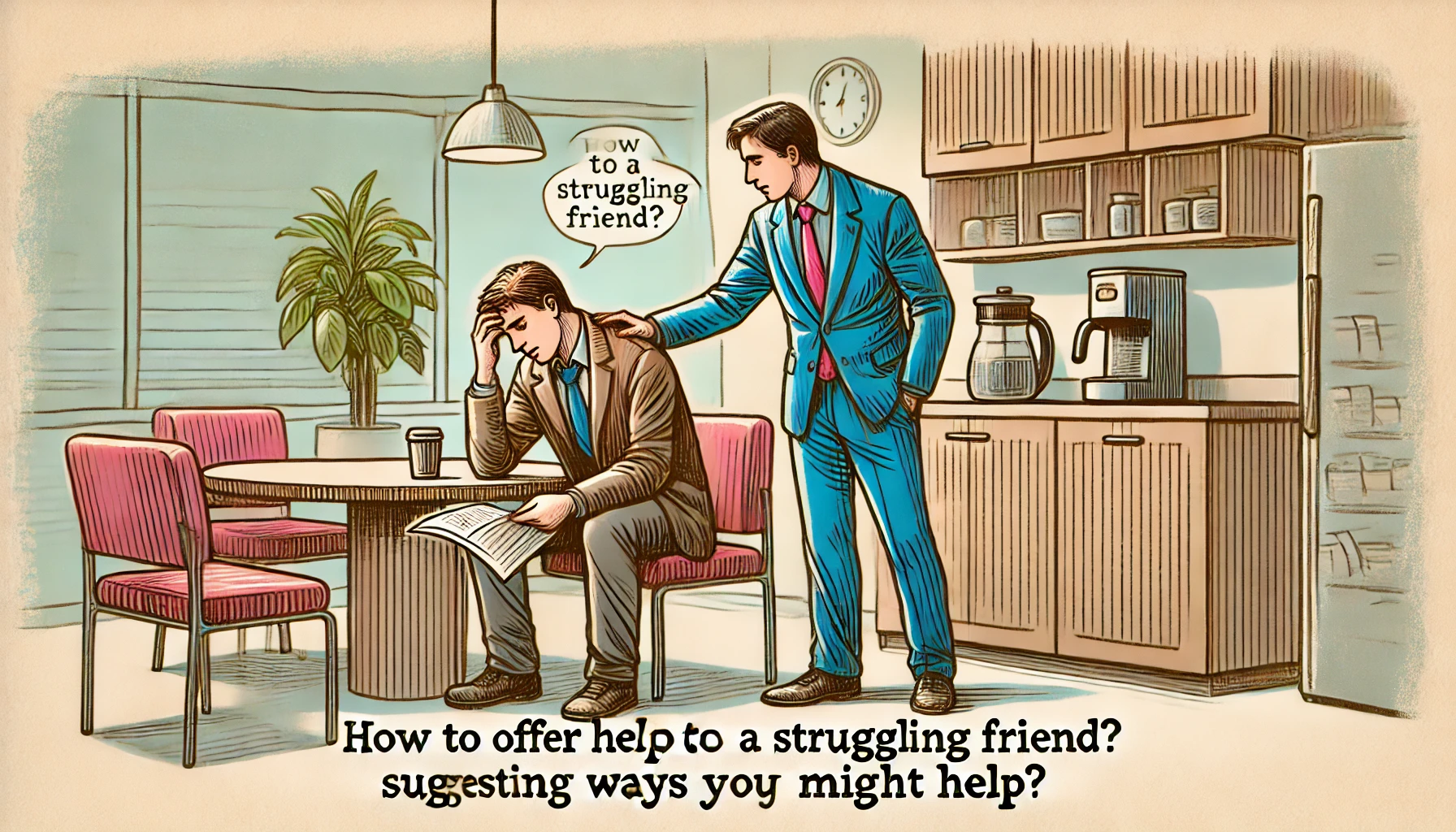
Supporting a friend at work who is struggling can be both rewarding and challenging. On one hand, offering help can strengthen your friendship and make a significant difference in their well-being. On the other hand, it’s important to navigate this support carefully to ensure that it’s both effective and appropriate in a professional setting. Whether your friend is dealing with personal issues, work-related stress, or a combination of both, your support can be crucial. However, offering help requires a delicate balance between empathy, respect for boundaries, and maintaining professionalism. This blog will explore how to offer help to a struggling friend at work, providing practical strategies to ensure your support is both meaningful and considerate.
1. Start with Active Listening
- Before offering any advice or solutions, make sure to fully understand your friend’s situation by listening carefully to what they have to say.
- Focus on being present during the conversation, showing that you are genuinely interested in their well-being.
- Avoid interrupting or making assumptions about their problems; instead, encourage them to express their thoughts and feelings at their own pace.
- Use reflective listening techniques, such as summarizing their concerns, to show that you understand and are engaged in their situation.
- Allow them to vent without immediately offering solutions, as sometimes the act of talking about their struggles can be therapeutic in itself.
2. Offer Help, Don’t Impose It
- Gently offer your assistance rather than imposing it, respecting their autonomy and choice in how they want to handle their situation.
- Phrase your offer in a way that gives them control, such as, “I’m here if you need anything” or “Would it help if I assisted with…?”
- Be specific in your offer to help, suggesting concrete actions you can take, like covering a meeting, helping with a project, or just being there to talk.
- Respect their decision if they decline your help, understanding that they may prefer to manage certain aspects on their own.
- Reassure them that your offer is open-ended and that they can reach out at any time if they change their mind.
3. Maintain Professional Boundaries
- While offering help, it’s important to keep professional boundaries in mind to ensure that your support doesn’t interfere with your work responsibilities or theirs.
- Avoid letting your offer of help lead to favoritism or perceptions of bias within the team, which could create workplace tensions.
- Ensure that personal conversations don’t disrupt your or your friend’s productivity; schedule time to talk during breaks or after work if needed.
- Keep your relationship balanced, ensuring that your friendship doesn’t become solely focused on their difficulties or on providing support.
- Be mindful of workplace policies and norms, making sure that your actions are in line with company expectations regarding personal interactions at work.
4. Encourage Them to Take Breaks
- Suggest taking regular breaks throughout the day to help them decompress and manage stress more effectively.
- Offer to take a walk together or grab a coffee during breaks, providing a change of scenery and an opportunity to relax.
- Encourage them to step away from their desk and engage in activities that they find calming or enjoyable, even if only for a few minutes.
- If they seem particularly overwhelmed, suggest taking a mental health day to recharge, reassuring them that it’s okay to prioritize their well-being.
- Remind them that self-care is important, especially during stressful periods, and that taking time for themselves can improve their overall performance and mental health.
5. Suggest Professional Resources
- If your friend’s struggles seem to go beyond what you can help with, gently suggest seeking professional resources, such as counseling or employee assistance programs (EAPs).
- Offer to help them find these resources or accompany them if they need support in reaching out for professional help.
- Normalize the idea of seeking professional support by discussing the benefits of talking to a counselor or using available workplace resources.
- Reassure them that seeking help is a sign of strength and self-awareness, not a weakness, and that many people benefit from professional guidance.
- Provide information discreetly, respecting their privacy and letting them decide if and when to seek further help.
6. Help with Workload Management
- If your friend is struggling with a heavy workload, offer to help them prioritize tasks or assist with projects where possible.
- Suggest breaking down large tasks into smaller, more manageable steps to make the workload feel less overwhelming.
- Offer to collaborate on tasks, sharing the burden and helping them to meet deadlines without feeling overstressed.
- Encourage them to delegate tasks where appropriate, reminding them that it’s okay to ask for help from the team when needed.
- If they’re unsure how to manage their workload, offer to brainstorm solutions together, helping them find ways to work more efficiently.
7. Respect Their Need for Space
- Understand that your friend might need space to process their struggles on their own and may not always be ready to talk or accept help.
- Avoid pushing them to share more than they’re comfortable with or to accept help if they’re not ready.
- Give them the time and space they need, checking in periodically without overwhelming them with constant offers of support.
- Let them know you’re available whenever they need you, but don’t take it personally if they prefer to handle things independently.
- Be supportive from a distance if necessary, offering subtle signs of support, such as leaving a kind note or sending a supportive message.
8. Encourage Positive Coping Mechanisms
- Suggest healthy ways to cope with stress, such as exercise, meditation, or engaging in hobbies that they enjoy.
- Offer to join them in these activities, making it a shared experience that can help both of you unwind and relax.
- Encourage them to maintain a balanced work-life schedule, ensuring that they make time for activities that bring them joy and relaxation.
- Remind them of the importance of taking care of their mental and physical health, especially during challenging times.
- Suggest they seek out support groups or online communities where they can connect with others who are going through similar experiences.
9. Check In Regularly, But Don’t Hover
- Periodically check in with your friend to see how they’re doing, offering your support without being intrusive.
- Use open-ended questions like, “How have you been feeling?” to give them the opportunity to share if they wish to.
- Be sensitive to their responses, and if they seem reluctant to talk, respect their boundaries and avoid pressing them for details.
- Let them know you’re there for them whenever they’re ready to talk, keeping the door open for future conversations.
- Balance your check-ins with professional interactions, ensuring that your friendship remains supportive without becoming overly focused on their struggles.
10. Celebrate Small Victories
- Acknowledge and celebrate any positive steps or achievements your friend makes, no matter how small, to boost their morale and confidence.
- Offer words of encouragement and praise for their efforts, reinforcing that they’re making progress despite the challenges they’re facing.
- Remind them of their strengths and past successes, helping them stay motivated and focused on their goals.
- Celebrate milestones together, whether it’s completing a project, handling a difficult situation, or simply getting through a tough day.
- Use these moments to reinforce your belief in their abilities and to remind them that they’re not alone in their journey.
Offering help to a struggling friend at work is an important way to show that you care and value their well-being. By listening actively, respecting their boundaries, and maintaining professionalism, you can provide meaningful support without overstepping. Whether it’s through offering practical help, encouraging breaks, or simply being there to listen, your support can make a significant difference in their ability to cope with their challenges.
Conclusion
Supporting a friend at work who is struggling requires empathy, patience, and a clear understanding of boundaries. By being an active listener, offering help without imposing, and maintaining professional boundaries, you can provide the support they need in a way that strengthens your friendship and contributes to a positive workplace environment. Remember, it’s not just about offering solutions, but about being there in a way that respects their needs and autonomy. With the right approach, your support can help your friend navigate their challenges and emerge stronger on the other side.