
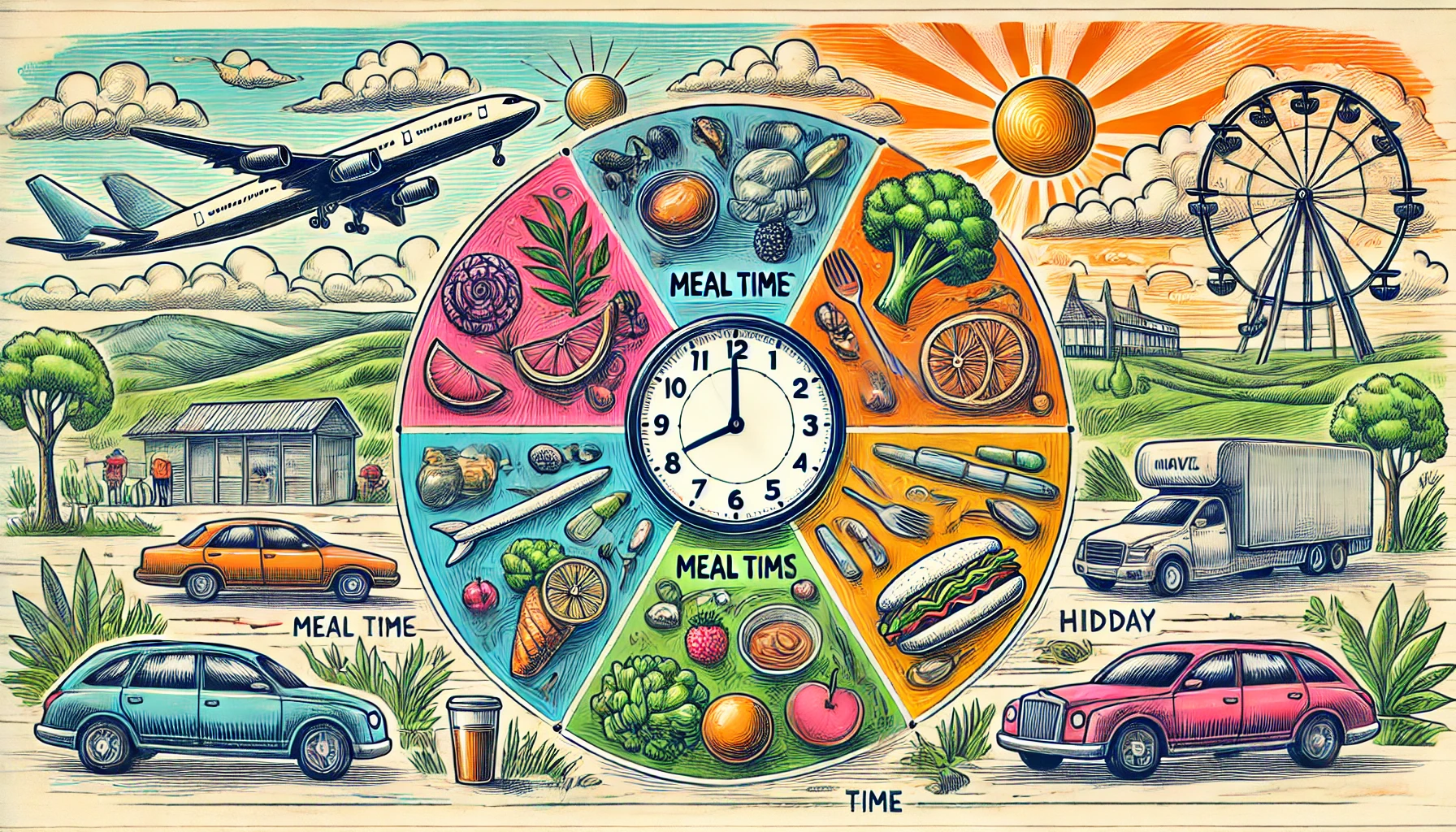
Maintaining consistent meal timing while traveling can be challenging, but with some planning and mindfulness, it’s possible to stay on track with your nutrition and support your overall health. Consistent meal timing helps regulate your body’s internal clock, manage hunger levels, and maintain energy throughout the day. This blog provides practical tips for keeping your meal schedule consistent while on the go.
Traveling often disrupts daily routines, including meal times, which can lead to irregular eating patterns, unhealthy food choices, and digestive issues. By preparing in advance and making thoughtful choices, you can ensure that your travel experience doesn’t compromise your nutrition goals.
1. Plan Ahead
- Research your destination: Look for restaurants, grocery stores, and healthy food options near your accommodation.
- Pack snacks: Bring portable, nutritious snacks like nuts, seeds, protein bars, and dried fruit to avoid reliance on convenience foods.
- Meal prep: If possible, prepare some meals in advance that you can take with you or have ready for your first day of travel.
- Travel-friendly containers: Use containers that are easy to carry and can keep food fresh during your journey.
- Stay informed: Check the food options available at airports, train stations, or along your travel route to plan meal stops.
2. Stick to a Schedule
- Set meal times: Try to eat at the same times each day, even while traveling, to maintain a sense of routine.
- Alarm reminders: Use your phone’s alarm or reminder function to alert you when it’s time to eat.
- Adjust for time zones: Gradually shift your meal times to align with the time zone of your destination to help your body adjust.
- Consistent intervals: Aim for regular intervals between meals and snacks to keep your energy levels stable.
- Flexibility: Be prepared to adjust slightly based on travel delays or unexpected changes, but strive to return to your schedule as soon as possible.
3. Choose Balanced Meals
- Nutrient-rich foods: Focus on meals that include a balance of protein, healthy fats, and complex carbohydrates.
- Portion control: Be mindful of portion sizes to avoid overeating, especially if you’re less active while traveling.
- Hydration: Drink plenty of water throughout the day to stay hydrated, which supports digestion and overall health.
- Healthy options: When dining out, opt for healthier menu choices like salads, grilled proteins, and whole grains.
- Avoid fast food: Steer clear of fast food and highly processed snacks, which can lead to energy crashes and digestive issues.
4. Manage Eating on the Go
- Portable meals: Choose foods that are easy to eat on the go, such as sandwiches, wraps, and salads in containers.
- Healthy snacks: Keep a supply of healthy snacks in your bag to avoid unhealthy temptations.
- Local cuisine: Enjoy local foods, but aim to make balanced choices that fit into your meal timing schedule.
- Mindful eating: Take time to enjoy your meals, even if you’re eating quickly, to aid digestion and prevent overeating.
- Avoid skipping meals: Try not to skip meals, as this can lead to overeating later and disrupt your meal timing routine.
5. Utilize Technology
- Apps: Use nutrition and meal planning apps to find healthy dining options and keep track of your meals.
- Fitness trackers: Some fitness trackers have features to remind you of meal times and monitor your dietary habits.
- Online resources: Research online for healthy eating tips specific to your travel destination.
- Navigation: Use map apps to locate nearby grocery stores, health food stores, and restaurants with healthy options.
- Digital reminders: Set reminders on your phone or smartwatch to prompt you when it’s time to eat.
6. Hydration Strategies
- Carry a water bottle: Bring a refillable water bottle to ensure you stay hydrated throughout your travels.
- Hydrating foods: Include hydrating foods like fruits and vegetables in your diet to help maintain hydration.
- Limit caffeine: Reduce caffeine intake, especially if traveling across time zones, to avoid dehydration and sleep disruption.
- Electrolytes: Consider electrolyte-rich drinks if you’re engaging in physical activities or if you’re in a hot climate.
- Regular intake: Sip water regularly rather than drinking large amounts all at once to stay properly hydrated.
7. Adjust to Time Zones
- Gradual adjustment: Start adjusting your meal times a few days before you travel to align with your destination’s time zone.
- First meal: Upon arrival, eat a meal that aligns with the local time, regardless of whether you’re hungry, to help your body adjust.
- Light meals: Choose lighter meals during the adjustment period to avoid digestive discomfort.
- Sun exposure: Spend time outdoors in natural light to help regulate your circadian rhythm and support your new meal schedule.
- Sleep and meals: Coordinate meal times with your sleep schedule to reinforce your body’s internal clock.
8. Mindful Eating Practices
- Listen to your body: Pay attention to hunger and fullness cues to avoid overeating or undereating.
- Savor your food: Take time to enjoy each bite, even when on the go, to aid digestion and satisfaction.
- Avoid distractions: Try to minimize distractions while eating to focus on your meal and recognize when you’re full.
- Healthy choices: Make mindful decisions about what and when to eat, keeping your health goals in mind.
- Balanced approach: Allow yourself to enjoy local foods and treats in moderation while maintaining overall balance.
9. Plan for Physical Activity
- Stay active: Incorporate physical activity into your travel plans to support digestion and overall health.
- Walking: Opt for walking tours or explore your destination on foot to increase your activity levels.
- Exercise routines: Maintain your regular exercise routine as much as possible, even if it means modifying it to fit your travel schedule.
- Hotel facilities: Use hotel gyms or fitness centers to stay active.
- Stretching: Incorporate stretching exercises, especially after long periods of sitting during travel, to improve circulation and digestion.
10. Manage Stress and Sleep
- Stress reduction: Practice stress-reduction techniques like deep breathing, meditation, or yoga to maintain a healthy mindset.
- Sleep schedule: Try to maintain a regular sleep schedule, even when crossing time zones, to support overall health and well-being.
- Relaxation techniques: Use relaxation techniques to help you unwind and get quality sleep, which in turn supports healthy eating habits.
- Sleep environment: Create a sleep-friendly environment by bringing items like earplugs, an eye mask, or a travel pillow.
- Consistent routines: Keep your pre-sleep routine consistent to signal to your body that it’s time to wind down.
Sample Travel Meal Timing Schedule
6:30 AM: Wake up and drink a glass of water
7:00 AM: Breakfast – Greek yogurt with granola and berries
10:00 AM: Mid-morning snack – A handful of almonds and an apple
12:30 PM: Lunch – Grilled chicken wrap with mixed greens and avocado
3:30 PM: Afternoon snack – Carrot sticks with hummus
6:30 PM: Dinner – Baked salmon with quinoa and steamed vegetables
8:30 PM: Herbal tea or water
10:00 PM: Bedtime
In conclusion, maintaining consistent meal timing while traveling requires planning, flexibility, and mindfulness. By preparing in advance, choosing balanced meals, staying hydrated, and adjusting to time zones, you can keep your nutrition on track and support your overall health. Utilize technology, practice mindful eating, and incorporate physical activity to enhance your travel experience without compromising your dietary goals. Implementing these strategies will help you maintain a healthy routine, even when you’re on the go.