
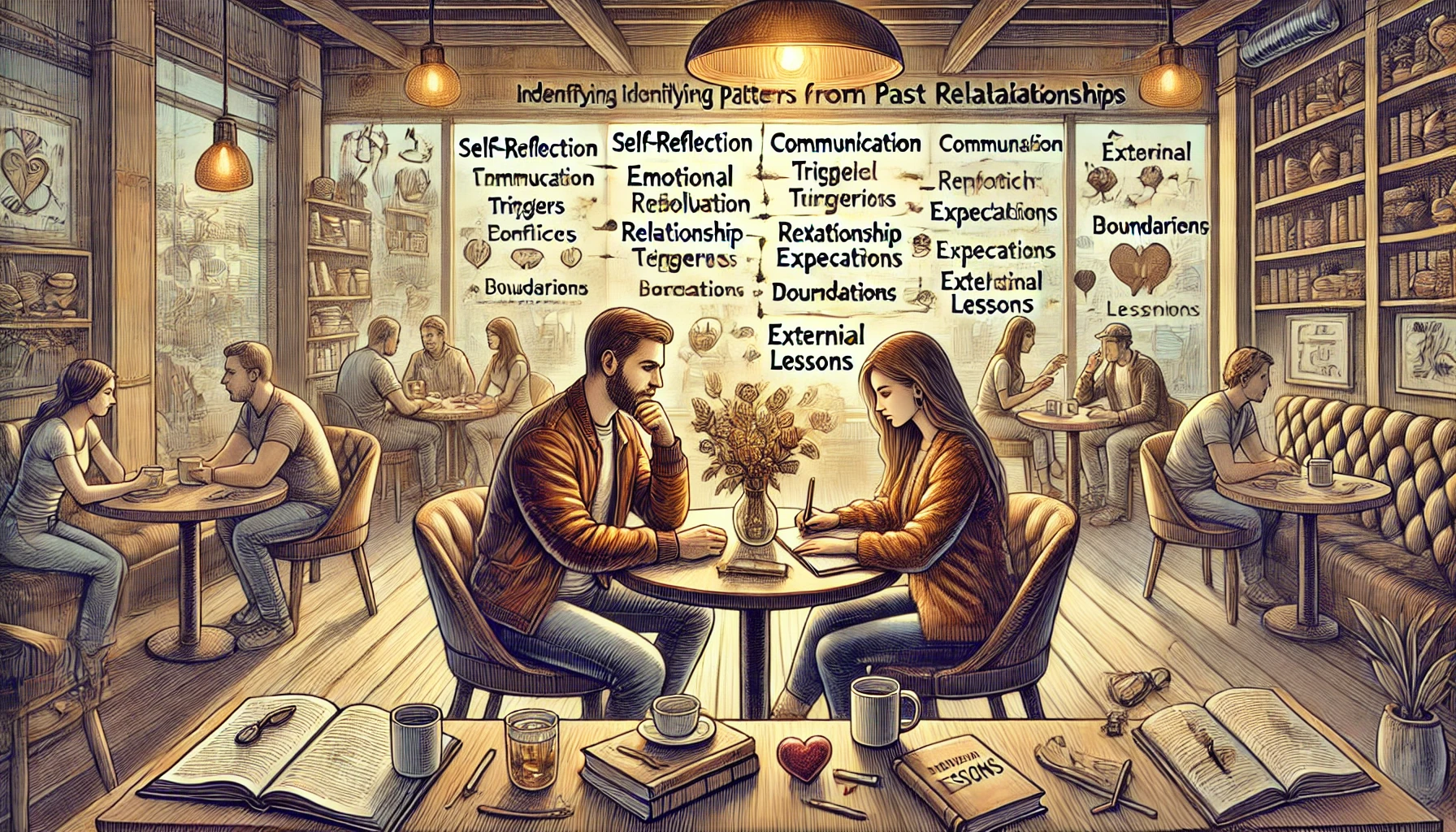
Identifying patterns from past relationships is crucial for personal growth and fostering healthier future connections. By reflecting on previous experiences, you can recognize recurring behaviors, understand underlying issues, and make conscious changes to improve your relationship dynamics. This blog will provide a detailed guide on how to identify patterns from past relationships and use these insights for personal development.
Recognizing patterns requires a combination of self-reflection, honest evaluation, and sometimes external perspectives. This process can help you understand your own behaviors and choices, as well as those of your partners, enabling you to break negative cycles and build more fulfilling relationships in the future.
1. Reflect on Past Relationships
- List Your Past Relationships: Start by listing all your significant past relationships. This includes romantic partners as well as close friendships or family dynamics if relevant.
- Note the Duration and Dynamics: Record how long each relationship lasted and note any significant dynamics or themes that were present.
- Recall Key Events: Think about major events or turning points in each relationship, both positive and negative.
- Identify Feelings: Reflect on the emotions you experienced throughout each relationship, particularly during conflicts or major changes.
- Highlight Repetitive Scenarios: Identify any scenarios or situations that seemed to repeat across different relationships.
2. Analyze Communication Styles
- Observe Communication Patterns: Reflect on how you and your partners communicated. Were there frequent misunderstandings or effective discussions?
- Identify Communication Breakdowns: Consider when and why communication broke down. Was it due to avoidance, aggression, or lack of clarity?
- Evaluate Listening Skills: Think about how well you listened to your partners and vice versa. Were you often interrupted or ignored?
- Assess Conflict Resolution: Reflect on how conflicts were handled. Did you resolve issues calmly or escalate them?
- Notice Non-Verbal Communication: Pay attention to non-verbal cues such as body language, facial expressions, and tone of voice.
3. Examine Emotional Triggers
- Identify Recurring Triggers: Note any emotional triggers that repeatedly caused stress or conflict in your relationships.
- Understand Your Reactions: Reflect on how you responded to these triggers. Did you become defensive, withdraw, or react aggressively?
- Recognize Partner Reactions: Consider how your partners reacted to these triggers and your responses.
- Explore Underlying Causes: Try to understand the deeper reasons behind these triggers. Are they related to past experiences or insecurities?
- Develop Coping Strategies: Think about healthier ways to cope with these triggers in the future.
4. Evaluate Role in Conflicts
- Acknowledge Your Role: Honestly assess your contribution to conflicts in past relationships.
- Recognize Patterns of Blame: Notice if you often blamed your partners or yourself for issues.
- Assess Conflict Escalation: Reflect on how conflicts escalated. Did you engage in yelling, silent treatment, or avoidance?
- Identify Resolution Attempts: Think about whether and how you attempted to resolve conflicts. Were your methods effective?
- Seek Constructive Alternatives: Consider alternative ways to handle conflicts that could lead to better outcomes.
5. Review Relationship Expectations
- List Your Expectations: Write down what you expected from your partners in past relationships.
- Assess Realism: Evaluate whether these expectations were realistic or if they placed undue pressure on the relationship.
- Identify Unmet Needs: Reflect on any needs that were consistently unmet and how they impacted the relationship.
- Consider Flexibility: Think about how flexible you were with your expectations and whether you allowed room for compromise.
- Adjust Future Expectations: Use these insights to set more balanced and realistic expectations for future relationships.
6. Reflect on Partner Choices
- Note Partner Qualities: List the qualities you were drawn to in each of your past partners.
- Identify Negative Traits: Recognize any negative traits that were common among your partners.
- Assess Compatibility: Consider whether your partners were truly compatible with you or if you overlooked significant differences.
- Understand Attraction Patterns: Reflect on why you were attracted to certain types of people. Are there underlying patterns in your choices?
- Make Conscious Choices: Use this understanding to make more conscious choices in future partners.
7. Recognize Boundary Issues
- Identify Boundary Violations: Reflect on instances where your boundaries were crossed or you crossed your partner’s boundaries.
- Assess Boundary Setting: Consider how well you set and enforced boundaries in past relationships.
- Understand Consequences: Think about the consequences of weak boundaries, such as resentment or codependency.
- Recognize Boundary Respect: Evaluate how much respect was shown for each other’s boundaries.
- Establish Firm Boundaries: Learn to set and maintain healthy boundaries in future relationships.
8. Seek External Perspectives
- Talk to Trusted Friends: Share your reflections with trusted friends or family members to gain their insights.
- Seek Professional Help: Consider therapy or counseling to help you understand your patterns and work through underlying issues.
- Join Support Groups: Participate in support groups where you can share experiences and learn from others.
- Read Relationship Books: Educate yourself on healthy relationship dynamics through books and articles.
- Reflect with a Mentor: If possible, discuss your reflections with a mentor or someone you respect.
9. Document and Review Insights
- Keep a Journal: Document your reflections and insights in a journal for easy reference.
- Create a Pattern Chart: Visualize your findings by creating a chart or diagram of recurring patterns.
- Review Regularly: Periodically review your journal and pattern chart to reinforce your understanding.
- Set Growth Goals: Use your insights to set specific goals for personal growth and relationship improvements.
- Celebrate Progress: Acknowledge and celebrate your progress in breaking negative patterns and building healthier relationships.
10. Apply Lessons to Future Relationships
- Be Mindful: Stay mindful of your patterns and consciously apply the lessons learned to future relationships.
- Communicate Openly: Practice open and honest communication from the start.
- Set Clear Boundaries: Establish and maintain healthy boundaries with new partners.
- Choose Wisely: Make deliberate choices when selecting future partners, based on compatibility and shared values.
- Stay Committed to Growth: Continually work on your personal growth and relationship skills.
Identifying patterns from past relationships is a vital step toward personal growth and building healthier future connections. By reflecting on your experiences, recognizing recurring behaviors, and making conscious changes, you can break negative cycles and foster more fulfilling relationships. Embrace this process as an opportunity to learn and grow, turning past challenges into valuable lessons for a better future.