
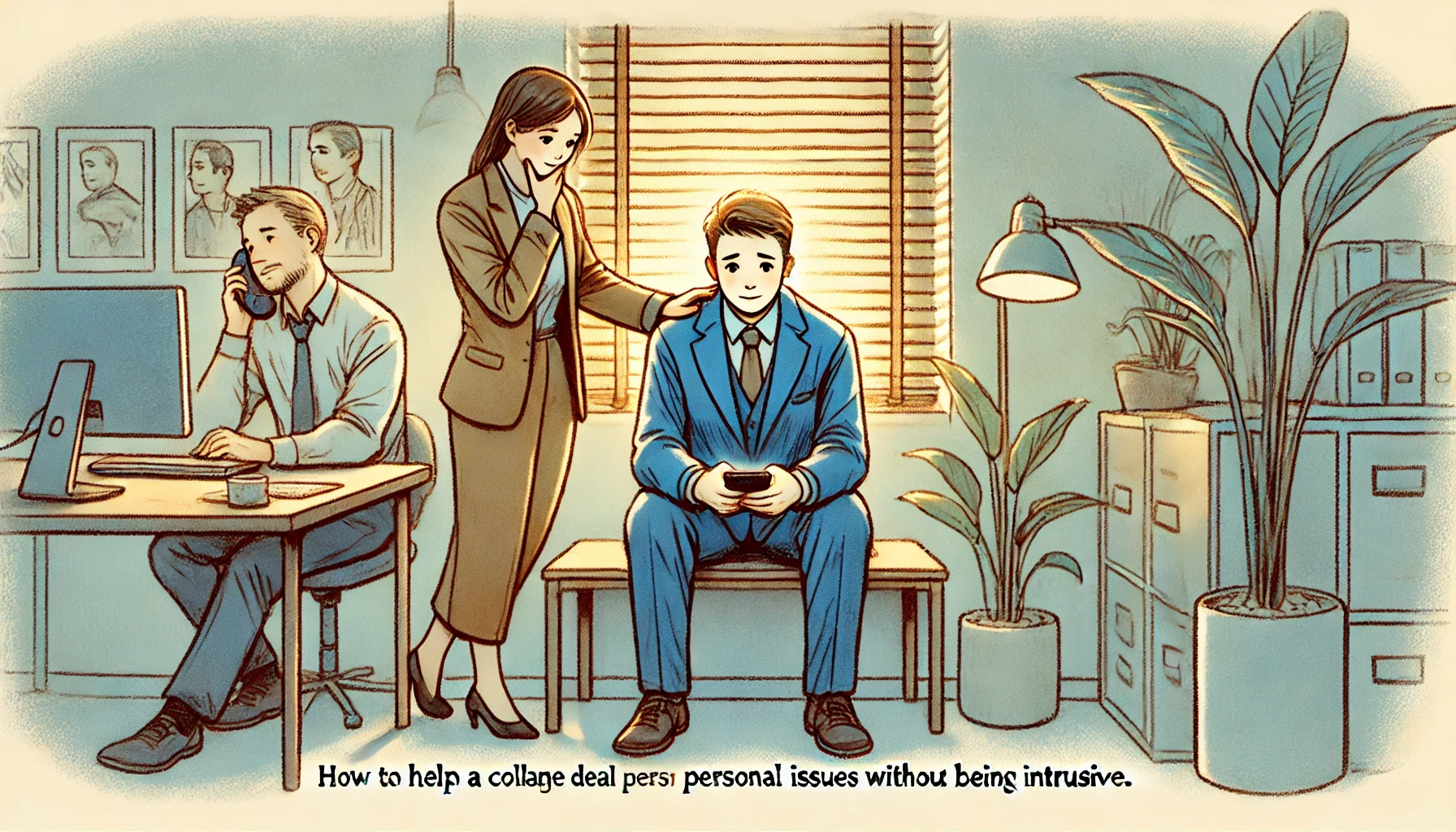
Supporting a colleague who is dealing with personal issues can be a delicate task, as it requires a balance between offering help and respecting their privacy. While it’s natural to want to assist a colleague in need, it’s important to ensure that your support doesn’t come across as intrusive or overbearing. Understanding how to provide meaningful support without crossing boundaries is key to maintaining professionalism and fostering a compassionate work environment. This blog will explore strategies for helping a colleague deal with personal issues in a way that is respectful, considerate, and effective.
1. Observe and Listen Carefully
- Pay attention to subtle cues that your colleague may be struggling, such as changes in behavior, mood, or work performance, without making assumptions or prying.
- If they choose to share their situation with you, listen actively and attentively, allowing them to express their thoughts and feelings without interruption.
- Use non-verbal cues like nodding and maintaining eye contact to show that you’re engaged and supportive, helping them feel heard and understood.
- Avoid pressing them for details or asking intrusive questions; instead, let them lead the conversation and share what they’re comfortable discussing.
- Be patient and allow them to open up at their own pace, respecting their need for privacy and space.
2. Offer a Listening Ear, Not Solutions
- Let your colleague know that you’re available to listen whenever they need to talk, providing a safe space for them to express their emotions without fear of judgment.
- Focus on listening rather than offering immediate advice or solutions, as they may simply need someone to hear them out.
- Use phrases like “I’m here if you need to talk” or “I’m happy to listen if you want to share,” which demonstrate your willingness to help without being intrusive.
- If they do ask for advice, offer it thoughtfully and considerately, ensuring that it aligns with their needs and preferences.
- Respect their decisions and avoid pushing them towards a particular course of action, allowing them to navigate their situation in their own way.
3. Respect Their Privacy and Boundaries
- Be mindful of your colleague’s privacy by not discussing their personal issues with others in the workplace, unless they’ve given explicit permission.
- Avoid making assumptions about their situation or offering unsolicited opinions, which can come across as invasive or presumptive.
- Let them set the boundaries for what they want to share and how much support they need, ensuring that you don’t overstep by pushing them to talk more than they’re comfortable with.
- If they prefer to keep their personal issues private, respect their wishes and avoid bringing up the topic unless they do so first.
- Reinforce that your support is available whenever they need it, but that you understand and respect their need for privacy.
4. Offer Practical Assistance
- Provide practical support that aligns with your colleague’s needs, such as offering to help with work tasks or covering for them if they need time off.
- Suggest concrete ways you can assist, like taking on a project, helping them organize their workload, or offering to run an errand if it’s within your capacity.
- Be specific in your offers of help, such as “Would it help if I handled this task for you?” or “I can cover your shift if you need to take some time off,” which can be more actionable than a general offer of support.
- Encourage them to take advantage of any workplace resources, such as Employee Assistance Programs (EAPs) or counseling services, that might help them manage their situation more effectively.
- If they decline your offers of help, respect their decision and let them know that your offer still stands if they change their mind.
5. Be Discreet and Non-Intrusive
- Approach your colleague privately and discreetly if you sense they need support, avoiding public settings where they might feel exposed or uncomfortable.
- Use neutral language when offering support, avoiding any terms that could make them feel singled out or embarrassed.
- Be aware of your timing; if your colleague is in the middle of a busy workday or visibly stressed, it might be better to wait for a more appropriate moment to offer help.
- If you notice that they’re becoming uncomfortable or withdrawn, be prepared to step back and give them the space they need.
- Always allow them to control the depth and direction of the conversation, ensuring that you’re not overstepping or delving into areas they’re not ready to discuss.
6. Encourage Professional Help if Necessary
- If your colleague’s personal issues are affecting their well-being or work performance significantly, gently suggest that they consider seeking professional help.
- Offer information about available resources, such as counseling services, mental health professionals, or support groups, without pressuring them to take action immediately.
- Reassure them that seeking help from a professional is a positive and proactive step, and that it’s okay to ask for support beyond what you or others in the workplace can provide.
- If they seem hesitant, offer to help them find a counselor or therapist, or accompany them to their first appointment if they need extra support.
- Reinforce that professional help is confidential and focused on their well-being, which might alleviate any concerns they have about seeking outside assistance.
7. Be Mindful of Your Own Boundaries
- Recognize your own limits in providing support, ensuring that your efforts don’t compromise your work responsibilities or personal well-being.
- Set boundaries for yourself, such as being clear about when you’re available to talk and when you need to focus on your work.
- Avoid becoming too emotionally involved in your colleague’s personal issues, which can lead to burnout or affect your ability to offer objective support.
- If you feel overwhelmed by the situation, consider seeking advice from a trusted manager or HR professional, ensuring that your own needs are also being met.
- Remember that it’s okay to step back if you feel that the situation is beyond what you can handle, and to encourage your colleague to seek additional support if necessary.
8. Focus on Empathy, Not Sympathy
- Approach your colleague’s situation with empathy, trying to understand their feelings and perspective without pitying them or making them feel like a burden.
- Use empathetic language that acknowledges their experience without diminishing their strength, such as “I can’t imagine how hard this must be for you, but I’m here to support you.”
- Avoid phrases that might come across as dismissive or condescending, like “It could be worse” or “At least it’s not as bad as…,” which can invalidate their feelings.
- Show genuine concern and care, but maintain a balanced approach that respects their autonomy and resilience.
- Empathy helps build trust and rapport, making it more likely that your colleague will feel comfortable reaching out to you for support when needed.
9. Check In Regularly, But Respect Their Space
- Follow up with your colleague periodically to see how they’re doing, but avoid overwhelming them with frequent check-ins that might feel intrusive.
- Offer a simple message or gesture of support, like “I’m thinking of you” or “I’m here if you need anything,” which shows that you care without pressuring them to talk.
- Respect their need for space if they seem to be withdrawing or need time to themselves, letting them know that you’re available when they’re ready.
- Encourage ongoing communication by letting them know they can reach out to you whenever they need support, without feeling obligated to do so.
- Balancing regular check-ins with respect for their space ensures that they feel supported without feeling suffocated.
10. Be Prepared to Step Back
- Recognize when your colleague may need professional support beyond what you can offer, and step back if you feel that you’re no longer able to help effectively.
- Be honest with your colleague if you need to focus on your own work or well-being, and suggest other resources or individuals who can assist them.
- Understand that stepping back doesn’t mean abandoning your colleague; it’s about ensuring that they get the appropriate support while maintaining your own boundaries.
- Encourage them to seek help from multiple sources, ensuring that they have a broad and sustainable support network.
- Let them know that you’re still there for them, but that you trust them to navigate their situation with the additional support they might need.
Helping a colleague deal with personal issues without being intrusive requires a careful balance of empathy, respect, and discretion. By offering a listening ear, respecting their privacy, and providing practical support, you can make a positive impact on their well-being while maintaining professionalism. Remember that your role is to be a supportive presence, not to solve their problems, and that sometimes the best help you can offer is simply to be there when they need it.
Conclusion
Supporting a colleague through personal challenges is an important aspect of a compassionate and supportive workplace, but it’s essential to do so in a way that respects their privacy and autonomy. By listening carefully, offering practical help, and maintaining clear boundaries, you can provide meaningful support without crossing into intrusive territory. Remember that your goal is to be a supportive presence, helping your colleague navigate their situation in a way that feels comfortable and empowering. With the right approach, you can contribute to a positive and caring work environment where everyone feels valued and supported.