
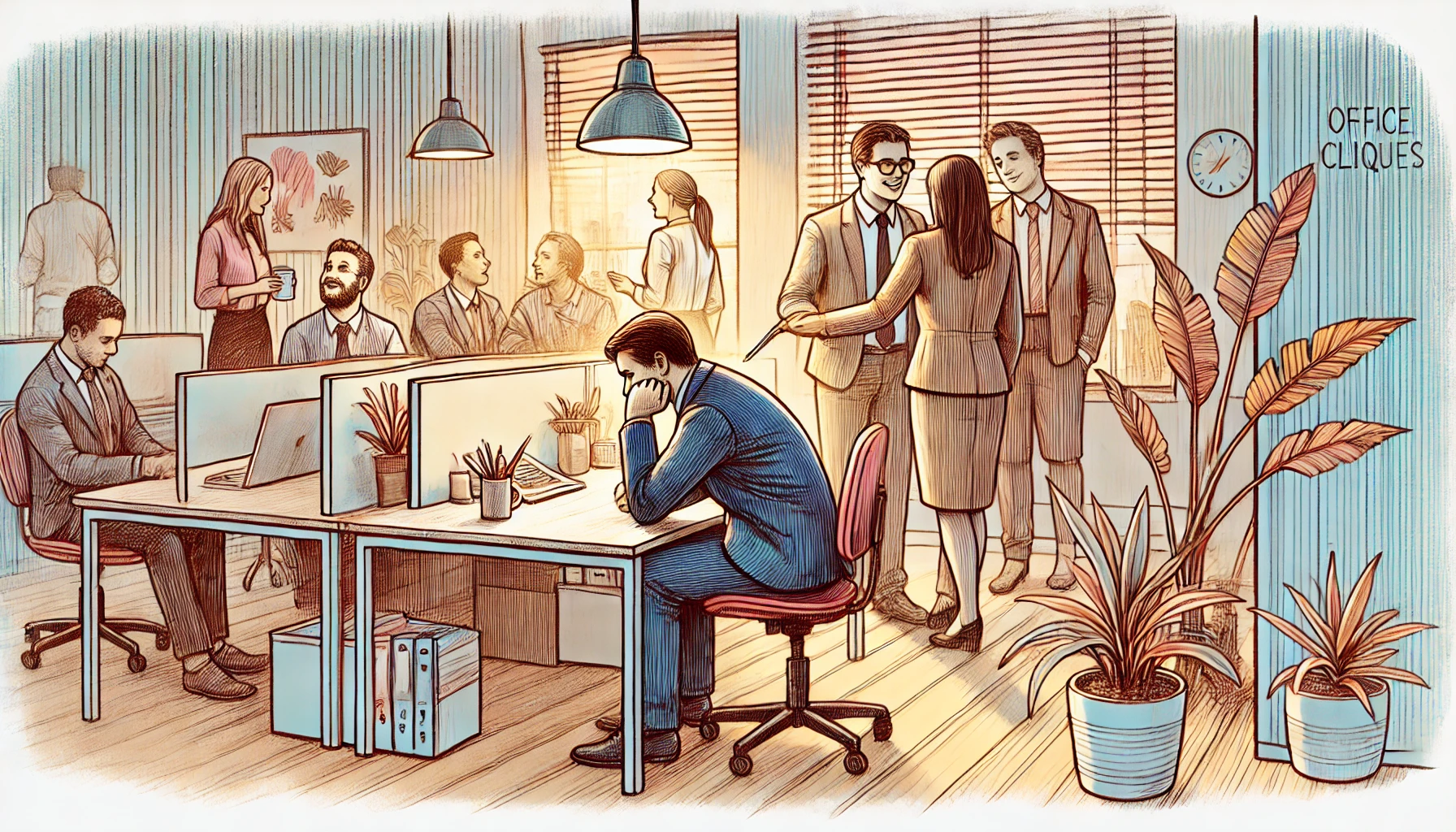
Feeling excluded by office cliques can be challenging and hurtful, impacting both your emotional well-being and your ability to perform effectively at work. Navigating this situation requires a combination of self-awareness, proactive communication, and professional strategies to ensure you maintain your confidence and productivity. This blog will explore how to deal with feeling excluded by office cliques, offering practical advice to help you manage the situation effectively while maintaining a positive outlook.
1. Assess the Situation Objectively
- Take a step back and assess the situation objectively to determine whether the exclusion is intentional or simply a misunderstanding.
- Consider if there are specific patterns or behaviors that suggest exclusion, such as being left out of meetings, social events, or important conversations.
- Reflect on whether your feelings might be influenced by other factors, such as stress or previous experiences, that could be affecting your perception.
- Avoid jumping to conclusions without gathering sufficient information, as this could lead to unnecessary tension or misunderstandings.
- An objective assessment helps you understand the situation more clearly and decide on the best course of action.
2. Focus on Building Individual Relationships
- Instead of trying to fit into a clique, focus on building individual relationships with colleagues who share similar interests or work-related goals.
- Engage with coworkers on a one-on-one basis, such as inviting someone for coffee or lunch, to establish a personal connection outside of the group dynamic.
- Show genuine interest in your colleagues’ work and contributions, offering support or assistance when appropriate to foster mutual respect and trust.
- Participate in team activities or projects where you can demonstrate your skills and work ethic, allowing others to see your value as a team member.
- Building individual relationships helps create a supportive network, reducing the impact of feeling excluded by a particular group.
3. Communicate Openly and Professionally
- If you feel comfortable, consider addressing the issue directly with a colleague you trust, expressing your feelings in a non-confrontational and professional manner.
- Use “I” statements to explain how the situation makes you feel, such as “I’ve noticed I’m often not included in team discussions, and I’d like to contribute more.”
- Avoid blaming or accusing others, as this can escalate the situation and create further tension. Instead, focus on finding solutions that benefit everyone involved.
- If appropriate, ask for feedback on how you can become more involved in team activities or discussions, demonstrating your willingness to contribute and collaborate.
- Open communication can help clear up misunderstandings and foster a more inclusive work environment.
4. Develop Your Professional Skills
- Focus on developing your professional skills and expertise, ensuring that your work speaks for itself and contributes to your confidence and job satisfaction.
- Seek out opportunities for professional development, such as training sessions, workshops, or mentorship programs, to enhance your knowledge and capabilities.
- Take the initiative on projects or tasks that align with your strengths, showcasing your skills and demonstrating your value to the team.
- Building your expertise can help you gain respect from colleagues, reducing the impact of exclusion and positioning you as a valuable contributor to the team.
- Developing your professional skills empowers you to focus on your growth and success, regardless of social dynamics in the workplace.
5. Maintain a Positive and Professional Attitude
- Stay positive and professional, even if you feel excluded, to maintain your reputation and contribute to a healthy work environment.
- Avoid engaging in negative behavior, such as gossiping or complaining, which can further isolate you and create a negative impression among colleagues.
- Focus on your work and responsibilities, ensuring that you continue to perform at a high level and demonstrate your commitment to the organization’s goals.
- Practice resilience by not allowing exclusion to affect your self-esteem or motivation, recognizing that your worth is not determined by others’ behavior.
- Maintaining a positive and professional attitude helps you navigate the situation with grace and integrity, preserving your well-being and reputation.
6. Seek Support from Allies
- Identify allies in the workplace who can offer support, advice, or a listening ear when you’re feeling excluded or overwhelmed by the situation.
- Allies can be colleagues, mentors, or even managers who understand your perspective and can provide guidance on how to handle the situation effectively.
- Share your concerns with these trusted individuals, seeking their advice on how to improve your inclusion in team activities or discussions.
- Allies can also help advocate for you in group settings, ensuring that your contributions are recognized and valued by the team.
- Having a support system in the workplace can help you feel less isolated and more empowered to address the situation constructively.
7. Participate in Inclusive Activities
- Look for opportunities to participate in activities or events that are designed to be inclusive and bring together a diverse group of colleagues.
- Volunteer for company-wide initiatives, such as social committees, community service projects, or employee resource groups, where you can meet and connect with a broader range of colleagues.
- Participate in training sessions, workshops, or lunch-and-learns that bring together employees from different departments or teams, allowing you to expand your network.
- Engaging in inclusive activities helps you build connections with colleagues outside of cliques, creating a more diverse and supportive professional network.
- By participating in these activities, you can find new opportunities for collaboration and inclusion, reducing the impact of feeling excluded by specific groups.
8. Consider Seeking Guidance from HR or Management
- If the situation persists and begins to affect your well-being or job performance, consider seeking guidance from HR or management.
- Document specific instances where you’ve felt excluded, providing a clear and objective account of the situation when discussing it with HR or a manager.
- Request a confidential conversation to express your concerns and explore potential solutions for improving inclusion within the team or organization.
- HR or management may offer mediation, team-building activities, or other interventions to address the issue and create a more inclusive work environment.
- Seeking guidance from HR or management can help you address the situation in a constructive and professional manner, ensuring that your concerns are taken seriously.
9. Focus on Your Own Well-Being
- Prioritize your mental and emotional well-being by practicing self-care, such as regular exercise, mindfulness, or hobbies that bring you joy and relaxation.
- Remind yourself that feeling excluded is not a reflection of your worth or abilities and that you have the power to create positive change in your work environment.
- Seek out activities outside of work that allow you to connect with supportive friends and family, reinforcing your sense of belonging and self-worth.
- Consider speaking with a therapist or counselor if the situation significantly impacts your mental health, as they can provide coping strategies and emotional support.
- Focusing on your well-being helps you stay resilient and maintain a positive outlook, even in the face of challenging social dynamics at work.
10. Reflect on Your Long-Term Goals
- Take time to reflect on your long-term career goals and whether your current work environment aligns with those objectives.
- Consider whether the exclusion you’re experiencing is a temporary situation or a sign of deeper issues within the organization’s culture.
- If you feel that the environment is not conducive to your growth or well-being, it may be worth exploring other opportunities where you can thrive professionally and socially.
- Reflecting on your long-term goals empowers you to make informed decisions about your career and work environment, ensuring that you prioritize your happiness and success.
- By focusing on your long-term objectives, you can maintain a sense of purpose and direction, even when facing challenges in your current role.
Conclusion
Dealing with feelings of exclusion by office cliques can be challenging, but with the right strategies, you can navigate the situation effectively while maintaining your confidence and productivity. By assessing the situation objectively, building individual relationships, and focusing on your professional growth, you can reduce the impact of exclusion and create a more positive work experience. Open communication, support from allies, and participation in inclusive activities further help you build a supportive network that enhances your sense of belonging. Ultimately, by prioritizing your well-being and reflecting on your long-term goals, you can ensure that your work environment aligns with your personal and professional aspirations.