
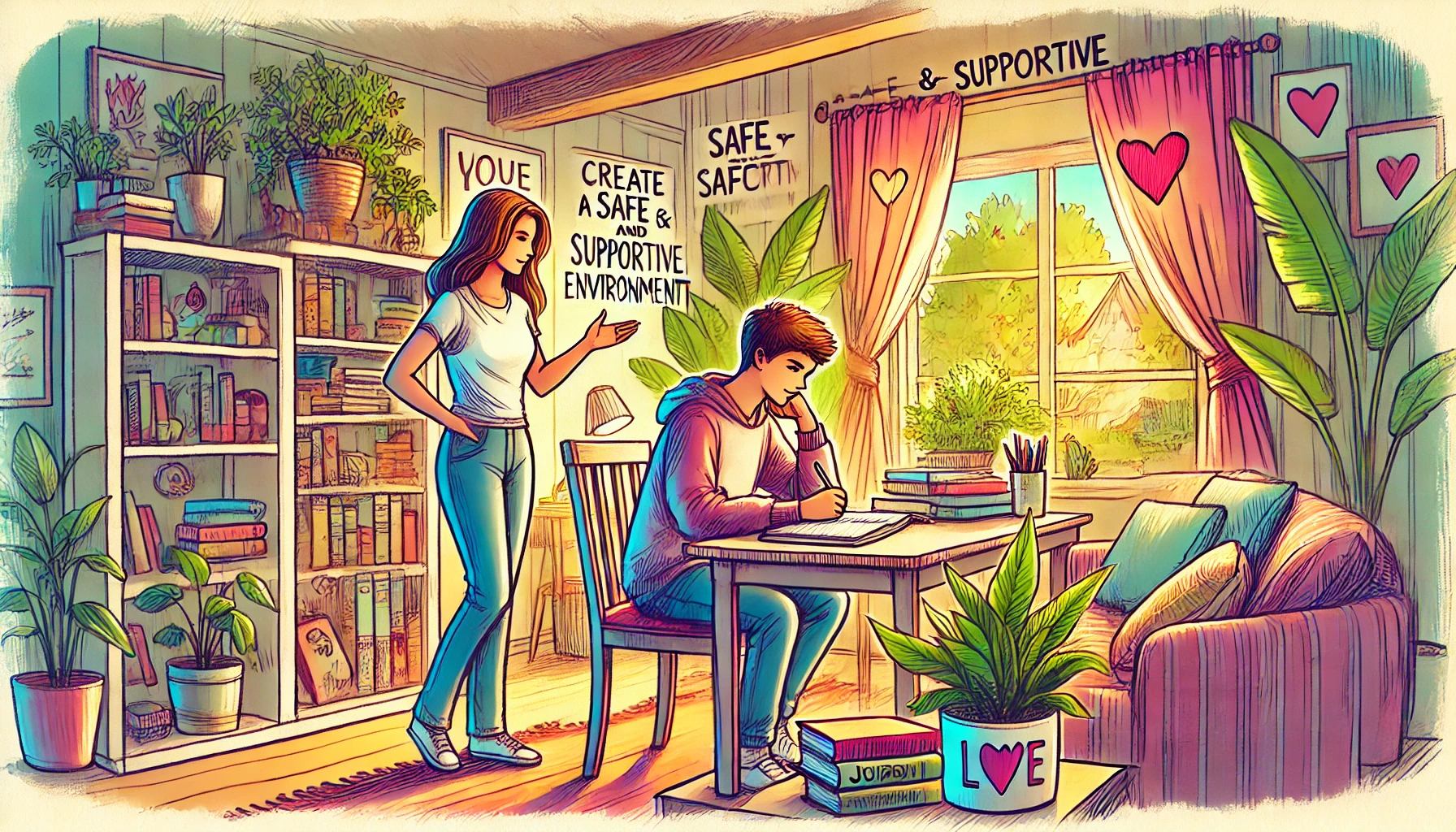
Creating a safe and supportive environment is essential for fostering your teen’s mental health and overall well-being. Adolescence is a challenging period marked by significant physical, emotional, and psychological changes. A nurturing home environment can help teens navigate these challenges, develop resilience, and thrive. This guide provides practical strategies for parents to create a safe and supportive environment for their teens.
A supportive environment encompasses open communication, emotional security, physical safety, and encouragement of healthy habits. By implementing these strategies, parents can help their teens feel valued, understood, and empowered to face life’s challenges.
1. Foster Open Communication
- Active Listening: Pay full attention when your teen is speaking. Show that you value their thoughts and feelings by listening without interrupting.
- Non-Judgmental Attitude: Approach conversations with empathy and without judgment. This encourages your teen to share openly.
- Regular Check-Ins: Make it a habit to check in with your teen regularly about their day, feelings, and experiences.
- Open-Ended Questions: Use open-ended questions to encourage deeper conversations and allow your teen to express themselves fully.
- Validation: Acknowledge and validate your teen’s feelings, even if you don’t fully understand or agree with them.
2. Ensure Physical Safety
- Safe Home Environment: Ensure that your home is physically safe and free from hazards. This includes securing potentially dangerous items and creating a comfortable living space.
- Boundaries and Rules: Establish clear boundaries and rules that promote safety, such as curfews and guidelines for using technology and social media.
- Emergency Plan: Develop and communicate an emergency plan for situations like fire, natural disasters, or medical emergencies.
- Monitor Activities: Be aware of your teen’s activities and who they are spending time with. Know where they are and when they will be home.
- Support Healthy Habits: Encourage healthy habits, such as regular exercise, balanced nutrition, and sufficient sleep, to support overall well-being.
3. Promote Emotional Security
- Unconditional Love and Support: Show unconditional love and support, reinforcing that your teen is valued and accepted regardless of their behavior or achievements.
- Consistent Presence: Be a consistent and reliable presence in your teen’s life. This stability provides a sense of security.
- Empathy and Understanding: Show empathy and understanding toward your teen’s struggles and challenges.
- Encourage Expression: Encourage your teen to express their emotions in healthy ways, such as talking, writing, or creative activities.
- Positive Reinforcement: Use positive reinforcement to acknowledge and celebrate your teen’s efforts and accomplishments.
4. Encourage Healthy Relationships
- Role Modeling: Model healthy relationships in your own interactions. Show respect, kindness, and effective communication.
- Peer Influence: Encourage your teen to build and maintain healthy friendships. Discuss the importance of positive peer influence.
- Family Time: Spend quality time together as a family to strengthen bonds and provide support.
- Respect Privacy: Respect your teen’s need for privacy while also being available for support and guidance.
- Conflict Resolution: Teach and practice healthy conflict resolution skills within the family.
5. Support Academic and Personal Growth
- Educational Support: Provide support for academic pursuits, such as helping with homework and encouraging a positive attitude toward learning.
- Extracurricular Activities: Encourage involvement in extracurricular activities that align with your teen’s interests and strengths.
- Set Realistic Expectations: Set realistic and achievable expectations for academic and personal goals. Avoid placing undue pressure on your teen.
- Celebrate Achievements: Celebrate your teen’s achievements and milestones, no matter how small, to boost their confidence and motivation.
- Encourage Independence: Support your teen in taking on responsibilities and making decisions, fostering their independence and self-reliance.
6. Foster Healthy Coping Mechanisms
- Stress Management: Teach stress management techniques such as deep breathing, mindfulness, and exercise.
- Problem-Solving Skills: Encourage the development of problem-solving skills to help your teen navigate challenges effectively.
- Creative Outlets: Provide opportunities for creative expression through activities like art, music, writing, or sports.
- Mindfulness Practices: Introduce mindfulness practices to help your teen stay grounded and manage stress.
- Encourage Help-Seeking: Normalize seeking help from trusted adults, counselors, or mental health professionals when needed.
7. Address Mental Health
- Mental Health Education: Educate yourself and your teen about mental health issues and the importance of self-care.
- Open Dialogue: Maintain an open dialogue about mental health, reducing stigma and encouraging openness.
- Recognize Signs: Be aware of the signs of mental health issues, such as changes in mood, behavior, or academic performance.
- Professional Help: Seek professional help from therapists or counselors if your teen is struggling with mental health issues.
- Peer Support: Encourage participation in support groups or peer networks for additional support.
8. Encourage Positive Use of Technology
- Set Boundaries: Establish clear guidelines for technology use, including limits on screen time and appropriate content.
- Digital Literacy: Educate your teen about digital literacy, including online safety and responsible social media use.
- Balance: Encourage a balance between online activities and offline activities, promoting a healthy lifestyle.
- Monitor Use: Keep an eye on your teen’s technology use without being overly intrusive, ensuring they use it positively.
- Model Behavior: Model responsible technology use in your own behavior.
9. Build Resilience and Self-Esteem
- Strengths Focus: Focus on your teen’s strengths and encourage them to pursue their passions.
- Positive Affirmations: Use positive affirmations to build self-esteem and confidence.
- Growth Mindset: Foster a growth mindset, encouraging your teen to view challenges as opportunities for growth.
- Goal Setting: Help your teen set and achieve realistic goals, building their sense of accomplishment and resilience.
- Supportive Feedback: Provide constructive and supportive feedback to help your teen improve and succeed.
10. Involve Your Teen in Decision-Making
- Collaborative Approach: Involve your teen in family decision-making processes to give them a sense of responsibility and ownership.
- Respect Opinions: Respect and value your teen’s opinions and perspectives, even if they differ from your own.
- Empowerment: Empower your teen to make decisions about their life, fostering independence and confidence.
- Problem-Solving: Work together to solve problems and address challenges, teaching collaboration and critical thinking.
- Responsibility: Encourage your teen to take on responsibilities within the family, promoting a sense of contribution and competence.
In conclusion, creating a safe and supportive environment for your teen involves fostering open communication, ensuring physical and emotional safety, promoting healthy relationships, and encouraging personal growth. By implementing these strategies, parents can help their teens navigate the challenges of adolescence and develop into confident, resilient, and well-adjusted individuals. Remember, your support and understanding play a crucial role in your teen’s mental health and overall well-being.