
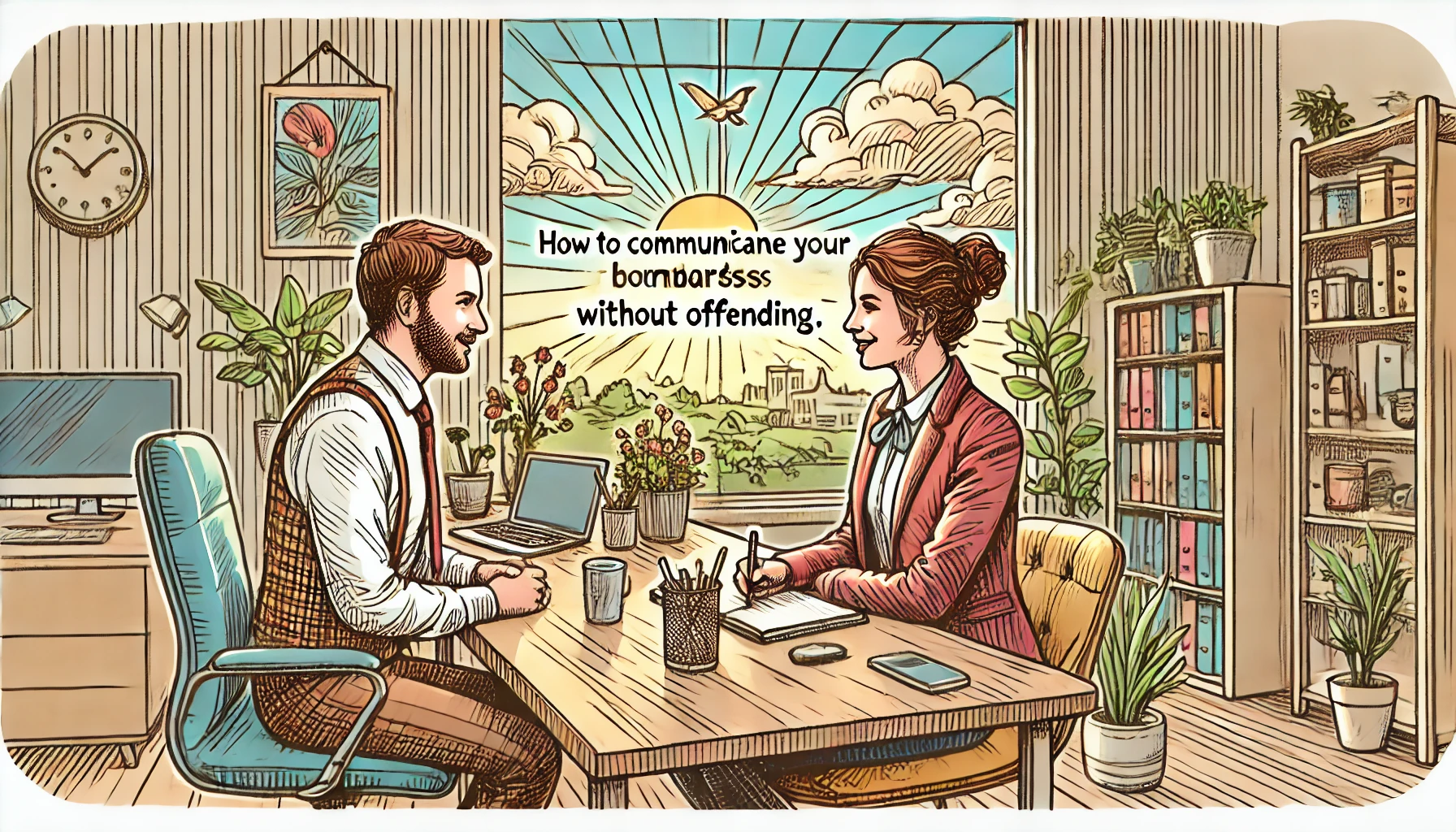
Communicating your boundaries effectively is crucial for maintaining healthy relationships in the workplace and in your personal life. However, setting boundaries can sometimes feel uncomfortable, especially when you’re concerned about offending others. The key to communicating boundaries without causing offense is to be clear, respectful, and assertive while showing empathy and understanding. By approaching the conversation with sensitivity and professionalism, you can protect your needs and well-being while maintaining positive relationships. In this blog, we’ll explore strategies for communicating your boundaries in a way that minimizes the risk of offending others.
Setting boundaries is an essential part of self-care and professional success, but it requires careful communication to ensure that your intentions are understood and respected. When done correctly, setting boundaries can actually strengthen your relationships by fostering mutual respect and understanding. Here’s how you can communicate your boundaries effectively without offending those around you.
1. Be Clear and Direct
- When setting boundaries, clarity is crucial. Vague or ambiguous statements can lead to misunderstandings or unintended boundary violations.
- Use straightforward language to express your boundaries, such as, “I need to leave the office by 5 PM to maintain my work-life balance,” or “I prefer to keep our discussions focused on work-related topics.”
- Avoid using overly complex or indirect language, which can dilute the message and make it harder for the other person to understand your needs.
- Being clear and direct helps ensure that your boundaries are understood and respected, reducing the likelihood of offense or confusion.
- Clear communication also demonstrates that you take your boundaries seriously and expect them to be honored.
2. Use “I” Statements
- Framing your boundaries using “I” statements helps you express your needs without sounding accusatory or placing blame on others.
- For example, instead of saying, “You always interrupt me during meetings,” you could say, “I find it difficult to focus when I’m interrupted during meetings.”
- “I” statements emphasize your feelings and experiences, making it easier for others to understand why the boundary is important to you.
- This approach reduces the risk of the other person feeling attacked or criticized, which can help prevent defensive reactions.
- Using “I” statements fosters a more collaborative and empathetic conversation about your boundaries.
3. Offer a Reason or Explanation
- Providing a brief explanation for your boundaries can help others understand the rationale behind them, making it easier for them to accept and respect your limits.
- For example, if you’re setting a boundary around your availability, you might say, “I need to focus on my work during the day, so I won’t be checking emails after 6 PM.”
- Offering a reason shows that your boundary is not arbitrary but is based on specific needs or circumstances, which can make it more relatable and acceptable to others.
- Be careful not to over-explain or justify your boundaries excessively, as this can undermine your position. A concise explanation is often sufficient.
- Providing context helps others see your perspective and reduces the likelihood of them feeling offended by your boundary.
4. Be Respectful and Polite
- Respect and politeness are key to communicating boundaries without offending. Even when setting firm boundaries, it’s important to approach the conversation with kindness and consideration.
- Use polite language and a calm tone of voice to convey your boundaries, such as, “I really appreciate your input, but I need to focus on this task alone right now.”
- Show empathy by acknowledging the other person’s needs or feelings while still asserting your boundary. For example, “I understand that this is important to you, but I need some time to think about it before I respond.”
- Respectful communication fosters a positive atmosphere and helps maintain goodwill, even when boundaries are being set.
- By being polite and considerate, you make it easier for others to accept and respect your boundaries without feeling offended.
5. Focus on the Positive
- When setting boundaries, focus on the positive outcomes or benefits that respecting your boundary will bring, both for you and for the other person.
- For example, you might say, “By limiting meetings to 30 minutes, we can stay focused and be more productive,” or “Setting aside time for myself helps me recharge and be more present when we’re together.”
- Highlighting the positive aspects of your boundary helps shift the focus away from what is being restricted and toward the value that the boundary provides.
- This approach can make it easier for others to understand and appreciate your boundaries, reducing the risk of offense.
- Focusing on the positive also reinforces the idea that boundaries are not about shutting people out but about creating a healthier and more balanced relationship.
6. Practice Active Listening
- Effective communication is a two-way street, and listening is just as important as speaking when setting boundaries. Show that you’re open to hearing the other person’s perspective by practicing active listening.
- Allow the other person to express their thoughts or concerns about the boundary you’re setting, and listen without interrupting or judging.
- Use verbal and non-verbal cues, such as nodding or making eye contact, to show that you’re engaged and understanding their point of view.
- If the other person raises valid concerns or objections, acknowledge them and try to find a compromise or solution that respects both your boundary and their needs.
- Active listening helps build trust and ensures that the boundary-setting process feels collaborative rather than confrontational.
7. Be Consistent and Follow Through
- Consistency is key to maintaining your boundaries and ensuring that they are respected over time. If you set a boundary but fail to enforce it consistently, others may take it less seriously.
- Follow through on your boundaries by politely reminding others when they are crossed and reinforcing the importance of respecting them.
- For example, if you’ve set a boundary around after-hours communication, respond with, “As I mentioned earlier, I won’t be checking emails after 6 PM, but I’ll get back to you first thing in the morning.”
- Consistent follow-through shows that you are committed to your boundaries and helps others understand that they are non-negotiable.
- By being consistent, you reinforce your boundaries and reduce the likelihood of them being crossed in the future.
8. Offer Alternatives or Compromises
- In some situations, offering an alternative or compromise can help communicate your boundaries without causing offense. This approach shows that you’re willing to be flexible while still protecting your needs.
- For example, if you can’t attend a meeting at a certain time, you might suggest an alternative time that works better for you: “I’m not available at 2 PM, but how about we meet at 3 PM instead?”
- Offering alternatives demonstrates that you’re considerate of the other person’s needs and are trying to find a solution that works for both of you.
- Compromises can help smooth over potential friction and make it easier for others to accept your boundaries.
- By offering alternatives, you create a win-win situation where both parties feel respected and accommodated.
9. Stay Calm and Confident
- Confidence is key when communicating boundaries. If you’re unsure or hesitant about your boundaries, others may be more likely to push back or ignore them.
- Stay calm and confident when setting boundaries, even if the conversation feels uncomfortable. Remember that you have the right to protect your time, energy, and well-being.
- Use assertive body language, such as maintaining eye contact and standing or sitting up straight, to reinforce your message.
- If someone reacts negatively to your boundary, remain calm and reiterate your point without becoming defensive or aggressive.
- Staying calm and confident helps convey that your boundaries are important and deserving of respect, reducing the likelihood of offense.
10. Follow Up When Necessary
- After communicating your boundary, it may be helpful to follow up with the other person to ensure that they understood your message and to address any lingering concerns.
- A follow-up can be as simple as checking in after the conversation to see how things are going: “I just wanted to check in and make sure we’re on the same page about my availability.”
- Following up shows that you’re committed to maintaining open communication and that you value the relationship.
- It also provides an opportunity to clarify any misunderstandings or to adjust the boundary if needed, based on the feedback you’ve received.
- By following up, you reinforce the boundary and demonstrate your commitment to maintaining a positive and respectful relationship.
Communicating your boundaries effectively is an essential skill for maintaining healthy relationships in both personal and professional settings. By being clear, direct, and respectful, you can set boundaries in a way that protects your needs without causing offense. Remember that boundaries are about creating a balanced and respectful dynamic, and that most people will appreciate your honesty and clarity when they are communicated thoughtfully. By following these strategies, you can ensure that your boundaries are understood, respected, and valued by those around you.