
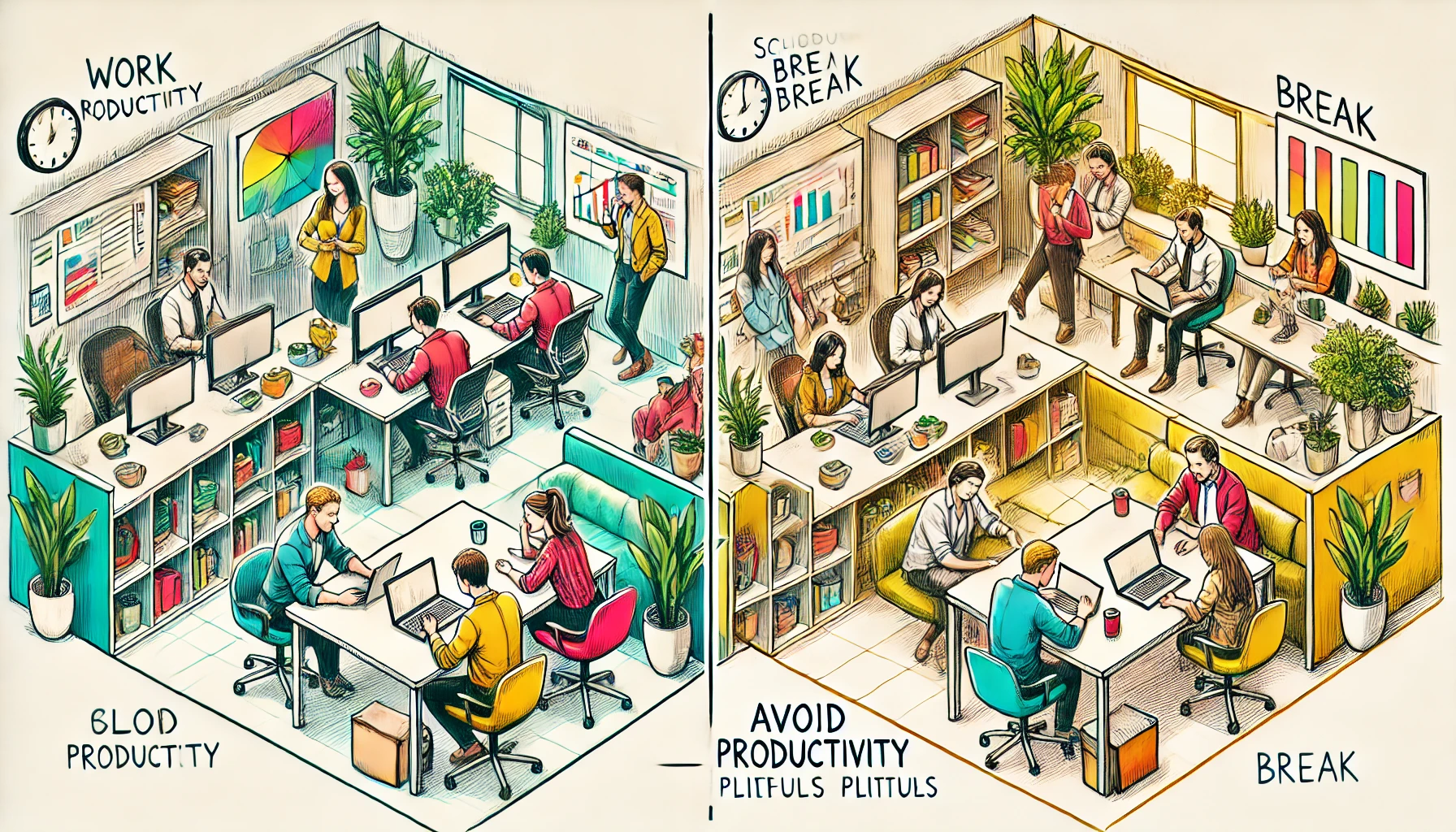
Workplace friendships can be a great asset, fostering a positive atmosphere, enhancing collaboration, and increasing job satisfaction. However, these relationships can also pose productivity challenges if not managed properly. Personal relationships at work can lead to distractions, favoritism, or even conflicts that may negatively impact both individual and team performance. To ensure that workplace friendships remain a positive influence, it’s essential to avoid common productivity pitfalls. This blog will explore strategies to help maintain a healthy balance between fostering strong workplace friendships and ensuring high levels of productivity.
1. Set Clear Professional Boundaries
- Encourage employees to maintain clear boundaries between their personal relationships and work responsibilities. While it’s natural to develop friendships at work, it’s important to ensure these relationships don’t interfere with professional duties.
- Suggest that personal conversations be kept to breaks, lunch hours, or after work, allowing employees to stay focused during work hours.
- Remind employees that while friendships are valuable, their primary obligation is to fulfill their job responsibilities and contribute to the team’s success.
- Encourage employees to avoid discussing personal issues during meetings or work-related activities to maintain a professional atmosphere.
- Setting clear boundaries helps employees navigate their workplace friendships without compromising their productivity.
2. Promote Accountability
- Cultivate a workplace culture where everyone is held accountable for their tasks and responsibilities, regardless of personal relationships or friendships.
- Implement clear performance metrics and regular check-ins to monitor progress, ensuring that all team members are meeting their obligations.
- Encourage managers to set a good example by holding everyone to the same standards of accountability, regardless of friendships.
- Reinforce the idea that workplace friendships should support, rather than undermine, accountability, with friends helping each other stay on track and meet deadlines.
- A culture of accountability ensures that workplace friendships contribute positively to work performance and don’t lead to slacking off or missed deadlines.
3. Balance Socializing with Work
- While socializing is important for building strong workplace relationships, it’s essential to strike a balance so that it doesn’t interfere with work responsibilities.
- Encourage employees to take breaks together, such as during lunch or coffee breaks, to foster connections while ensuring that work hours remain productive.
- Promote the idea of work-first, socializing-second, where employees prioritize their tasks and use social interactions as a reward for completing work.
- Suggest organizing social events or team-building activities outside of regular work hours, allowing employees to bond without detracting from their professional obligations.
- By balancing socializing with work, employees can enjoy the benefits of workplace friendships without compromising their productivity.
4. Avoid Favoritism
- Favoritism, real or perceived, can lead to resentment and conflict within a team, negatively affecting productivity and morale.
- Encourage managers to treat all team members equally, regardless of personal relationships, to ensure fairness in decision-making, task assignments, and evaluations.
- Establish clear criteria for promotions, bonuses, and recognition, ensuring that all employees have an equal opportunity to succeed based on their performance.
- Encourage transparency in decision-making processes, so that all team members understand the reasons behind managerial decisions.
- Avoiding favoritism ensures that workplace friendships do not lead to unfair advantages or tensions within the team.
5. Address Conflicts Professionally
- Conflicts are natural in any workplace, but it’s important to address them professionally to prevent them from harming relationships and productivity.
- Encourage employees to handle conflicts with open communication, focusing on finding solutions that benefit everyone involved.
- Provide conflict resolution training or resources to help employees navigate disagreements in a way that maintains professionalism and respect.
- If necessary, involve HR or management to mediate conflicts and ensure that they are resolved in a manner that supports a positive work environment.
- Addressing conflicts professionally helps maintain healthy relationships and ensures that workplace friendships continue to contribute positively to productivity.
6. Encourage Inclusivity
- Workplace friendships can sometimes lead to cliques or exclusive groups, which can create division and negatively impact team dynamics.
- Encourage an inclusive work culture where everyone feels welcome to participate in social interactions and team activities, regardless of personal relationships.
- Promote team-building activities that include all team members, fostering a sense of unity and collaboration across the entire team.
- Remind employees that inclusivity and teamwork are key to the success of the organization and that building relationships with a diverse range of colleagues can enhance their work experience.
- By promoting inclusivity, organizations can prevent the formation of cliques and ensure that all employees feel valued and included.
7. Monitor the Impact on Team Dynamics
- Regularly assess how workplace friendships are affecting team dynamics, both positively and negatively, to ensure a healthy balance.
- Encourage managers to observe interactions within the team and provide feedback if they notice that friendships are leading to distractions or conflicts.
- If a workplace friendship is negatively impacting team dynamics, address the issue promptly and professionally, offering guidance on how to improve the situation.
- Promote a culture of openness, where employees feel comfortable discussing any concerns they may have about how friendships are affecting their work or the team.
- Monitoring the impact of workplace friendships helps ensure that they remain a positive force for productivity and collaboration.
8. Provide Training on Professionalism
- Offer training sessions on workplace professionalism, covering topics such as communication, conflict resolution, and maintaining boundaries.
- Encourage employees to develop skills that help them navigate workplace relationships while staying focused on their professional responsibilities.
- Provide resources on how to balance personal relationships with work, such as time management techniques or strategies for setting boundaries.
- Training on professionalism helps employees understand the importance of maintaining a productive work environment while fostering positive relationships with colleagues.
- By providing training and resources, organizations can equip employees with the tools they need to manage workplace friendships effectively.
9. Recognize and Reward Team Efforts
- Acknowledge and reward employees who successfully balance their work and friendships, recognizing their ability to maintain high performance while fostering strong relationships.
- Implement recognition programs that highlight team members who excel in both collaboration and productivity, setting an example for others.
- Encourage peer recognition, where colleagues can acknowledge each other’s efforts in balancing work and personal connections effectively.
- Use performance reviews as an opportunity to discuss how employees manage their workplace friendships and productivity, offering praise or guidance as needed.
- Recognition and rewards reinforce the value of balancing friendships with productivity, motivating employees to strive for excellence in both areas.
10. Lead by Example
- Managers and leaders play a crucial role in setting the tone for how workplace friendships and productivity are balanced within the organization.
- Lead by example by maintaining professional relationships with colleagues, even when friendships exist, demonstrating that it’s possible to balance both effectively.
- Encourage team members to follow your lead in prioritizing work responsibilities while fostering positive relationships with their colleagues.
- Address any concerns about productivity or professionalism promptly and fairly, reinforcing the importance of maintaining a balance between work and personal connections.
- Leading by example helps create a workplace culture where friendships are valued but do not interfere with achieving high levels of performance and productivity.
Workplace friendships, when managed well, can be a powerful asset for both individual and team success. By fostering strong relationships while maintaining a focus on professionalism and productivity, organizations can create a work environment where employees are engaged, motivated, and effective.
Conclusion
Workplace friendships can greatly enhance the work environment, but they must be managed carefully to avoid productivity pitfalls. By setting clear professional boundaries, promoting accountability, and fostering inclusivity, organizations can ensure that friendships contribute positively to both individual and team performance. Encouraging open communication, monitoring team dynamics, and providing training on professionalism further support the balance between relationships and productivity. With the right strategies in place, workplace friendships can become a valuable asset, driving engagement, collaboration, and overall success in the workplace.