
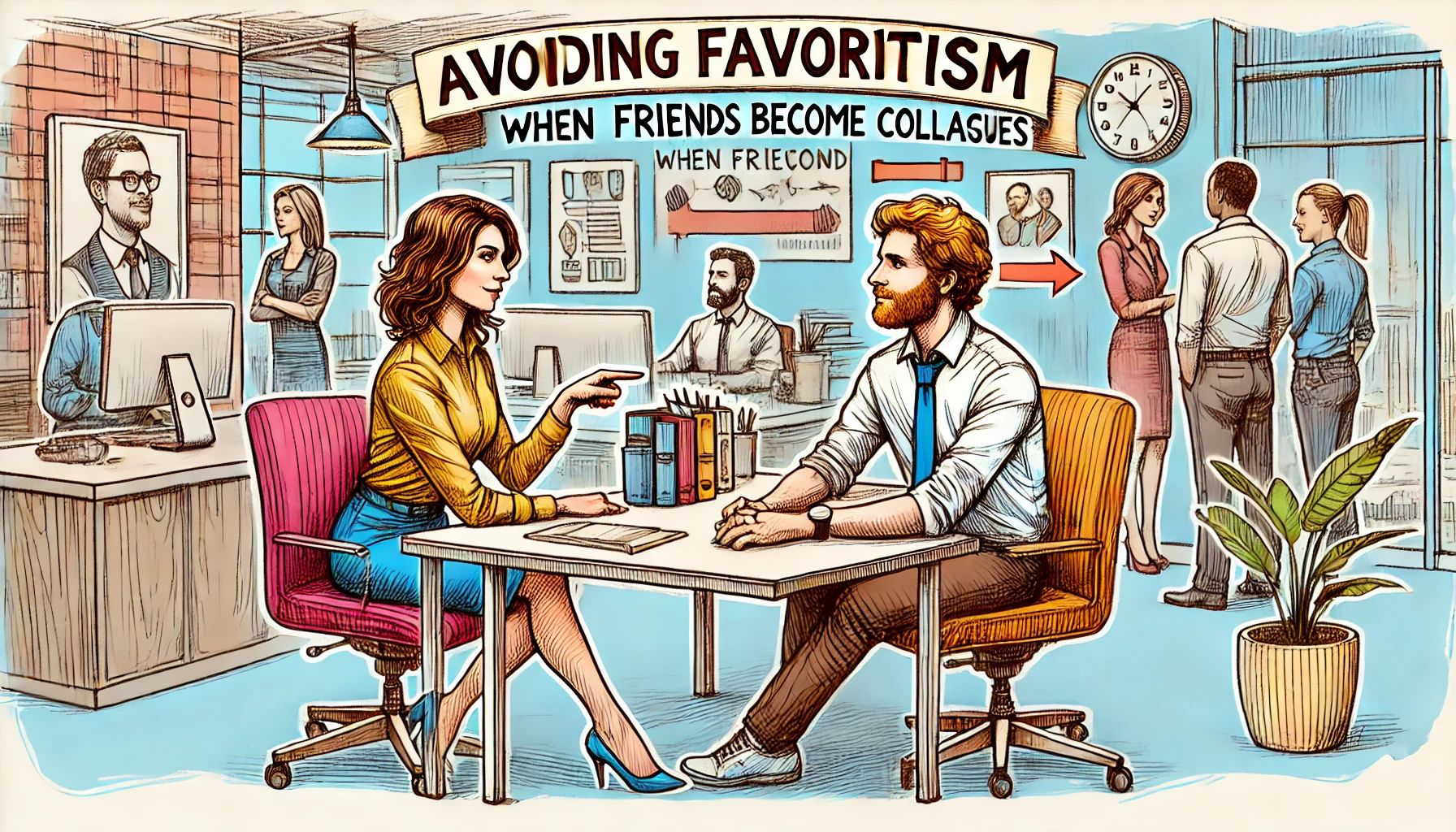
Avoiding favoritism when friends become colleagues is a critical aspect of maintaining a fair and professional work environment. While friendships in the workplace can foster collaboration and improve morale, they can also lead to perceptions of bias if not managed carefully. When favoritism occurs, it can damage team dynamics, reduce trust, and create a toxic work environment. It’s essential to adopt strategies that ensure all team members are treated equally, regardless of personal relationships.
Balancing personal friendships with professional responsibilities requires clear boundaries, consistent communication, and a commitment to fairness. By being mindful of how your actions and decisions are perceived by others, you can maintain the integrity of your work environment while preserving valuable friendships.
1. Set Clear Professional Boundaries
- Establish boundaries from the start by defining what topics and behaviors are appropriate at work versus in a social setting. This separation helps maintain professionalism.
- Agree with your friend on how to handle work interactions to ensure they don’t cross into personal territory. This includes avoiding discussions about work decisions in social contexts.
- Refrain from discussing work-related matters during social gatherings, keeping personal time distinct from professional responsibilities.
- Communicate openly with your friend about the need to prioritize work duties and ensure that personal matters do not interfere with professional obligations.
- Revisit these boundaries periodically, especially if your roles within the organization evolve or change.
2. Treat All Colleagues Equally
- Ensure that you apply the same standards, rules, and expectations to all employees, regardless of your personal relationship with them. This is crucial for maintaining fairness.
- Make decisions based on objective criteria such as performance, skills, and qualifications, rather than personal relationships.
- Avoid giving your friend preferential treatment, such as easier assignments, more flexibility, or access to opportunities not available to others.
- Ensure that praise, recognition, and rewards are distributed based on merit and are communicated transparently to the entire team.
- Regularly reflect on your actions to ensure that you are not inadvertently favoring your friend, and make adjustments as needed.
3. Maintain Objectivity in Decision-Making
- When making decisions that affect your friend, rely on objective data and formal processes to guide your choices, ensuring they are based on merit.
- Involve other colleagues or supervisors in decision-making processes that involve your friend to provide additional perspectives and reduce the risk of bias.
- Document your decisions and the reasoning behind them to maintain transparency and accountability, especially in situations where favoritism could be perceived.
- Seek input from neutral parties, such as HR, when making significant decisions that impact your friend, to ensure fairness and objectivity.
- Be prepared to recuse yourself from decisions that directly affect your friend if you feel that your objectivity might be compromised.
4. Foster Inclusivity and Team Collaboration
- Encourage a culture of inclusivity where all team members feel valued and included, regardless of personal relationships within the group.
- Promote teamwork by ensuring that all voices are heard and respected, and by avoiding the formation of cliques or exclusive groups.
- Ensure that team activities, both professional and social, include everyone, preventing any perception that you are favoring your friend.
- When assigning tasks or projects, distribute responsibilities based on skills and experience rather than personal relationships, promoting a fair and balanced workload.
- Regularly assess team dynamics to ensure that personal relationships are not creating divisions or affecting overall team cohesion.
5. Communicate Transparently and Consistently
- Be open and transparent in your communication with the entire team, ensuring that decisions, policies, and expectations are clearly understood by everyone.
- Address any concerns about favoritism directly and professionally, acknowledging the importance of treating all colleagues fairly.
- When communicating with your friend about work matters, use the same tone and level of formality as you would with any other colleague.
- Keep communication professional during work hours, avoiding personal conversations that could be misconstrued by others as favoritism.
- Encourage open dialogue among team members about the importance of fairness and professionalism, fostering a culture of mutual respect.
6. Separate Personal and Professional Feedback
- When giving feedback to your friend, focus solely on their work performance, using the same criteria and approach as you would with other employees.
- Avoid mixing personal opinions with professional feedback to ensure that your assessments are fair and objective.
- Use formal channels, such as performance reviews or structured meetings, to provide feedback, maintaining a professional tone and setting.
- Be consistent in how you deliver feedback to all employees, ensuring that your friend receives the same level of scrutiny and support as everyone else.
- Document feedback sessions to provide a clear, objective record that can be referred to if any concerns about favoritism arise.
7. Seek Guidance and Support
- If you find it challenging to manage the balance between your personal and professional relationship, seek advice from a mentor, HR professional, or supervisor.
- Attend training or workshops focused on managing workplace relationships to gain insights and strategies for avoiding favoritism.
- Use company policies or best practices as a guide for making decisions that involve personal relationships, ensuring they align with organizational standards.
- Regularly check in with your friend to ensure that both of you are comfortable with the boundaries and expectations set for your work relationship.
- Be open to feedback from other team members on how your relationship with your friend is perceived, and make adjustments as needed to maintain fairness.
8. Reflect Regularly on Your Behavior
- Take time to reflect on your interactions with your friend and other colleagues to ensure that you are maintaining professionalism and fairness.
- Ask for feedback from your friend, other colleagues, and supervisors to gain perspective on how your actions are perceived and whether any adjustments are needed.
- Be honest with yourself about whether you are treating your friend differently from other employees, and make changes to ensure consistency.
- Regularly review your approach to managing personal relationships in the workplace to ensure that you are upholding the values of fairness and professionalism.
- Consider the long-term implications of your behavior on your career, your friend’s career, and the overall work environment, making changes as necessary to maintain a healthy balance.
9. Be Prepared for Difficult Conversations
- Address any concerns about favoritism or perceived bias directly and professionally, ensuring that all parties understand the importance of fairness.
- If you need to have a difficult conversation with your friend about work performance or behavior, approach it with empathy but maintain a professional tone.
- Be clear about the reasons behind your decisions and actions, particularly if they could be perceived as unfair or biased, to prevent misunderstandings.
- Use formal communication methods, such as scheduled meetings or written documentation, for difficult conversations to maintain professionalism.
- Recognize that managing personal relationships in the workplace can be challenging, and be prepared to make tough decisions that prioritize the needs of the organization.
10. Balance Personal and Professional Relationships
- Strive to maintain a balance between your personal and professional relationships, ensuring that neither one negatively impacts the other.
- Keep personal conversations and social activities separate from work responsibilities, allowing you to focus fully on each aspect of your life when appropriate.
- Be mindful of how your personal relationship with your friend might affect your professional responsibilities, and take steps to ensure that work always comes first during business hours.
- Encourage your friend to develop relationships with other colleagues, fostering a more inclusive and supportive work environment.
- Reflect regularly on the balance between your personal and professional roles, making adjustments as needed to ensure that both remain healthy and effective.
Avoiding favoritism when friends become colleagues is essential for maintaining a fair, respectful, and productive work environment. By setting clear boundaries, treating all employees equally, and maintaining objectivity in your decision-making, you can successfully balance your personal and professional relationships. This approach not only preserves the integrity of your work environment but also strengthens the trust and respect within your friendships, allowing both to thrive.