
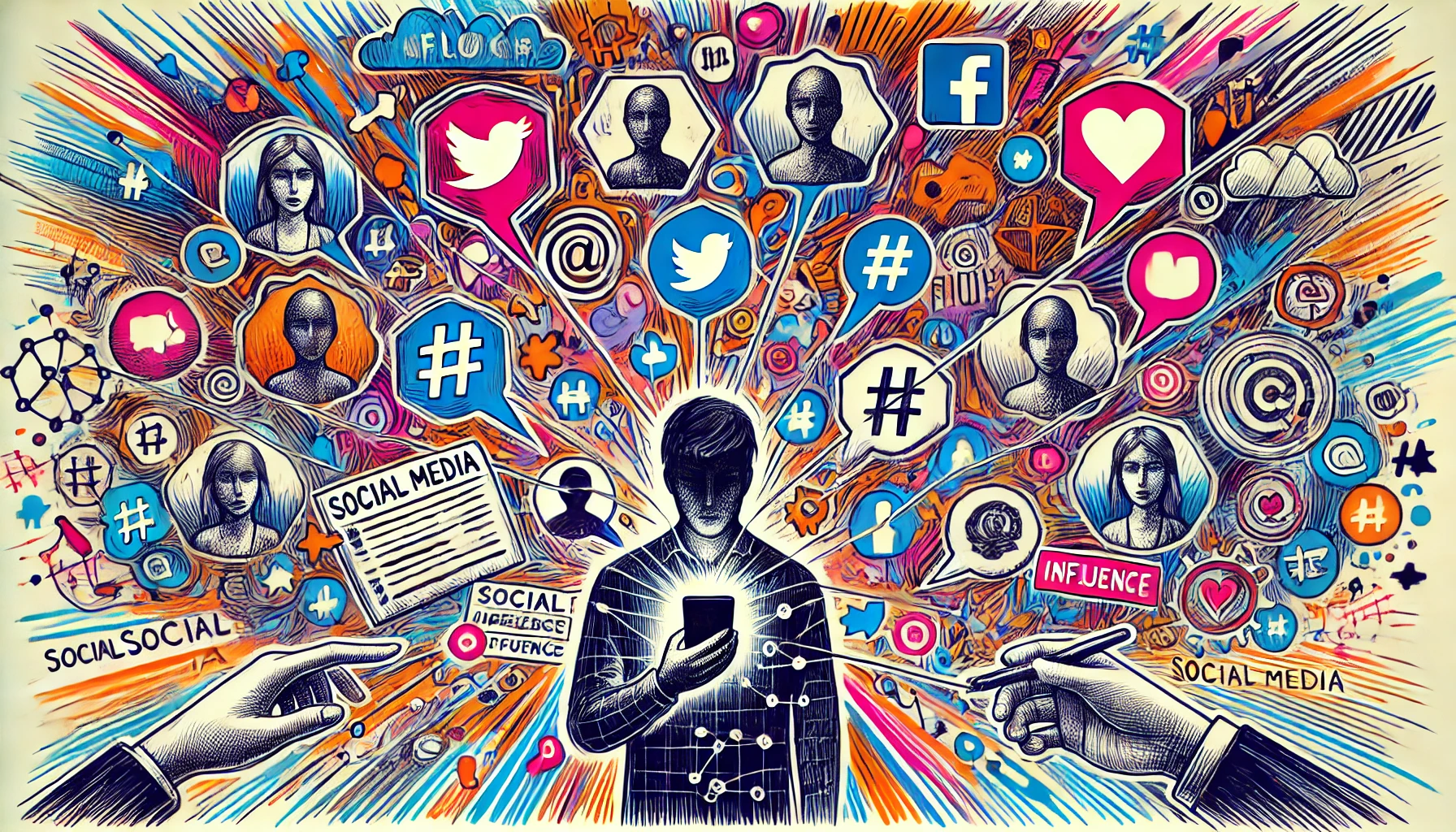
Social media has transformed the way people interact, consume information, and form opinions. With billions of users globally, platforms like Facebook, Twitter, Instagram, and TikTok have become the primary sources of news, entertainment, and social interaction for many. These platforms thrive on user engagement, and their algorithms are designed to show content that resonates with users, often reinforcing existing beliefs and shaping new opinions. The influence of social media is so powerful that it can sway political views, consumer behavior, and even personal values.
At its core, social media taps into the human need for connection and approval. Likes, shares, and comments act as social currency, rewarding certain types of content and discouraging others. As a result, the opinions we form and share online are often shaped by a combination of social proof, peer influence, and the persuasive power of the content we encounter. In this blog, we’ll explore how social media shapes our opinions through influence, breaking down the key mechanisms that drive this process.
1. Social Proof and the Bandwagon Effect
- Social proof refers to the psychological tendency to look to others for cues about what is right or acceptable. On social media, this manifests in the form of likes, shares, and comments.
- The bandwagon effect is a related concept, where people adopt beliefs or behaviors simply because they see others doing the same. The more likes or shares a post has, the more likely it is to be perceived as credible or popular.
- This is especially powerful on social media, where trending topics, viral posts, and influencer endorsements can create a snowball effect, shaping mass opinions quickly.
- Social proof can influence everything from political opinions to consumer choices, as people often trust content with higher engagement metrics, assuming it has been vetted by others.
- Even if individuals don’t necessarily agree with a post, they may still engage with it to fit in with their social circle, reinforcing its popularity.
2. The Role of Algorithms in Opinion Formation
- Social media platforms use algorithms to prioritize content that aligns with users’ past behavior, showing posts that they are likely to engage with. This creates a filter bubble, where individuals are exposed primarily to content that reinforces their pre-existing beliefs.
- These algorithms reward content that generates engagement, which often means sensational, emotionally charged, or controversial posts are more likely to surface.
- As a result, users may become trapped in echo chambers, where their opinions are continually reinforced, limiting exposure to opposing viewpoints.
- This algorithm-driven reinforcement can polarize opinions over time, making individuals more extreme in their beliefs.
- By limiting the diversity of content users see, algorithms can subtly shape their opinions without them being fully aware of the process.
3. The Influence of Social Media Celebrities and Influencers
- Influencers have become powerful opinion leaders on social media, shaping the tastes, preferences, and beliefs of their followers through product endorsements, lifestyle posts, and personal opinions.
- Many users view influencers as relatable figures, and their opinions carry more weight than traditional advertising or celebrity endorsements because they foster a sense of personal connection.
- Influencers often create a parasocial relationship with their audience, where followers feel they “know” the influencer personally, making their recommendations or opinions more persuasive.
- Sponsored content blurs the line between genuine opinion and paid promotion, with followers often adopting the opinions or behaviors endorsed by influencers, unaware of the commercial motives behind them.
- Beyond consumer behavior, influencers play a role in shaping political views, health practices, and even social values, as their opinions often go unquestioned by their loyal audience.
4. The Spread of Misinformation and Its Impact
- Misinformation spreads rapidly on social media, often because sensational or emotionally charged content garners more attention and shares.
- When users encounter misinformation, they may form opinions based on false or misleading information, especially if the content is widely shared or appears credible due to social proof.
- The confirmation bias effect exacerbates this, as people are more likely to believe and share information that aligns with their pre-existing views, further entrenching their opinions.
- Misinformation can have serious consequences, particularly in areas like public health, politics, or social issues, where false beliefs can lead to harmful decisions.
- Platforms have introduced fact-checking mechanisms, but the spread of misinformation often outpaces these efforts, leaving many users influenced by false narratives.
5. Peer Pressure and Conformity in Online Spaces
- Peer pressure is amplified on social media, where individuals often feel compelled to conform to the opinions or behaviors of their online communities to avoid social rejection or criticism.
- This pressure can lead users to post content they don’t fully agree with or engage in discussions they might normally avoid, simply to maintain social harmony.
- Conformity in online groups can lead to groupthink, where the desire for consensus overrides critical thinking, resulting in the reinforcement of popular opinions without much scrutiny.
- Users may also self-censor or refrain from sharing their true opinions if they believe they will be met with disapproval or backlash from their peers.
- The more someone engages with a particular group or community on social media, the stronger the pressure to conform to the dominant opinions of that group becomes.
6. Emotional Influence: The Role of Fear, Anger, and Empathy
- Social media content that evokes strong emotions, particularly fear, anger, or empathy, is more likely to be shared and engaged with, which in turn shapes opinions.
- Posts that trigger emotional responses, such as fear about a societal issue or anger toward a political figure, tend to go viral more easily, reinforcing the emotional aspect of opinion formation.
- Empathy-driven content, such as personal stories or social justice campaigns, can also sway opinions by humanizing complex issues and making them feel more immediate and personal.
- The emotional tone of a post often overrides factual content, leading users to form opinions based on how they feel rather than what they know.
- This emotional influence can create strong, polarized opinions, as social media amplifies content that taps into users’ deepest fears or moral values.
7. Echo Chambers and Political Polarization
- Echo chambers refer to the self-reinforcing environments on social media where users are exposed only to opinions and content that reflect their own beliefs, leading to political or social polarization.
- Users within an echo chamber rarely encounter opposing viewpoints, and when they do, these are often presented in a negative or distorted light.
- This isolation from diverse perspectives leads to more extreme opinions, as individuals continuously receive validation from like-minded users.
- Echo chambers contribute to political polarization, where people on opposite sides of the political spectrum become more entrenched in their views and less willing to engage in civil discourse with those who disagree.
- Social media’s role in facilitating these echo chambers is a significant factor in the increasing polarization seen in political discussions globally.
8. The Impact of Viral Content
- Viral content can have a profound influence on opinion formation, as it reaches a wide audience in a short amount of time, often shaping public discourse.
- Memes, videos, and posts that go viral can define the narrative around an issue, even if they present a simplified or skewed perspective.
- The viral nature of content means that certain issues or opinions can dominate the public conversation, leaving other perspectives underrepresented.
- Viral content often sets the agenda for what people talk about, which influences their opinions on important topics, even if the content is superficial or lacks depth.
- Once an opinion becomes popular through viral content, it can be hard to challenge or reverse, as it becomes entrenched in the public consciousness.
9. The Power of Hashtags and Social Movements
- Hashtags have become a powerful tool for organizing social movements and shaping public opinion on social media, allowing users to rally around a common cause or idea.
- Hashtag movements like #MeToo, #BlackLivesMatter, or #ClimateAction have driven widespread awareness and support for social causes, influencing both individual opinions and broader societal change.
- Hashtags provide a sense of belonging, as users who support the cause can easily connect with like-minded individuals and amplify their message.
- However, hashtag activism can also lead to slacktivism, where individuals express support for a cause online without taking meaningful action in real life, leading to superficial engagement.
- Despite this, the collective voice created by hashtag movements can shift public opinion, forcing governments, corporations, and institutions to respond to social pressure.
10. Self-Presentation and the Influence of Social Approval
- Social media encourages individuals to carefully curate their online presence, presenting a version of themselves that they believe will gain the most approval from their peers.
- This self-presentation can influence opinions, as users often adopt views or behaviors that they believe will be positively received by their followers, rather than those that reflect their true beliefs.
- The desire for social approval can lead to conformity with popular opinions, especially on contentious issues where taking a dissenting view might result in criticism or ostracism.
- Over time, the opinions individuals express online may become more aligned with the expectations of their social group, even if those opinions don’t reflect their authentic views.
- Social media creates a feedback loop where the opinions that receive the most approval are amplified, shaping the views of others in the process.
In conclusion, social media has a profound impact on how we form opinions, shaping everything from our political views to our consumer choices. Through mechanisms like social proof, algorithms, influencer culture, and emotional appeal, social media platforms subtly and overtly influence the way we think and feel. By understanding these processes, we can become more mindful of the ways social media shapes our opinions and make more informed, deliberate decisions about the content we engage with.