
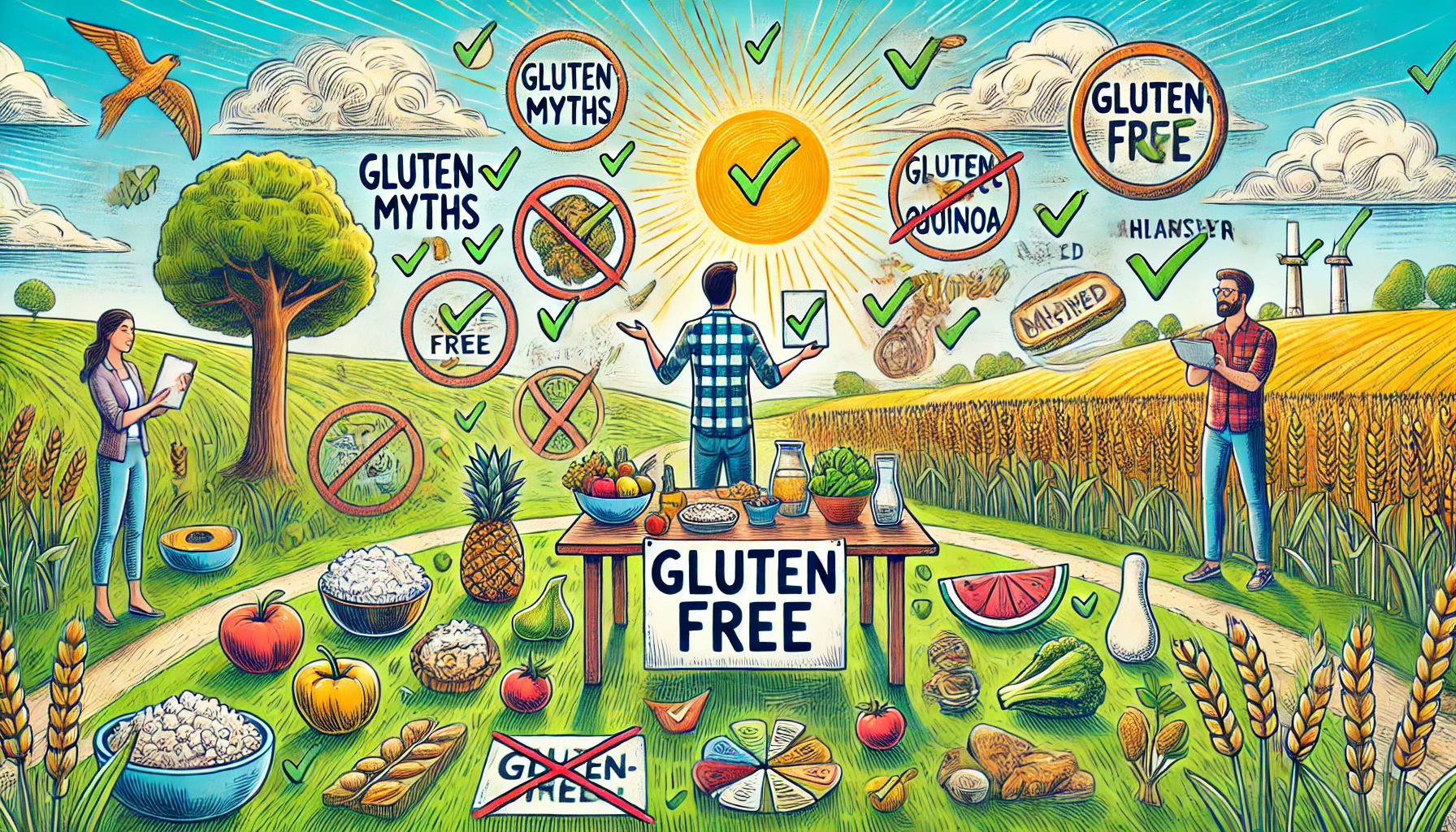
Gluten-free diets have become increasingly popular, with many people adopting them for various health reasons or simply as a lifestyle choice. While gluten-free eating is essential for individuals with celiac disease or gluten sensitivity, there are numerous myths and misconceptions about its benefits and necessity for the general population. This blog will debunk common myths about gluten-free diets and provide clarity on what they truly entail.
The gluten-free trend has been fueled by the perception that it is inherently healthier or more beneficial for weight loss. However, the reality is more nuanced, and understanding the facts can help individuals make informed dietary choices. Let’s explore and debunk some of the most widespread myths surrounding gluten-free diets.
1. Myth: Gluten-Free Diets Are Healthier for Everyone
- Health Necessity: A gluten-free diet is essential for those with celiac disease, gluten sensitivity, or wheat allergy, but it is not inherently healthier for the general population.
- Nutritional Balance: Many gluten-free products are highly processed and can lack essential nutrients like fiber, iron, and B vitamins, which are often found in whole grains.
- Whole Grains: Whole grains such as wheat, barley, and rye, which contain gluten, are rich in nutrients and can be part of a balanced diet for those without gluten-related disorders.
- Nutrient Intake: Eliminating gluten without a medical reason may lead to an unbalanced diet and nutritional deficiencies.
- Healthy Diet: A healthy diet can include gluten-containing grains, provided it is balanced and varied.
2. Myth: Gluten-Free Foods Aid in Weight Loss
- Caloric Content: Gluten-free foods are not inherently lower in calories. Many gluten-free alternatives can be higher in sugar and fats to compensate for the texture and flavor of gluten-containing products.
- Processed Foods: Gluten-free processed foods can be just as calorie-dense, if not more so, than their gluten-containing counterparts.
- Portion Control: Weight loss is determined by caloric intake versus expenditure, regardless of gluten content.
- Whole Foods: Focusing on whole, unprocessed foods like fruits, vegetables, lean proteins, and whole grains (gluten-free or not) is more effective for weight management.
- Balanced Approach: A balanced diet with appropriate portion sizes is crucial for weight loss, not simply eliminating gluten.
3. Myth: Gluten Is Unhealthy and Should Be Avoided
- Misconceptions: Gluten is a protein found in wheat, barley, and rye, and it is not harmful to the majority of the population. Only those with specific medical conditions need to avoid it.
- Nutrient Sources: Gluten-containing grains provide important nutrients, including fiber, vitamins, and minerals.
- Misleading Claims: The notion that gluten is inherently bad has been popularized by anecdotal reports and celebrity endorsements rather than scientific evidence.
- Digestive Health: Most people digest gluten without issues. Cutting out gluten unnecessarily can limit dietary diversity.
- Dietary Balance: A varied diet that includes gluten-containing grains can contribute to overall health and well-being.
4. Myth: Gluten-Free Diets Are Always Low-Carb
- Carbohydrate Content: Gluten-free diets are not necessarily low-carb. Many gluten-free foods contain alternative grains and starches, such as rice, corn, and potatoes, which can be high in carbohydrates.
- Alternative Grains: Gluten-free grains like quinoa, buckwheat, and millet are also sources of carbohydrates.
- Misconception: The confusion often arises because some people equate gluten-free with grain-free or low-carb, which is not accurate.
- Dietary Variety: Gluten-free diets can include a wide range of carbohydrate-rich foods, both whole and processed.
- Balanced Diet: A gluten-free diet can be high, moderate, or low in carbs, depending on food choices.
5. Myth: Gluten-Free Means Grain-Free
- Gluten-Free Grains: Many gluten-free grains, such as rice, corn, quinoa, buckwheat, millet, and sorghum, are naturally free of gluten.
- Diet Diversity: A gluten-free diet can include a variety of grains and seeds, providing essential nutrients and dietary fiber.
- Nutritional Value: Gluten-free grains offer similar nutritional benefits as gluten-containing grains, including being good sources of complex carbohydrates.
- Diet Flexibility: The diet allows for a broad range of foods, not just those devoid of grains.
- Healthy Options: Including a variety of gluten-free grains can help ensure a balanced intake of nutrients.
6. Myth: Gluten-Free Foods Are Always Healthier
- Processed Foods: Many gluten-free products are processed and can contain higher levels of sugar, fat, and salt compared to their gluten-containing counterparts.
- Nutritional Labeling: Just because a product is labeled gluten-free doesn’t mean it is a healthier choice. It’s essential to read labels and understand the nutritional content.
- Natural vs. Processed: Naturally gluten-free foods, like fruits, vegetables, and lean proteins, are generally healthier than processed gluten-free snacks.
- Whole Foods: Prioritize whole, minimally processed foods for better nutrition.
- Diet Quality: The quality of a diet is determined by the overall balance and variety of foods, not just the absence of gluten.
7. Myth: A Gluten-Free Diet Automatically Means High Quality
- Nutrient Deficiencies: Gluten-free diets can be lower in essential nutrients like fiber, B vitamins, and iron if not carefully planned.
- Balanced Intake: A gluten-free diet requires careful planning to ensure it meets all nutritional needs, especially when excluding fortified gluten-containing products.
- Quality of Ingredients: Focus on the quality and variety of ingredients rather than the gluten-free label alone.
- Dietary Balance: A well-rounded diet is key to maintaining health, whether it includes gluten or not.
- Nutrient Sources: Include a wide range of nutrient-dense foods to avoid deficiencies.
8. Myth: Gluten Sensitivity Is the Same as Celiac Disease
- Celiac Disease: Celiac disease is an autoimmune disorder where ingesting gluten leads to damage in the small intestine. It requires strict adherence to a gluten-free diet.
- Non-Celiac Gluten Sensitivity: Non-celiac gluten sensitivity (NCGS) involves symptoms similar to celiac disease, such as bloating and fatigue, but does not cause intestinal damage.
- Different Conditions: While both conditions require gluten avoidance, their underlying mechanisms and diagnostic criteria differ.
- Diagnosis: Celiac disease is diagnosed through specific blood tests and biopsies, whereas NCGS is diagnosed through symptom evaluation after ruling out celiac disease and wheat allergy.
- Medical Guidance: It’s essential to consult with a healthcare professional for proper diagnosis and dietary guidance.
9. Myth: Gluten-Free Diets Are Easy to Follow
- Diet Complexity: Maintaining a strict gluten-free diet can be challenging due to the presence of gluten in many processed foods, sauces, and even medications.
- Cross-Contamination: There is also a risk of cross-contamination in foods prepared or processed with gluten-containing ingredients.
- Dining Out: Eating out requires careful scrutiny of menus and communication with restaurant staff to avoid gluten exposure.
- Product Availability: Access to gluten-free products can vary depending on location and availability.
- Lifestyle Adjustment: Transitioning to a gluten-free diet often requires significant lifestyle changes and diligence.
10. Myth: Everyone Should Try a Gluten-Free Diet
- Unnecessary Restrictions: For individuals without celiac disease, gluten sensitivity, or a wheat allergy, there is no health benefit to avoiding gluten.
- Diet Quality: Unnecessarily following a gluten-free diet can lead to reduced intake of important nutrients found in whole grains.
- Balanced Eating: A balanced diet, including a variety of whole grains, is recommended for overall health and well-being.
- Individual Needs: Dietary choices should be based on individual health needs, preferences, and medical conditions.
- Expert Consultation: Before making significant dietary changes, consult a healthcare professional or dietitian.
In conclusion, while gluten-free diets are essential for certain individuals, they are not inherently healthier or necessary for everyone. It’s crucial to base dietary choices on individual health needs and to understand that a balanced and varied diet, whether gluten-free or not, is key to overall health. By debunking these common myths, we can better understand the realities of gluten-free eating and make informed dietary decisions.