
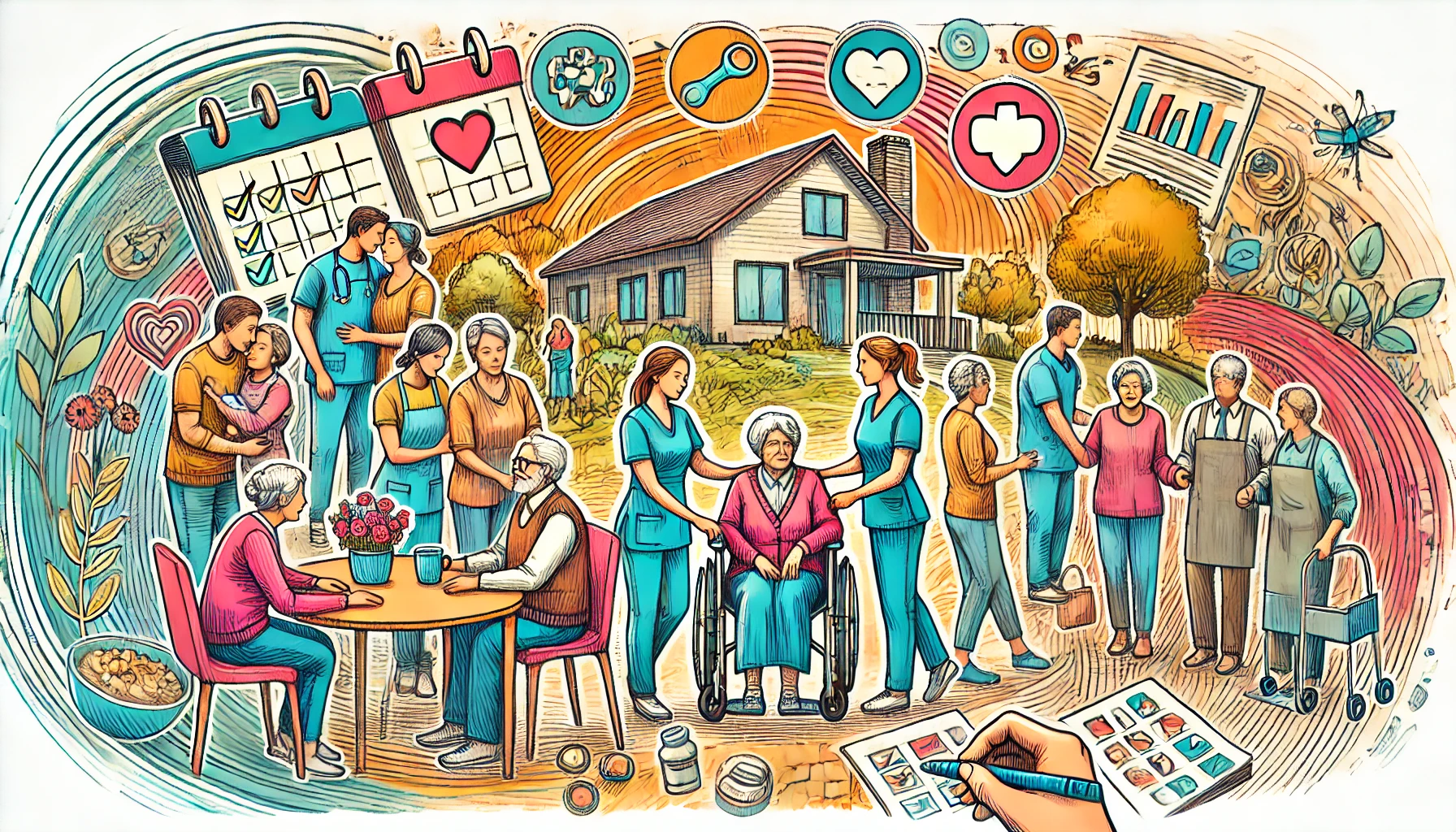
Caring for elderly parents or relatives is a significant responsibility that can be both rewarding and challenging. To manage the demands of elder care effectively, it is essential to build a robust support system. A well-rounded support network can provide emotional, practical, and financial assistance, making the caregiving journey more manageable and ensuring the well-being of both the caregiver and the elderly individual. Here are key strategies for building a comprehensive support system for elder care.
1. Involve Family Members
- Hold regular family meetings to discuss caregiving responsibilities, share updates, and plan for future needs.
- Divide caregiving tasks among family members based on their strengths, availability, and proximity.
- Create a shared calendar or use a scheduling app to coordinate caregiving duties and keep everyone informed.
- Encourage open communication and provide opportunities for family members to express their concerns and suggestions.
- Establish a rotation system to ensure that caregiving responsibilities are distributed fairly and prevent burnout.
2. Utilize Community Resources
- Explore local community centers, senior centers, and religious organizations that offer support services for elderly individuals.
- Look for adult daycare centers that provide daytime care and activities, giving caregivers a break.
- Investigate meal delivery services, such as Meals on Wheels, to ensure your loved one has access to nutritious meals.
- Utilize transportation services specifically designed for seniors to help with medical appointments and errands.
- Connect with local non-profit organizations that offer resources and support for caregivers and elderly individuals.
3. Seek Professional Help
- Consider hiring professional caregivers to provide in-home care, assist with daily activities, and offer companionship.
- Engage with geriatric care managers who can help coordinate care, navigate healthcare systems, and develop care plans.
- Utilize home health services for medical care, such as nursing, physical therapy, or medication management.
- Explore options for respite care, which provides temporary relief for caregivers by taking over their responsibilities for a short period.
- Consult with elder law attorneys to address legal matters, such as power of attorney, wills, and guardianship.
4. Join Support Groups
- Participate in caregiver support groups, either in-person or online, to share experiences, gain advice, and find emotional support.
- Look for support groups specific to certain conditions, such as Alzheimer’s or Parkinson’s disease, for targeted advice and resources.
- Use online forums and social media groups to connect with other caregivers, share tips, and offer mutual encouragement.
- Attend workshops, webinars, and conferences focused on caregiving to stay informed and connected with the caregiver community.
- Encourage elderly individuals to join support groups for seniors, providing them with social interaction and peer support.
5. Leverage Technology
- Use caregiving apps to manage schedules, track medications, and coordinate tasks with other family members.
- Set up video calls and messaging apps to stay connected with your loved one and monitor their well-being remotely.
- Utilize telehealth services for medical consultations, reducing the need for frequent trips to healthcare facilities.
- Explore medical alert systems that provide emergency assistance and peace of mind for both caregivers and elderly individuals.
- Use online resources and databases to find information, support, and services related to elder care.
6. Educate Yourself and Others
- Continuously educate yourself about your loved one’s medical conditions, treatment options, and caregiving best practices.
- Attend caregiving workshops, seminars, and training sessions to enhance your skills and knowledge.
- Share information and resources with other family members and caregivers to ensure everyone is well-informed.
- Stay updated on new developments in elder care, such as advancements in medical treatments or changes in healthcare policies.
- Use reliable sources, such as healthcare providers, non-profit organizations, and government agencies, for accurate information.
7. Develop a Financial Plan
- Assess your loved one’s financial situation, including income, savings, insurance, and expenses.
- Explore government programs and benefits, such as Medicaid, Medicare, Social Security, and veterans’ benefits, for financial assistance.
- Consider long-term care insurance to cover costs associated with in-home care, assisted living, or nursing homes.
- Consult with financial planners or elder law attorneys to develop a comprehensive financial plan for elder care.
- Create a budget that outlines caregiving expenses and identifies potential sources of financial support.
8. Establish Legal Protections
- Prepare legal documents, such as power of attorney, healthcare proxy, and living wills, to ensure your loved one’s wishes are respected.
- Review and update wills and estate plans to reflect current wishes and circumstances.
- Address guardianship or conservatorship issues if your loved one is no longer capable of making decisions independently.
- Ensure that all necessary legal documents are easily accessible to relevant family members and healthcare providers.
- Seek legal advice to navigate complex legal matters and protect your loved one’s rights and interests.
9. Practice Self-Care
- Prioritize your own physical, emotional, and mental well-being by taking regular breaks and engaging in self-care activities.
- Maintain a healthy lifestyle with regular exercise, a balanced diet, and adequate sleep.
- Seek support from friends, family, or professional counselors to manage stress and prevent caregiver burnout.
- Set realistic boundaries to balance caregiving responsibilities with personal life, work, and other commitments.
- Recognize and address signs of burnout early, and take proactive steps to seek help and support.
10. Plan for Emergencies
- Develop an emergency plan that includes contact information, emergency procedures, and contingency plans for sudden changes in caregiving needs.
- Prepare an emergency kit with necessary supplies, such as medications, medical equipment, and important documents.
- Discuss and document your loved one’s preferences for emergency situations, such as hospitalization or advanced care directives.
- Ensure that other family members and caregivers are aware of the emergency plan and know their roles.
- Regularly review and update the emergency plan to ensure it remains current and effective.
11. Create a Positive Environment
- Foster a supportive and nurturing home environment that promotes comfort and well-being.
- Encourage social interactions and activities that bring joy and fulfillment to your loved one.
- Decorate the living space with familiar and cherished items to create a sense of belonging and continuity.
- Practice patience, empathy, and kindness in your interactions, reinforcing a positive caregiving relationship.
- Celebrate special occasions and milestones together, strengthening family bonds and creating positive memories.
12. Encourage Independence and Empowerment
- Support your loved one in maintaining as much independence as possible, encouraging them to participate in daily activities.
- Provide tools and resources that promote independence, such as assistive devices or home modifications.
- Involve your loved one in decision-making processes, respecting their autonomy and preferences.
- Encourage them to pursue hobbies, social activities, and community involvement to enhance their sense of purpose.
- Offer assistance as needed but avoid taking over tasks they can manage themselves.
Building a comprehensive support system for elder care involves leveraging family, community resources, professional help, technology, and self-care. By involving family members, utilizing community resources, seeking professional help, joining support groups, leveraging technology, educating yourself and others, developing a financial plan, establishing legal protections, practicing self-care, planning for emergencies, creating a positive environment, and encouraging independence, you can provide effective and compassionate care for your elderly loved ones. These strategies will help ensure their well-being while maintaining a balanced and fulfilling caregiving experience.