
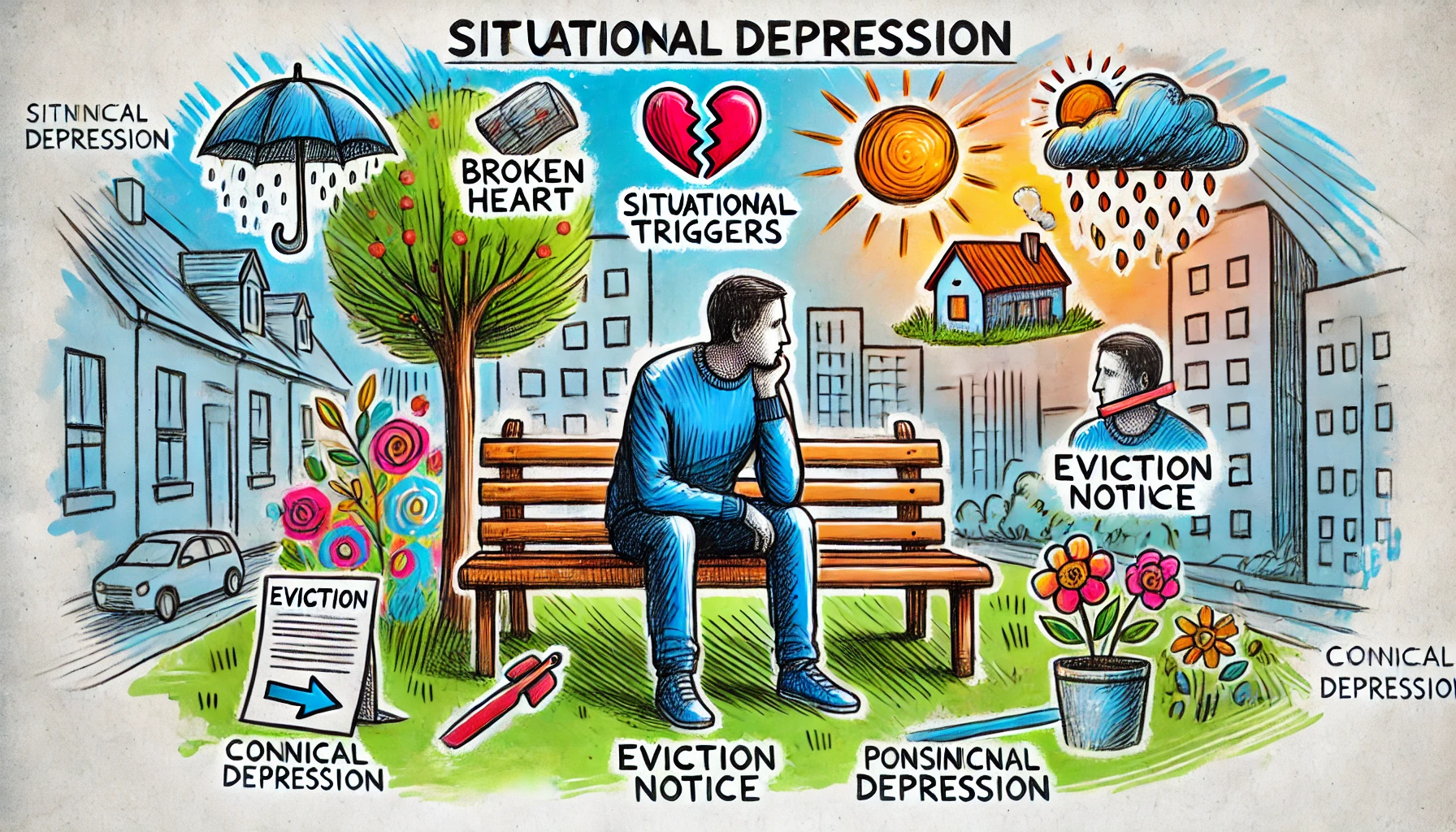
Situational depression, also known as adjustment disorder with depressed mood, is a type of depression triggered by a specific event or situation. It occurs in response to life changes or stressful events such as the loss of a loved one, job loss, divorce, or a significant life transition. Unlike clinical depression, which can arise without an apparent cause and involves a chemical imbalance in the brain, situational depression is directly linked to external stressors. While it shares many symptoms with clinical depression, its cause, duration, and treatment can differ significantly.
Understanding the differences between situational depression and clinical depression is essential for accurate diagnosis and effective treatment. Situational depression is generally less severe and tends to resolve once the individual adapts to the stressor. However, it can still significantly impact a person’s quality of life. This blog will explore the key distinctions between situational and clinical depression, including their causes, symptoms, and treatment options.
1. Causes of Situational Depression
- Specific Life Events: Situational depression is triggered by a specific life event or series of events that cause significant stress. Common triggers include the death of a loved one, divorce, relationship problems, job loss, financial difficulties, or a major life transition such as moving to a new city.
- Response to Stress: This type of depression is a direct response to the external stressor. The intensity of the reaction often correlates with the perceived severity of the event and the individual’s ability to cope.
- Lack of Coping Resources: Individuals who lack adequate coping resources, such as social support, healthy coping strategies, or previous experience in dealing with similar stressors, are more likely to develop situational depression.
- Pre-existing Vulnerabilities: People with a history of mental health issues, including anxiety or depression, may be more vulnerable to developing situational depression when faced with stressful events.
- Environmental Factors: A stressful or unsupportive environment can exacerbate the effects of situational stressors, making it more challenging for individuals to adapt and recover.
2. Causes of Clinical Depression
- Biological Factors: Clinical depression, also known as major depressive disorder (MDD), is often associated with biological factors such as imbalances in neurotransmitters (e.g., serotonin, norepinephrine, dopamine) that regulate mood. Genetics also play a role, as individuals with a family history of depression are at a higher risk.
- Psychological Factors: Negative thought patterns, low self-esteem, and a tendency toward pessimism can contribute to the development of clinical depression. Traumatic or stressful experiences, particularly in childhood, can also predispose individuals to MDD.
- Chronic Medical Conditions: Chronic illnesses such as diabetes, heart disease, or neurological disorders can increase the risk of developing clinical depression. The ongoing stress and physical symptoms of these conditions can affect mental health.
- Substance Abuse: Substance abuse, including alcohol and drugs, can contribute to the onset of clinical depression by altering brain chemistry and exacerbating depressive symptoms.
- No Apparent Trigger: Unlike situational depression, clinical depression can occur without a clear external trigger or stressor. It may develop gradually over time or appear suddenly, affecting individuals regardless of their circumstances.
3. Symptoms of Situational Depression
- Emotional Symptoms: Individuals with situational depression may experience feelings of sadness, hopelessness, and helplessness in response to the stressful event. They may feel overwhelmed by the situation and have difficulty finding enjoyment in activities.
- Crying Spells: Frequent crying spells or feeling tearful for seemingly minor reasons are common in situational depression. This emotional response is often directly related to the stressor.
- Anxiety and Irritability: Increased anxiety, irritability, and restlessness are typical symptoms, as individuals struggle to cope with the stressor and adapt to the changes it brings.
- Difficulty Concentrating: Situational depression can impair concentration and decision-making, making it difficult to focus on work, school, or daily responsibilities.
- Social Withdrawal: People experiencing situational depression may withdraw from social interactions, avoiding friends and family as they struggle to cope with their emotions.
4. Symptoms of Clinical Depression
- Persistent Low Mood: Clinical depression involves a persistent, pervasive low mood that lasts for at least two weeks. This mood is not directly linked to a specific event and can include feelings of sadness, emptiness, or hopelessness.
- Loss of Interest: A hallmark symptom of clinical depression is a loss of interest or pleasure in activities that were once enjoyable. This anhedonia can affect all areas of life, including hobbies, work, and social interactions.
- Physical Symptoms: Clinical depression can manifest as physical symptoms such as fatigue, changes in appetite or weight, sleep disturbances (insomnia or hypersomnia), and psychomotor agitation or retardation.
- Feelings of Worthlessness: Individuals with clinical depression often experience intense feelings of worthlessness, guilt, or self-criticism, which can be disproportionate to their circumstances.
- Suicidal Thoughts: Clinical depression may involve recurrent thoughts of death or suicide, which require immediate attention and intervention from a mental health professional.
5. Duration and Course of Situational Depression
- Shorter Duration: Situational depression is typically of shorter duration than clinical depression. Symptoms generally arise within three months of the triggering event and last for a relatively short period, often resolving within six months as the individual adapts to the change or stressor.
- Tied to the Stressor: The course of situational depression is directly related to the presence and resolution of the stressor. As the individual adjusts to the situation or the stressor is removed, symptoms often improve.
- Potential for Resolution: With appropriate support and coping strategies, situational depression can often resolve on its own, though intervention can be helpful in facilitating recovery.
- Risk of Progression: If the stressor persists or if the individual has difficulty adapting, situational depression can progress to a more chronic form of depression, potentially leading to major depressive disorder.
- Fluctuating Symptoms: Symptoms of situational depression may fluctuate, often intensifying during periods of heightened stress and diminishing as the individual begins to adapt.
6. Duration and Course of Clinical Depression
- Longer Duration: Clinical depression typically lasts longer than situational depression, with symptoms persisting for weeks, months, or even years. Without treatment, clinical depression can become a chronic condition with recurring episodes.
- Independent of External Events: Unlike situational depression, clinical depression is not directly tied to a specific external event or stressor. It can occur independently of circumstances and may not improve with changes in the environment.
- Recurrent Episodes: Many individuals with clinical depression experience recurrent episodes throughout their lives. Even with treatment, the risk of future episodes remains, making long-term management important.
- Chronic Nature: In some cases, clinical depression can become chronic, with individuals experiencing persistent symptoms over an extended period. This can significantly impact their quality of life and functioning.
- Severity of Impact: Clinical depression often has a more severe impact on an individual’s daily functioning, affecting their ability to work, maintain relationships, and perform basic self-care.
7. Treatment Options for Situational Depression
- Psychotherapy: Talk therapy, such as cognitive-behavioral therapy (CBT) or interpersonal therapy (IPT), is often effective for situational depression. Therapy focuses on helping individuals develop coping strategies, process their emotions, and adapt to the stressor.
- Support Groups: Joining a support group can provide individuals with a sense of community and understanding. Sharing experiences with others facing similar challenges can offer emotional support and practical advice.
- Lifestyle Modifications: Encouraging healthy lifestyle changes, such as regular exercise, a balanced diet, adequate sleep, and stress management techniques (e.g., mindfulness, meditation), can help improve mood and resilience.
- Social Support: Building a strong support network of friends, family, and community resources can provide emotional and practical support during difficult times. Social connections can play a crucial role in recovery.
- Short-Term Medication: In some cases, short-term use of antidepressant or anti-anxiety medication may be helpful, particularly if symptoms are severe or significantly impair functioning. Medication should be used under the guidance of a healthcare provider.
8. Treatment Options for Clinical Depression
- Medication: Antidepressant medications, such as selective serotonin reuptake inhibitors (SSRIs) or serotonin-norepinephrine reuptake inhibitors (SNRIs), are commonly used to treat clinical depression. These medications can help regulate neurotransmitter levels and alleviate depressive symptoms.
- Psychotherapy: Cognitive-behavioral therapy (CBT), interpersonal therapy (IPT), and other forms of psychotherapy are effective for treating clinical depression. Therapy helps individuals identify and change negative thought patterns, develop coping skills, and improve relationships.
- Combination Therapy: A combination of medication and psychotherapy is often the most effective approach for treating clinical depression, addressing both the biological and psychological aspects of the condition.
- Advanced Treatments: For individuals who do not respond to standard treatments, advanced options such as electroconvulsive therapy (ECT), transcranial magnetic stimulation (TMS), or ketamine infusions may be considered.
- Long-Term Management: Clinical depression often requires long-term management, including ongoing therapy, medication adjustments, and lifestyle modifications, to prevent relapse and maintain stability.
9. Coping Strategies for Situational Depression
- Acceptance and Adaptation: Accepting the situation and allowing oneself time to grieve or process the event is an important step in coping with situational depression. Understanding that it’s normal to feel overwhelmed can provide a sense of validation.
- Developing Coping Skills: Learning and practicing coping skills, such as relaxation techniques, mindfulness, and problem-solving strategies, can help individuals manage stress and reduce the impact of the stressor.
- Setting Realistic Goals: Setting small, achievable goals can provide a sense of accomplishment and improve motivation. Breaking tasks into manageable steps can make it easier to tackle daily responsibilities.
- Seeking Support: Reaching out to friends, family, or support groups for emotional support can be incredibly helpful. Talking about feelings and experiences can provide relief and foster a sense of connection.
- Engaging in Positive Activities: Participating in activities that bring joy and fulfillment, such as hobbies, exercise, or creative pursuits, can help improve mood and provide a sense of normalcy during difficult times.
10. The Importance of Recognizing and Treating Both Conditions
- Accurate Diagnosis: Differentiating between situational and clinical depression is crucial for developing an effective treatment plan. Understanding the root cause of symptoms can guide the appropriate intervention and support.
- Preventing Progression: Early intervention in situational depression can prevent its progression to clinical depression, reducing the risk of long-term mental health issues. Providing support and coping strategies can facilitate recovery.
- Tailored Treatment: Recognizing the differences between the two conditions allows for tailored treatment approaches. Situational depression may respond well to short-term therapy and support, while clinical depression often requires a more comprehensive, long-term treatment plan.
- Reducing Stigma: Educating individuals about the differences between situational and clinical depression can reduce stigma and encourage those affected to seek help. Understanding that both conditions are valid and treatable is essential.
- Promoting Resilience: Addressing situational and clinical depression with appropriate treatment and support can promote resilience and improve an individual’s ability to cope with future stressors, enhancing overall mental well-being.
Conclusion
Situational depression and clinical depression are distinct conditions with different causes, symptoms, and treatment approaches. Situational depression arises in response to a specific life event or stressor and typically resolves as the individual adapts to the situation. In contrast, clinical depression is a more persistent and often biologically based condition that may not be tied to an external cause. Understanding these differences is essential for accurate diagnosis and effective treatment.
Treatment for situational depression often involves psychotherapy, support groups, lifestyle modifications, and building a strong support network. Clinical depression may require a combination of medication, psychotherapy, and long-term management. Recognizing and addressing both conditions is crucial for improving mental health outcomes and promoting resilience. By raising awareness and providing appropriate support, we can help individuals navigate the challenges of both situational and clinical depression and work towards recovery.