
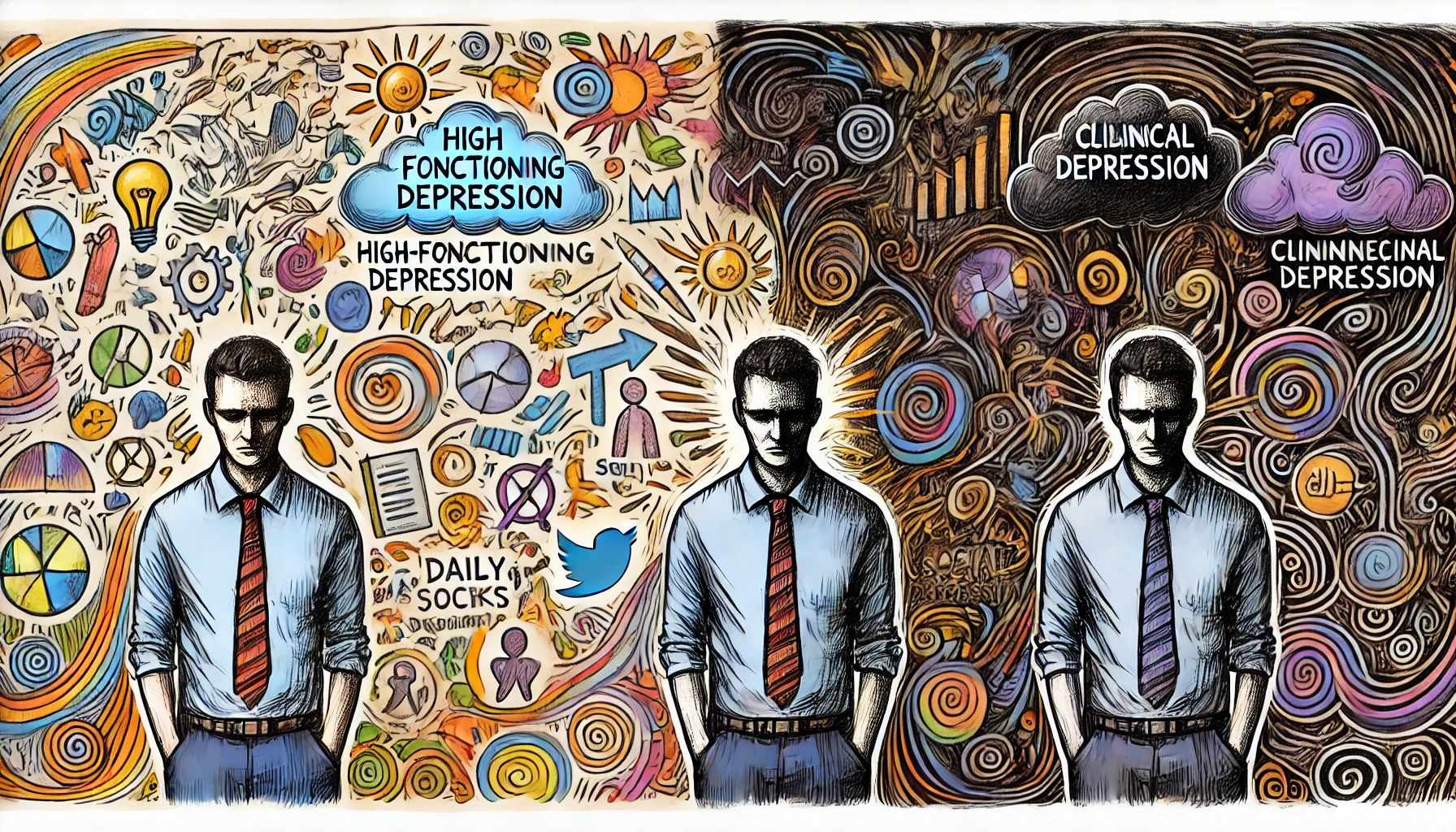
Depression manifests in various forms, and not all of them are easily recognizable. While clinical depression, or major depressive disorder (MDD), is often characterized by severe symptoms that significantly impair daily functioning, high-functioning depression is more subtle and can be harder to identify. People with high-functioning depression may appear to lead a normal life on the surface, maintaining responsibilities and relationships, yet struggle internally with persistent depressive symptoms. Understanding the differences between high-functioning depression and clinical depression is essential for recognizing the signs and seeking appropriate support.
High-functioning depression, often associated with persistent depressive disorder (PDD) or dysthymia, can be particularly challenging because individuals may not outwardly exhibit the severity of symptoms typically associated with major depression. They often downplay their struggles, making it difficult for themselves and others to recognize the need for help. In contrast, clinical depression involves more intense and debilitating symptoms that interfere with nearly every aspect of life. This blog delves into the distinctions between these two forms of depression to enhance awareness and guide effective intervention.
Understanding Clinical Depression
- Severity and Intensity of Symptoms
- Clinical depression, also known as major depressive disorder (MDD), involves severe symptoms that significantly impair a person’s ability to function in daily life.
- Symptoms include persistent feelings of sadness, hopelessness, and worthlessness, along with a loss of interest in activities once enjoyed.
- Individuals may experience intense emotional pain, frequent crying spells, and an overwhelming sense of despair that affects their thoughts, behaviors, and physical health.
- Clinical depression often includes physical symptoms like fatigue, changes in appetite, sleep disturbances, and difficulty concentrating.
- The intensity of these symptoms can make it difficult for individuals to carry out basic responsibilities such as work, school, or self-care.
- Impact on Daily Functioning
- Clinical depression has a profound impact on daily functioning, making it challenging for individuals to perform routine tasks, maintain relationships, or fulfill obligations.
- Work performance may decline due to difficulties with concentration, decision-making, and motivation, potentially leading to absenteeism or job loss.
- Social withdrawal is common, as individuals may isolate themselves from friends and family due to a lack of energy or interest in social activities.
- In severe cases, individuals may struggle to get out of bed, maintain personal hygiene, or take care of household responsibilities.
- This level of impairment often prompts those around the individual to recognize that something is wrong and seek professional help.
Recognizing High-Functioning Depression
- Persistent Yet Milder Symptoms
- High-functioning depression, often associated with persistent depressive disorder (PDD), involves a chronic form of depression where symptoms are less severe but more prolonged.
- Individuals experience a low, gloomy mood most of the time, with symptoms lasting for at least two years for adults (one year for children and adolescents).
- Unlike clinical depression, the symptoms of high-functioning depression may not be as intense or debilitating, allowing individuals to maintain a semblance of normalcy in their daily lives.
- Common symptoms include low energy, irritability, feelings of inadequacy, difficulty experiencing pleasure, and a general sense of pessimism or hopelessness.
- While the symptoms are less acute, their persistence can significantly impact an individual’s quality of life and overall well-being.
- Maintaining an Appearance of Normalcy
- Individuals with high-functioning depression often appear to function relatively well in their daily lives, successfully meeting work, school, and social obligations.
- They may be able to mask their symptoms and present themselves as composed and competent, leading others to believe that they are coping well.
- Despite their outward appearance of normalcy, these individuals are often struggling internally with feelings of sadness, fatigue, and self-doubt.
- The ability to maintain daily responsibilities can make it difficult for both the individual and others to recognize the need for help, as the symptoms may not seem severe enough to warrant concern.
- High-functioning depression is often described as “smiling depression,” where individuals put on a facade of happiness while concealing their inner turmoil.
Differences in Diagnosis and Treatment
- Diagnostic Criteria and Challenges
- Clinical depression is diagnosed based on criteria outlined in the Diagnostic and Statistical Manual of Mental Disorders (DSM-5), which includes experiencing at least five symptoms of depression for a minimum of two weeks.
- Symptoms must cause significant distress or impairment in social, occupational, or other important areas of functioning to meet the criteria for major depressive disorder.
- High-functioning depression, or PDD, requires the presence of a depressed mood for most of the day, for more days than not, over a period of at least two years, along with at least two other symptoms of depression.
- Diagnosing high-functioning depression can be challenging because individuals may downplay their symptoms or attribute them to personality traits or life circumstances.
- Both conditions require a thorough evaluation by a mental health professional to ensure accurate diagnosis and appropriate treatment.
- Treatment Approaches
- Treatment for clinical depression typically involves a combination of psychotherapy and medication, such as antidepressants, to alleviate symptoms and improve functioning.
- Cognitive-behavioral therapy (CBT) is often used to help individuals identify and change negative thought patterns and behaviors that contribute to their depression.
- High-functioning depression may also benefit from similar treatments, but the focus may be on building coping strategies, improving self-esteem, and addressing underlying issues that contribute to the chronic low mood.
- Medication can be effective for both types of depression, but it may take time to find the right combination and dosage that works for the individual.
- Lifestyle changes, such as regular exercise, a balanced diet, adequate sleep, and stress management, can also play a crucial role in managing both clinical and high-functioning depression.
Coping with High-Functioning Depression
- The Struggle with Perfectionism
- Individuals with high-functioning depression often exhibit traits of perfectionism and high self-expectations, which can contribute to their condition.
- They may feel an intense pressure to perform well and maintain an appearance of success, even when they are struggling internally.
- This drive for perfection can lead to burnout, increased stress, and feelings of inadequacy, further exacerbating depressive symptoms.
- The fear of failure or letting others down can prevent individuals from seeking help or admitting that they are struggling.
- Learning to set realistic expectations and practicing self-compassion are important steps in managing high-functioning depression.
- The Importance of Seeking Help
- One of the biggest challenges for individuals with high-functioning depression is recognizing and acknowledging the need for help.
- Because they are able to maintain their daily responsibilities, they may believe that their symptoms are not severe enough to warrant professional intervention.
- However, untreated high-functioning depression can lead to worsening symptoms, reduced quality of life, and an increased risk of developing major depressive disorder.
- Seeking help from a mental health professional can provide valuable support, tools, and strategies for managing symptoms and improving well-being.
- Encouraging open discussions about mental health and reducing stigma can help individuals feel more comfortable seeking the help they need.
Impact on Relationships and Daily Life
- Challenges in Personal Relationships
- Both high-functioning depression and clinical depression can have a significant impact on personal relationships, including family, friends, and romantic partners.
- Individuals with high-functioning depression may struggle with feelings of emptiness, irritability, or emotional distance, which can lead to misunderstandings and conflict in relationships.
- In clinical depression, the severity of symptoms such as social withdrawal, lack of interest in activities, and emotional numbness can make it difficult to maintain close connections with others.
- Loved ones may find it hard to understand why the individual is struggling or may feel helpless in providing support, leading to frustration and strain on the relationship.
- Open communication, patience, and empathy are crucial for supporting individuals with both high-functioning and clinical depression in their relationships.
- Maintaining Daily Responsibilities
- Individuals with high-functioning depression often excel at maintaining their daily responsibilities, which can mask the severity of their internal struggles.
- They may appear to function well at work or school, but the effort required to maintain this facade can be exhausting and lead to burnout.
- In contrast, clinical depression can make it difficult for individuals to perform even basic daily tasks, such as personal hygiene, household chores, or attending work.
- The inability to keep up with responsibilities can lead to feelings of guilt, shame, and worthlessness, further fueling the cycle of depression.
- Recognizing the impact of depression on daily functioning is important for providing appropriate support and accommodations to help individuals manage their symptoms.
Conclusion
High-functioning depression and clinical depression are two forms of depression that differ in severity, duration, and impact on daily life. While clinical depression is characterized by intense and debilitating symptoms that significantly impair functioning, high-functioning depression presents with more subtle, yet persistent, symptoms that allow individuals to maintain an appearance of normalcy. Despite these differences, both conditions can have a profound impact on an individual’s well-being and quality of life.
Understanding the distinctions between high-functioning depression and clinical depression is crucial for recognizing the signs and seeking appropriate support. Both forms of depression require professional intervention, whether through therapy, medication, or lifestyle changes, to help individuals manage their symptoms and improve their overall well-being. By raising awareness and promoting open discussions about mental health, we can reduce stigma and encourage individuals to seek the help they need to lead fulfilling lives.