
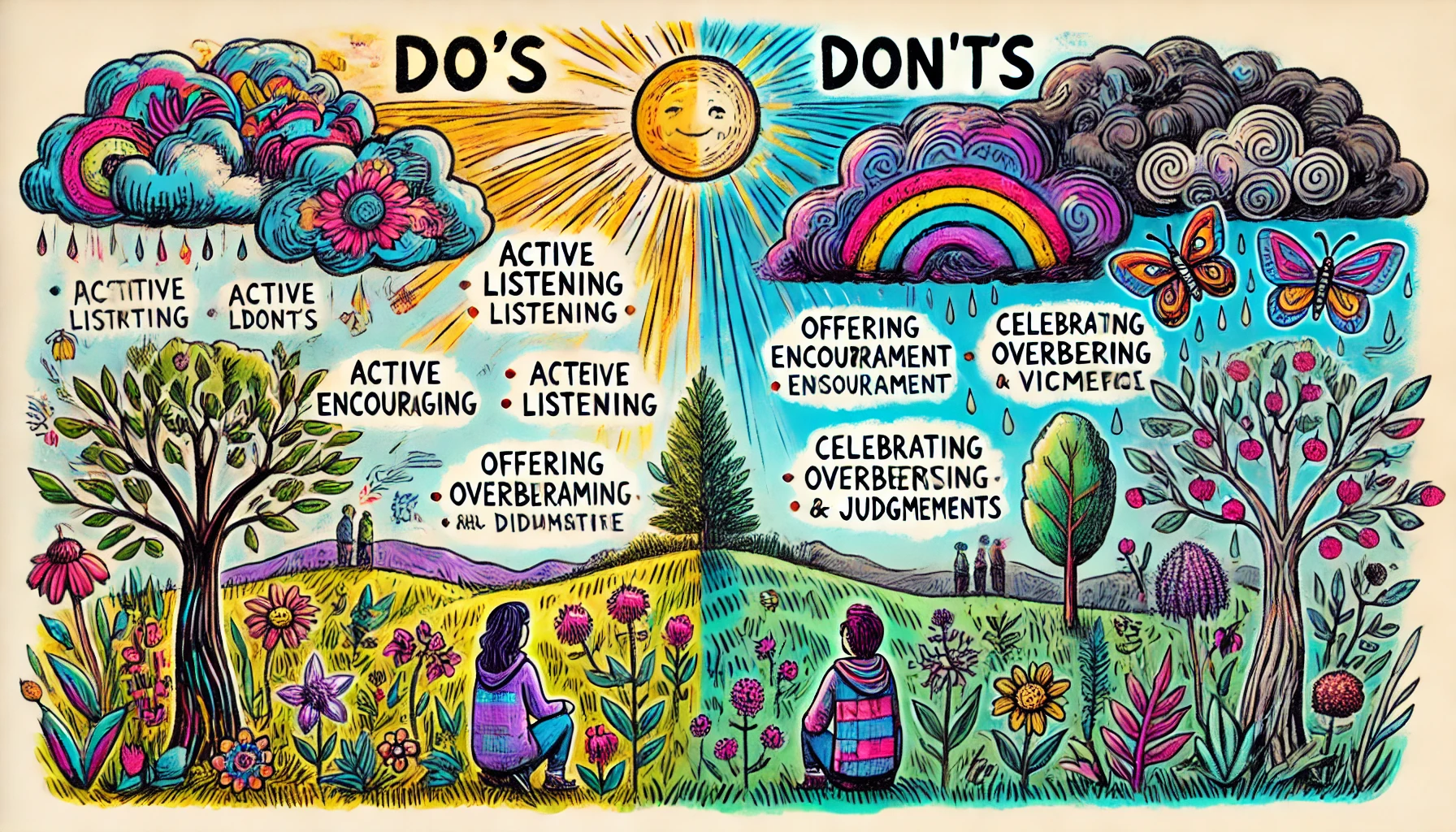
Supporting a friend’s personal development is an essential aspect of maintaining a strong and healthy friendship. Personal development involves the pursuit of growth in various aspects of life, such as mental, emotional, spiritual, or physical well-being. It is a journey that often comes with challenges, breakthroughs, and a need for encouragement. As a friend, your role is to provide the right kind of support that helps rather than hinders their progress. However, this can be a delicate balance, as the wrong approach might unintentionally stifle their growth or strain your relationship. Understanding the do’s and don’ts of supporting a friend during this critical time can help you offer the most beneficial and thoughtful support.
While it’s natural to want to be there for a friend, it is important to recognize that personal development is a highly individual process. What works for one person might not work for another, and even the best intentions can sometimes lead to unintended consequences. Your support should be rooted in understanding, empathy, and respect for your friend’s unique journey. Being aware of the potential pitfalls and the best practices will help you navigate this role more effectively, ensuring that your friendship grows stronger alongside their personal development.
1. Do: Offer Encouragement
- Celebrate their successes. Recognize and celebrate even the small victories your friend achieves. Positive reinforcement can boost their confidence and motivation.
- Encourage them to keep going. When they face setbacks, remind them that growth is a journey with ups and downs. Your words of encouragement can help them stay the course.
- Be a positive influence. Surround them with positivity by sharing uplifting stories, quotes, or your own experiences with personal development.
- Support their goals. Encourage them to pursue their ambitions and remind them of their capabilities when they doubt themselves.
- Express your belief in their potential. Let your friend know that you believe in their ability to grow and succeed. Your faith in them can be a powerful motivator.
2. Don’t: Pressure Them
- Avoid setting your own expectations. Personal development is their journey, not yours. Don’t impose your timeline or expectations on them.
- Don’t push them too hard. While encouragement is essential, too much pressure can lead to stress and anxiety. Allow them to progress at their own pace.
- Resist the urge to take control. It’s important that your friend feels in control of their own growth. Avoid directing or managing their process.
- Don’t overwhelm them with advice. While it’s okay to offer advice when asked, be careful not to overwhelm them with too much information or opinions.
- Avoid making comparisons. Comparing their progress to others can be demotivating. Focus on their unique journey instead.
3. Do: Listen Actively
- Be fully present. When your friend shares their thoughts or concerns, give them your full attention. This shows that you value their experiences and are there to support them.
- Reflect on what they say. Paraphrase or summarize what they’ve said to show that you understand and are engaged in the conversation.
- Ask open-ended questions. Encourage deeper reflection by asking questions that prompt your friend to explore their thoughts and feelings more thoroughly.
- Provide a safe space for expression. Ensure your friend feels comfortable sharing their experiences without fear of judgment or criticism.
- Acknowledge their feelings. Whether they’re excited, scared, or confused, validate their emotions as an important part of their growth journey.
4. Don’t: Judge or Criticize
- Avoid being critical. Personal development is often accompanied by mistakes and learning experiences. Don’t criticize your friend for their decisions or missteps.
- Resist the urge to judge. Everyone’s growth journey is different. Avoid judging their choices or comparing them to how you think things should be done.
- Don’t offer unsolicited advice. Offering advice without being asked can come off as judgmental, even if that’s not your intention.
- Keep your opinions in check. Be mindful of how your opinions might be perceived. If they don’t align with your friend’s values or goals, it’s better to keep them to yourself.
- Avoid making them feel inadequate. Focus on their progress and potential rather than pointing out what they have yet to achieve.
5. Do: Respect Their Autonomy
- Give them space to grow. Personal development often requires solitude and self-reflection. Respect their need for space and time alone.
- Support their decisions. Even if you don’t agree with every decision they make, support their right to make choices that feel right to them.
- Encourage independence. While you’re there to help, it’s important that your friend learns to navigate their growth journey independently.
- Honor their boundaries. Respect any boundaries they set, whether it’s about the kind of support they want or the frequency of your involvement.
- Allow them to lead. Let your friend take the lead in their growth process. Your role is to support, not to steer.
6. Don’t: Overstep Boundaries
- Avoid being overly involved. It’s essential to be supportive without becoming too involved in your friend’s personal development journey.
- Don’t make it about you. Their growth journey is not about your needs or expectations. Avoid centering yourself in their process.
- Respect their privacy. If they choose not to share certain aspects of their journey, respect their right to privacy.
- Avoid taking over. Let them make their own decisions and mistakes. It’s their journey to navigate, not yours.
- Don’t over-communicate. Sometimes less is more. Avoid bombarding them with messages or advice, especially if they’ve indicated a need for space.
7. Do: Be Consistent
- Show up regularly. Consistent support can help your friend feel secure and valued in your relationship. Be there for them through the highs and lows.
- Follow through on commitments. If you promise to help in a specific way, make sure to follow through. Reliability builds trust.
- Check in periodically. Even if they don’t need your support constantly, periodic check-ins show that you care and are thinking of them.
- Be a steady presence. In times of uncertainty, your consistent presence can provide comfort and stability.
- Offer ongoing support. Personal development is a long-term process. Be prepared to offer your support for as long as it’s needed.
8. Don’t: Be Inconsistent
- Avoid being unreliable. If you make promises you can’t keep, it can damage your friend’s trust in you and your friendship.
- Don’t disappear during tough times. Your friend needs you the most when things are challenging. Don’t back away when they need support.
- Avoid sending mixed signals. Be clear about your intentions and availability. Mixed signals can lead to confusion and strain the relationship.
- Don’t overcommit. It’s better to commit to what you can realistically manage than to overextend yourself and fail to deliver.
- Avoid being unpredictable. Consistency is key. Avoid sudden changes in your level of support or involvement.
9. Do: Focus on Their Needs
- Ask how you can help. Instead of assuming what they need, ask your friend directly how you can best support them.
- Tailor your support. Different stages of personal development may require different kinds of support. Adapt your approach to fit their current needs.
- Be empathetic. Try to understand things from their perspective. Empathy allows you to offer more meaningful and relevant support.
- Offer practical help. Sometimes, what they need most is practical assistance, such as helping with tasks or finding resources.
- Encourage self-care. Remind your friend to take care of themselves during their growth journey, whether it’s through rest, relaxation, or activities they enjoy.
10. Don’t: Make Assumptions
- Avoid assuming you know what’s best. Even if you’ve gone through similar experiences, their journey is unique. Don’t assume that what worked for you will work for them.
- Don’t impose your methods. Everyone’s path to growth is different. Don’t impose your methods or strategies on them.
- Resist the urge to predict outcomes. Personal development is unpredictable. Avoid making assumptions about where their journey will lead.
- Don’t make decisions for them. Support their autonomy by allowing them to make their own decisions, even if you think you know better.
- Avoid assuming they need your help. Sometimes, the best way to support is to step back and let them handle things on their own.
Supporting a friend during their personal development is a delicate balance of offering help, providing encouragement, and respecting their independence. By following these do’s and don’ts, you can play a positive role in their growth journey without overstepping or inadvertently causing harm. Remember, the goal is to empower your friend to reach their full potential while maintaining the integrity of your friendship.