
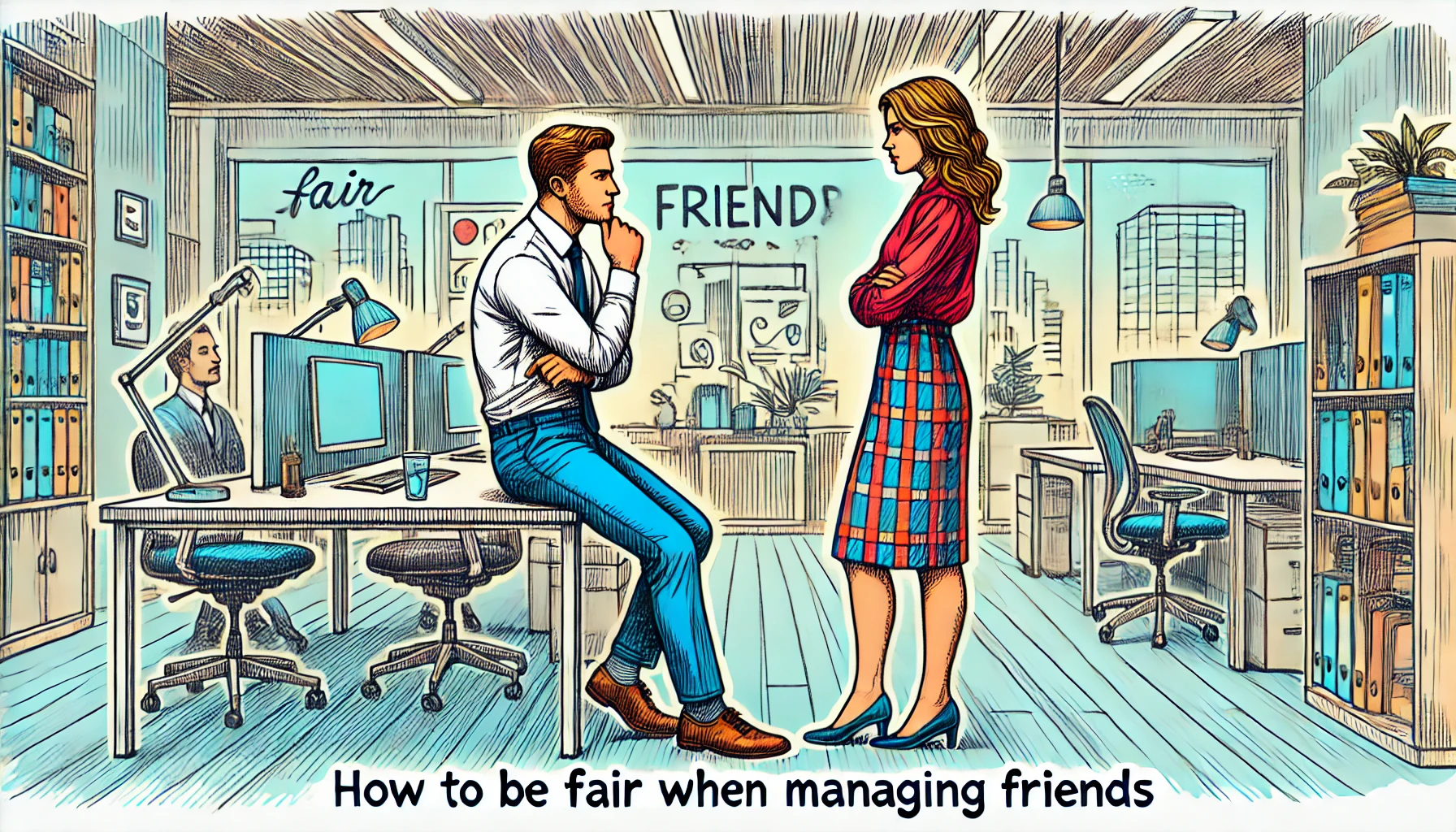
Managing friends in the workplace can be challenging, as it requires balancing personal relationships with professional responsibilities. To be fair and effective in your role, it’s essential to establish clear boundaries, maintain objectivity, and ensure that all team members are treated equitably. By managing your friendships with fairness and professionalism, you can build a strong, cohesive team while preserving personal relationships.
This blog will explore strategies for being fair when managing friends in the workplace, helping you navigate this complex dynamic while maintaining trust and respect among your team.
1. Establish Clear Professional Boundaries
- Differentiate between work and personal interactions. Make it clear to your friends that during work hours, your role as a manager takes precedence over your personal relationship, and work-related decisions will be based on professional considerations.
- Avoid discussing work-related issues in social settings. Keep conversations about work performance, team dynamics, or business matters separate from personal time to prevent conflicts of interest.
- Set expectations early. Have an open discussion with your friend about how to manage the relationship in a way that doesn’t affect your ability to lead or their ability to contribute effectively to the team.
- Respect the boundaries of your colleagues. Ensure that other team members don’t feel excluded or uncomfortable due to your friendship with a subordinate.
- Consistently apply these boundaries. Upholding these boundaries consistently helps maintain a clear distinction between your professional and personal relationships.
2. Maintain Objectivity in Decision-Making
- Base decisions on merit, not personal relationships. When making decisions about promotions, assignments, or performance evaluations, ensure that your choices are driven by objective criteria and the best interests of the team.
- Use standardized criteria for evaluations. Develop and use clear, consistent criteria for evaluating all team members, ensuring that your friend is held to the same standards as everyone else.
- Seek input from others when necessary. If you’re concerned about your ability to remain objective, consult with other managers or HR to get additional perspectives on your decisions.
- Avoid showing favoritism. Treat your friend the same way you would treat any other employee, avoiding special treatment or preferential assignments.
- Be transparent about your decisions. Clearly communicate the rationale behind your decisions to your team, ensuring that everyone understands that your choices are based on fairness and merit.
3. Communicate Clearly and Transparently
- Be upfront about the challenges of managing a friend. Acknowledge the potential difficulties and make it clear that you’re committed to treating them fairly and professionally.
- Encourage open dialogue. Foster an environment where your friend and other team members feel comfortable discussing concerns or issues related to fairness or boundaries.
- Keep work-related feedback focused on performance. When giving feedback to your friend, focus on their work performance and avoid letting personal feelings influence the conversation.
- Address concerns about favoritism directly. If other team members express concerns, listen to them and address the issues openly, reinforcing your commitment to fairness.
- Be clear about the separation of roles. Ensure that your friend understands the distinction between your role as a manager and your personal relationship, particularly when it comes to decision-making and feedback.
4. Handle Feedback and Accountability Consistently
- Provide honest and constructive feedback. When giving feedback to your friend, ensure that it is objective and focused on their work performance, just as you would with any other employee.
- Hold your friend accountable to the same standards as the rest of the team. Avoid giving them leniency or special treatment when it comes to deadlines, expectations, or performance issues.
- Address performance issues directly and professionally. If your friend is underperforming, have a candid conversation about their performance, focusing on the work and not the personal relationship.
- Be consistent in how you handle feedback and discipline. Apply the same processes and criteria to all team members, ensuring that your friend is treated no differently than their colleagues.
- Encourage your friend to view feedback as an opportunity for growth. Reinforce that constructive criticism is part of their professional development and not a reflection of your personal relationship.
5. Foster an Inclusive Team Environment
- Ensure that all team members feel valued and included. Actively work to prevent any perception that your friend is receiving special treatment or preferential access to information or opportunities.
- Promote team collaboration and equity. Encourage team activities and decision-making processes that involve all members equally, ensuring that everyone has a voice and feels respected.
- Be mindful of how your interactions with your friend are perceived. Avoid excessive private meetings or socializing with your friend during work hours that could make other team members feel excluded.
- Celebrate team successes collectively. Recognize the contributions of all team members, not just your friend, to reinforce the importance of everyone’s role in the team’s achievements.
- Encourage open communication within the team. Foster a culture where all team members feel comfortable raising concerns or sharing ideas, helping to build trust and collaboration.
6. Address Conflicts Professionally
- Handle work-related conflicts as you would with any other employee. Focus on resolving issues professionally, without letting personal feelings influence the conversation or outcome.
- Keep personal disagreements separate from work. If a conflict arises in your personal relationship, ensure it doesn’t affect your professional interactions or the work environment.
- Resolve work conflicts within the workplace. Avoid discussing work-related disagreements during personal time, keeping the focus on finding professional solutions.
- Be open to receiving feedback, even if it’s difficult. Accept feedback from your friend professionally, seeing it as an opportunity to improve your management skills.
- Manage personal conflicts discreetly. If a personal issue arises, address it outside of work hours to avoid it impacting your professional responsibilities.
7. Seek Support and Advice When Needed
- Consult with HR or a mentor if you’re unsure how to navigate the relationship. If you’re facing challenges in managing your friend, seek guidance from HR or a trusted mentor to ensure you’re handling the situation appropriately.
- Seek input from other managers or supervisors. If you’re concerned about bias or favoritism, ask for a second opinion on decisions or actions related to your friend.
- Be open to feedback from your team. Encourage your team members to share their thoughts on how you’re managing the group, including any concerns they might have about fairness or bias.
- Stay informed about best practices for managing friends at work. Continuously seek out resources and training to help you navigate the complexities of managing friends in the workplace.
- Reflect on your management approach regularly. Take time to assess how well you’re maintaining boundaries and fairness in your role, making adjustments as needed.
8. Reassess the Friendship If Necessary
- Recognize when the friendship is affecting your work. If your relationship with your friend is compromising your ability to manage effectively or creating tension within the team, it may be time to reassess.
- Be prepared to adjust the dynamics of the relationship. If necessary, consider taking a step back from the friendship to focus on your responsibilities as a manager.
- Prioritize your long-term career goals. If the friendship is hindering your professional development or creating challenges within the team, prioritize your career and make decisions accordingly.
- Seek advice from HR or a mentor if needed. If you’re unsure how to navigate the situation, consult with HR or a trusted mentor for guidance on how to proceed.
- Consider the long-term impact on your leadership. Reflect on how the friendship is affecting your reputation and leadership effectiveness, and take steps to ensure that your professional success remains your top priority.
9. Follow Up Regularly
- Schedule regular check-ins with your friend. Regularly discuss their performance, goals, and any concerns they might have to ensure that you’re both aligned on expectations and progress.
- Monitor your management style. Continuously assess whether you’re treating your friend fairly and equitably, making adjustments as needed to maintain professionalism.
- Seek feedback from the broader team. Regularly ask for input from other team members to ensure that your management style is perceived as fair and inclusive.
- Document key decisions and feedback. Keep records of your evaluations and decisions related to your friend to ensure transparency and accountability.
- Reflect on the relationship and your role. Continuously evaluate how well you’re balancing your professional responsibilities with your personal relationship, making changes as necessary to uphold fairness.
Managing friends in the workplace requires a delicate balance of professionalism, transparency, and fairness. By establishing clear boundaries, maintaining objectivity, and fostering an inclusive team environment, you can effectively navigate this complex dynamic while ensuring that all team members feel valued and respected. Remember, the key to being fair when managing friends is to prioritize your responsibilities as a leader while nurturing a positive and supportive workplace for everyone.