
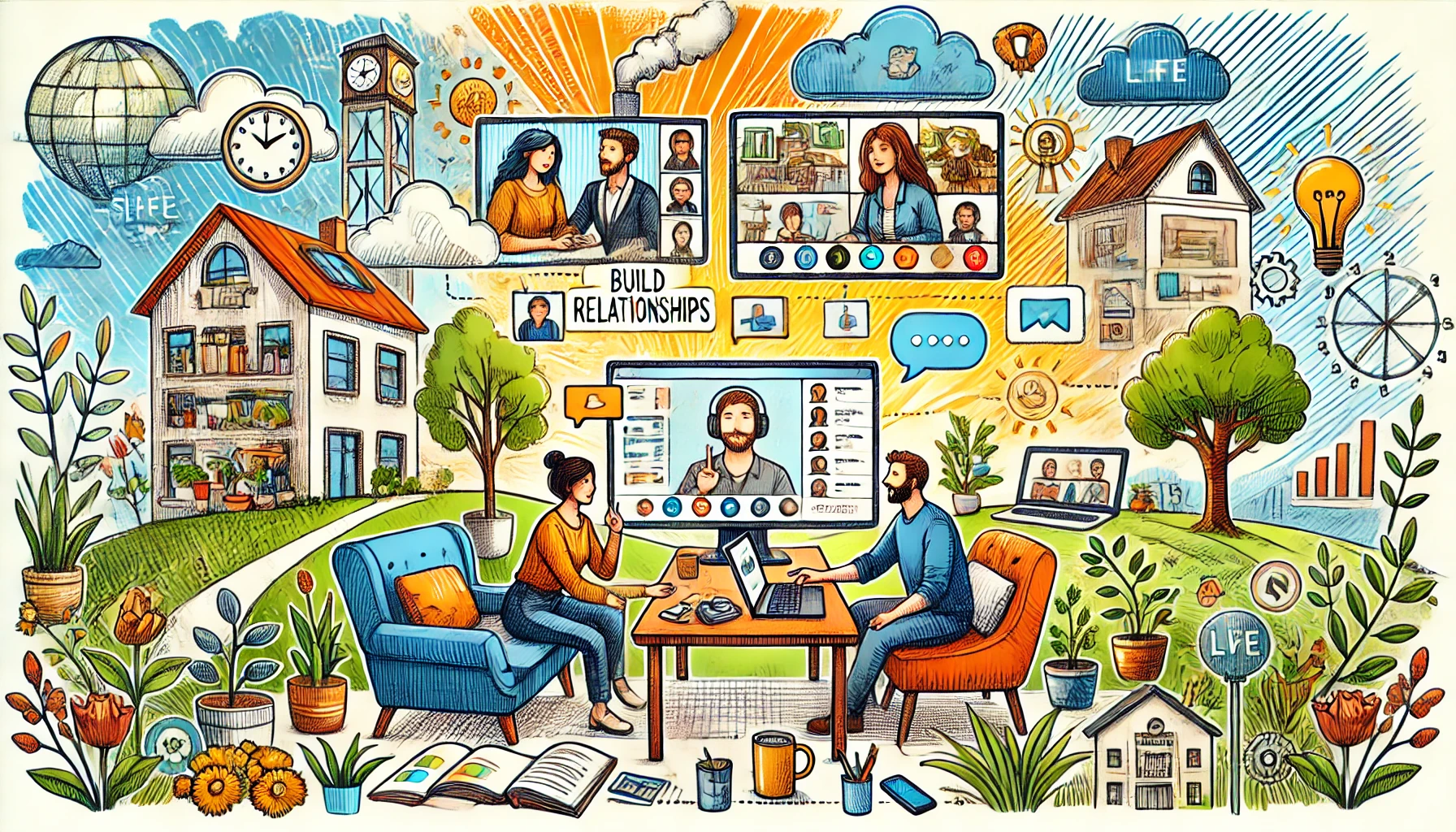
Building relationships in a remote work environment presents unique challenges compared to traditional in-person workplaces. Without the benefit of face-to-face interactions, remote workers need to be more intentional and proactive in creating and maintaining connections with their colleagues. Strong relationships in a remote setting are essential for fostering collaboration, enhancing communication, and creating a sense of belonging within the team. Despite the physical distance, it’s possible to build meaningful and productive relationships that contribute to both personal and professional growth. In this blog, we’ll explore practical strategies for building relationships in a remote work environment, ensuring that you remain connected and engaged with your team.
The shift to remote work has changed the way we interact with our colleagues. Virtual meetings, emails, and instant messaging have replaced the casual conversations and spontaneous interactions that occur in a physical office. However, with the right approach, you can overcome these barriers and build strong relationships that enhance your remote work experience. Whether you’re new to remote work or looking to improve your existing relationships, the following tips will help you navigate the complexities of remote communication and foster a supportive and collaborative work environment.
1. Communicate Regularly and Effectively
- Regular communication is the foundation of any strong relationship, especially in a remote work environment where face-to-face interactions are limited.
- Make an effort to check in with your colleagues frequently through various communication channels such as emails, instant messaging, and video calls.
- Schedule regular team meetings to stay updated on work progress and to maintain a sense of connection with your colleagues.
- Use clear and concise language in your communication to avoid misunderstandings, and ensure that your messages are respectful and professional.
- Don’t hesitate to reach out to colleagues individually for casual conversations or quick catch-ups, which can help maintain a personal connection despite the physical distance.
2. Leverage Video Calls for Face-to-Face Interaction
- Video calls are a powerful tool for building relationships in a remote work environment, as they allow you to see and interact with your colleagues more personally.
- Use video calls for team meetings, one-on-one check-ins, and even casual catch-ups to simulate the face-to-face interactions that occur in an office setting.
- Turn on your camera during video calls to enhance the sense of presence and connection with your colleagues.
- Encourage your team to use video calls for brainstorming sessions or collaborative projects, as this fosters a more engaging and interactive environment.
- Be mindful of time zones and schedules when setting up video calls, ensuring that all team members can participate comfortably.
3. Participate Actively in Virtual Team Activities
- Virtual team activities, such as online games, virtual coffee breaks, or team-building exercises, provide opportunities to connect with colleagues on a more personal level.
- Participate actively in these activities to build rapport with your team members and create a sense of camaraderie.
- Suggest or organize virtual social events that cater to your team’s interests, such as movie nights, trivia quizzes, or book clubs, to foster a sense of community.
- These activities help break down barriers and allow team members to interact in a more relaxed and informal setting, which can strengthen relationships.
- Regular participation in virtual team activities ensures that you remain engaged and connected with your colleagues, even when working remotely.
4. Show Empathy and Support
- Empathy is crucial in a remote work environment, where colleagues may face unique challenges such as isolation, work-life balance issues, or technical difficulties.
- Show empathy by being understanding and supportive of your colleagues’ situations, whether it’s a missed deadline due to family responsibilities or a sudden internet outage.
- Offer your assistance when a colleague is struggling with a task or needs help navigating remote work challenges, such as time management or technology issues.
- Regularly check in on your colleagues’ well-being, asking how they are doing and offering a listening ear if they need to talk.
- By showing empathy and support, you build trust and create a more positive and collaborative remote work environment.
5. Create Opportunities for Informal Interactions
- In a remote work setting, informal interactions are often missing, but they are essential for building strong relationships.
- Create opportunities for informal conversations by setting up virtual coffee breaks, lunch meetings, or casual chats during the workday.
- Use instant messaging platforms to share non-work-related content, such as interesting articles, jokes, or personal updates, to keep the conversation light and engaging.
- Encourage team members to participate in these informal interactions, as they help build rapport and a sense of belonging.
- Informal interactions foster a more relaxed and friendly atmosphere, making it easier to build and maintain relationships in a remote environment.
6. Be Transparent and Reliable
- Transparency and reliability are key to building trust in a remote work environment, where colleagues rely on each other’s contributions to achieve team goals.
- Be transparent about your availability, work progress, and any challenges you may be facing, so that your colleagues know when and how they can rely on you.
- Meet deadlines consistently and communicate any delays or issues as soon as they arise, to avoid disrupting the team’s workflow.
- Follow through on your commitments and be accountable for your work, demonstrating that you are a dependable team member.
- Transparency and reliability build credibility and trust, which are essential for strong and effective remote work relationships.
7. Encourage Collaboration and Teamwork
- Collaboration is a key component of building relationships in a remote work environment, as it encourages interaction and fosters a sense of shared purpose.
- Use collaborative tools such as shared documents, project management platforms, and virtual whiteboards to facilitate teamwork and collective problem-solving.
- Encourage team members to share their ideas, insights, and expertise, creating an inclusive environment where everyone’s contributions are valued.
- Work together on projects, even when tasks are individual, by discussing progress, offering feedback, and brainstorming solutions as a team.
- Collaboration enhances team cohesion and helps build relationships based on mutual respect and shared goals.
8. Recognize and Celebrate Achievements
- Recognizing and celebrating achievements, whether big or small, is important for building morale and reinforcing positive relationships in a remote work environment.
- Acknowledge your colleagues’ hard work and accomplishments through public recognition in team meetings, emails, or messaging platforms.
- Celebrate team milestones, such as the completion of a project or reaching a target, with virtual celebrations or shout-outs to boost team spirit.
- Personal achievements, such as birthdays, work anniversaries, or personal milestones, should also be recognized to show that you care about your colleagues as individuals.
- Celebrating achievements fosters a positive and supportive team culture, making remote work relationships more meaningful and fulfilling.
9. Be Patient and Understanding
- Building relationships in a remote work environment takes time and requires patience, as the lack of in-person interactions can slow down the process.
- Be patient with yourself and your colleagues as you navigate the challenges of remote work and adapt to new ways of connecting.
- Understand that building trust and rapport remotely may take longer, and don’t be discouraged if relationships don’t develop as quickly as they would in person.
- Offer grace when miscommunications or technical issues arise, recognizing that remote work comes with its own set of challenges.
- Patience and understanding create a more harmonious and supportive remote work environment, where relationships can grow naturally over time.
10. Foster Inclusivity and Respect
- Inclusivity and respect are essential for building strong relationships in a remote work environment, where team members may come from diverse backgrounds and locations.
- Encourage inclusive practices by ensuring that all team members have equal opportunities to participate in meetings, discussions, and decision-making processes.
- Be respectful of cultural differences, time zones, and personal circumstances that may affect how your colleagues work and communicate.
- Promote a culture of respect by valuing diverse perspectives and treating all team members with kindness and consideration.
- Inclusivity and respect create a sense of belonging and trust, which are fundamental for building strong and lasting relationships in a remote work environment.
Building relationships in a remote work environment requires intentionality, empathy, and effective communication. By following these strategies, you can foster strong connections with your colleagues, even when working from a distance. Regular communication, active participation in virtual activities, and a commitment to transparency and collaboration are key to creating a supportive and engaging remote work environment. Remember that building relationships takes time, but with patience and effort, you can create meaningful connections that enhance your work experience and contribute to your professional success.