
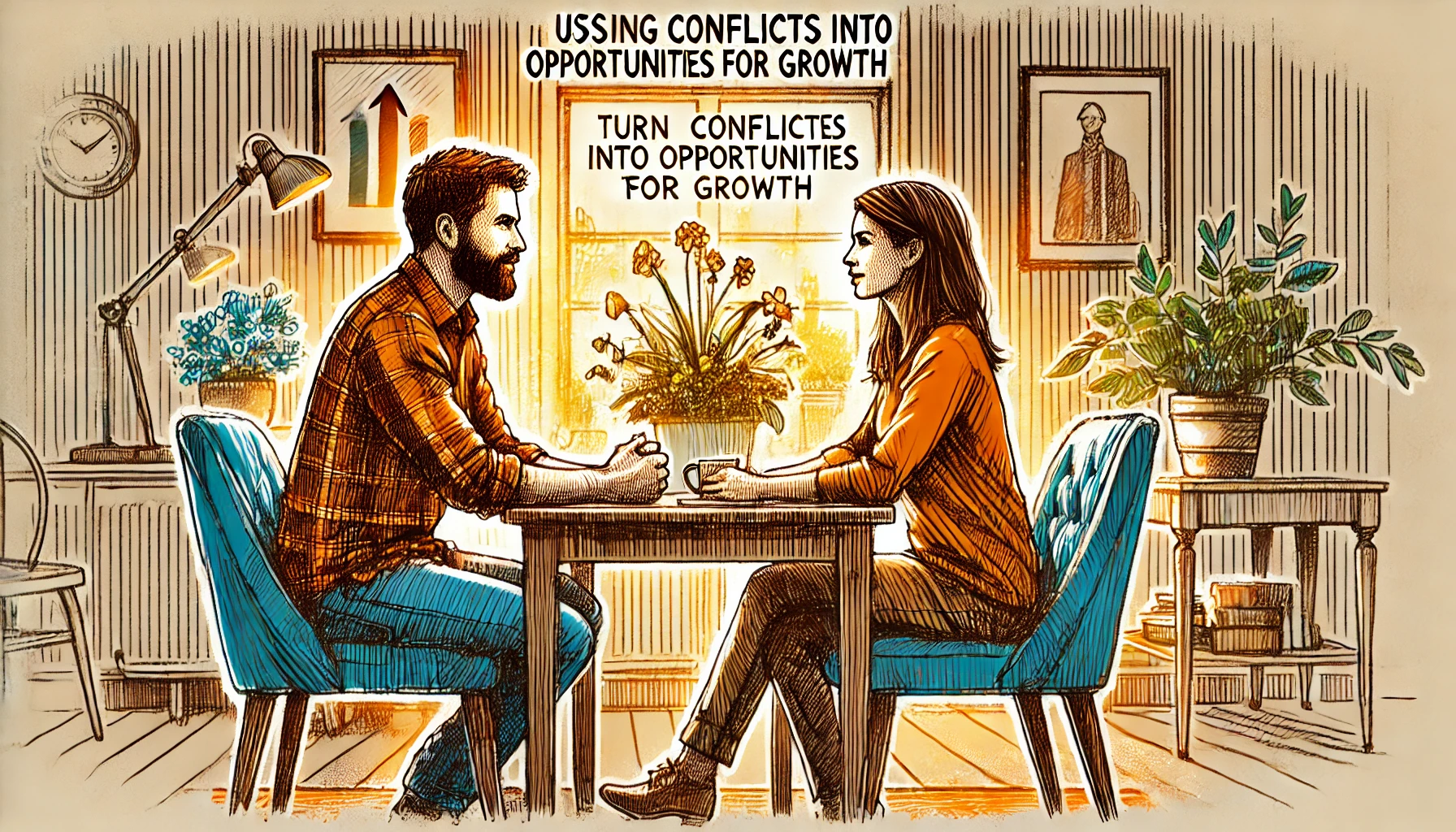
Turning conflicts into opportunities for growth in marriage is a powerful way to strengthen your relationship and deepen your connection with your partner. While conflicts can be challenging and emotionally charged, they also provide valuable opportunities to learn more about each other, build trust, and develop skills that can enhance your relationship. By approaching conflicts with a positive mindset and a focus on growth, couples can transform disagreements into moments of learning and connection.
To turn conflicts into opportunities for growth, it’s essential to approach disagreements with empathy, openness, and a willingness to understand each other’s perspectives. By viewing conflicts as a natural part of any relationship and as opportunities to improve communication and strengthen your bond, you can navigate challenges in a way that fosters greater intimacy and partnership. The following strategies can help you turn conflicts into opportunities for growth in your marriage.
1. Reframe Conflicts as Opportunities
- The first step in turning conflicts into opportunities for growth is to reframe how you view disagreements. Instead of seeing conflicts as negative or threatening, consider them as opportunities to learn more about each other and improve your relationship.
- Recognize that conflicts are a natural part of any marriage and that they can provide valuable insights into your partner’s thoughts, feelings, and needs. Each disagreement offers a chance to understand each other better and to address underlying issues that may be affecting your relationship.
- Approach conflicts with curiosity rather than defensiveness. Ask yourself, “What can I learn from this situation?” or “How can we grow from this experience?” This mindset shift can help you see conflicts as constructive rather than destructive.
- By reframing conflicts as opportunities, you create a positive context for resolving disagreements and focusing on growth rather than simply avoiding or minimizing conflict.
2. Communicate Openly and Honestly
- Open and honest communication is essential for turning conflicts into opportunities for growth. Both partners should feel comfortable expressing their thoughts, feelings, and concerns without fear of judgment or retaliation.
- Use “I” statements to express your feelings and needs during a conflict. For example, instead of saying, “You always ignore me,” try, “I feel hurt when I don’t feel listened to.” This approach helps you communicate your perspective without placing blame on your partner.
- Encourage your partner to share their thoughts and feelings as well. Active listening, where you fully focus on your partner’s words and respond with empathy, is key to understanding each other’s perspectives.
- Be open to feedback and willing to consider how your actions or behavior may have contributed to the conflict. Acknowledging your role in the disagreement fosters mutual respect and trust.
- By communicating openly and honestly, you create a safe space for addressing conflicts in a way that promotes growth and understanding.
3. Practice Empathy and Understanding
- Empathy is a powerful tool for turning conflicts into opportunities for growth. By putting yourself in your partner’s shoes and trying to understand their perspective, you can approach disagreements with greater compassion and less defensiveness.
- During a conflict, take a moment to consider how your partner might be feeling and why they may be reacting the way they are. Ask yourself, “What might my partner be experiencing right now?” or “How would I feel in their position?”
- Express empathy by acknowledging your partner’s feelings and validating their experience. Even if you don’t agree with their perspective, it’s important to recognize that their feelings are valid and deserve to be heard.
- Practice active listening by giving your partner your full attention and responding with understanding. Reflecting back what you’ve heard, such as “I understand that you’re feeling frustrated because…,” shows that you’re engaged and care about their perspective.
- By practicing empathy and understanding, you can turn conflicts into opportunities to deepen your emotional connection and build greater trust in your relationship.
4. Focus on Solutions, Not Blame
- To turn conflicts into opportunities for growth, it’s important to focus on finding solutions rather than assigning blame. Shifting the focus from “Who’s at fault?” to “How can we resolve this?” creates a more constructive and positive dynamic.
- Approach conflicts with a problem-solving mindset, where both partners work together to identify the underlying issues and brainstorm potential solutions. This collaborative approach reinforces the idea that you’re on the same team, working toward a common goal.
- Avoid using accusatory language or making sweeping generalizations, such as “You always do this” or “You never listen.” Instead, focus on the specific issue at hand and how it can be addressed.
- Be open to compromise and willing to consider different perspectives. Finding a solution that works for both partners often requires flexibility and a willingness to meet in the middle.
- By focusing on solutions rather than blame, you create a positive environment for resolving conflicts and turning them into opportunities for growth and improvement.
5. Reflect on the Conflict and Learn from It
- After a conflict has been resolved, take time to reflect on the experience and what you’ve learned from it. This reflection process is key to turning conflicts into opportunities for growth.
- Discuss the conflict with your partner once emotions have settled. Talk about what went well, what could have been handled differently, and what you’ve learned about each other in the process.
- Consider how the conflict has highlighted areas for growth in your relationship. For example, you might realize that you need to work on better communication, setting clearer boundaries, or managing stress more effectively.
- Use the insights gained from the conflict to make positive changes in your relationship. This might involve setting new goals, adopting new communication strategies, or making a commitment to address underlying issues before they escalate.
- By reflecting on and learning from conflicts, you can use them as stepping stones for personal and relational growth, strengthening your marriage over time.
6. Strengthen Your Conflict Resolution Skills
- Conflicts offer valuable opportunities to strengthen your conflict resolution skills, which are essential for maintaining a healthy and resilient marriage. Developing these skills helps you navigate disagreements more effectively and with less emotional distress.
- Practice active listening, empathy, and open communication as part of your conflict resolution toolkit. These skills help you approach conflicts with a focus on understanding and collaboration rather than defensiveness or hostility.
- Work on managing your emotions during conflicts. Techniques such as deep breathing, taking breaks, or using mindfulness can help you stay calm and focused, making it easier to resolve disagreements constructively.
- Develop problem-solving strategies that you can use during conflicts, such as brainstorming solutions together, considering different perspectives, and being open to compromise.
- By strengthening your conflict resolution skills, you can turn conflicts into opportunities for growth and create a more harmonious and supportive relationship.
7. Build Trust Through Resolving Conflicts
- Successfully resolving conflicts can help build trust in your marriage, as it demonstrates that you and your partner are committed to working through challenges together. Trust is a crucial foundation for a strong and healthy relationship.
- When conflicts are resolved in a way that respects both partners’ needs and feelings, it reinforces the idea that you can rely on each other during difficult times. This trust builds confidence in the relationship and strengthens your bond.
- Be consistent in your approach to conflict resolution, demonstrating that you’re committed to handling disagreements with care and respect. This consistency helps to build and maintain trust over time.
- Acknowledge and appreciate your partner’s efforts to resolve conflicts constructively. Expressing gratitude for their willingness to work through challenges together reinforces the trust and commitment in your relationship.
- By building trust through resolving conflicts, you create a marriage that is more resilient, supportive, and capable of growth.
8. Use Conflicts to Deepen Emotional Intimacy
- Conflicts, when handled well, can actually deepen emotional intimacy in a marriage. Working through disagreements together can help you learn more about each other’s needs, fears, and desires, strengthening your emotional connection.
- During conflicts, be open about your feelings and vulnerabilities. Sharing your emotions honestly can create a deeper level of intimacy and understanding between you and your partner.
- Use conflicts as opportunities to show empathy and support for each other. Demonstrating that you care about your partner’s feelings, even during disagreements, can help build a stronger emotional bond.
- Reflect on how the conflict has helped you grow closer as a couple. Discuss how you can use the experience to enhance your emotional intimacy and create a deeper connection moving forward.
- By using conflicts to deepen emotional intimacy, you can transform challenges into opportunities for greater closeness and understanding in your marriage.
9. Reinforce Your Commitment to Each Other
- Conflicts offer an opportunity to reinforce your commitment to each other and to the marriage. By working through disagreements together, you demonstrate that you’re both invested in the relationship and willing to do what it takes to make it work.
- After resolving a conflict, reaffirm your love and commitment to your partner. This can be as simple as saying, “I’m glad we worked through this together,” or “I appreciate how we handled that situation.”
- Use conflicts as reminders of the strength of your relationship and your ability to overcome challenges together. Celebrate your successes in resolving disagreements and view them as a testament to your commitment to each other.
- Discuss how you can continue to support each other in the future and work together to prevent conflicts from escalating. This ongoing commitment helps to create a strong and resilient marriage.
- By reinforcing your commitment to each other, you can turn conflicts into opportunities to strengthen your bond and ensure the long-term health of your marriage.
10. Celebrate Growth and Progress
- Finally, celebrate the growth and progress you’ve made as a couple in handling conflicts. Recognizing and appreciating how far you’ve come can reinforce the positive changes you’ve made and motivate you to continue growing together.
- Take time to acknowledge the improvements in your conflict resolution skills and the ways in which you’ve deepened your understanding of each other. Celebrating these successes helps to solidify them and encourages further growth.
- Use positive reinforcement to support each other’s efforts in handling conflicts constructively. Express gratitude for your partner’s patience, understanding, and willingness to compromise.
- Consider creating rituals or traditions for celebrating your growth as a couple, such as reflecting on your progress during anniversaries or other significant milestones.
- By celebrating growth and progress, you create a positive feedback loop that encourages continuous improvement and strengthens your marriage over time.
In conclusion, turning conflicts into opportunities for growth in marriage requires a positive mindset, open communication, and a commitment to understanding each other’s perspectives. By reframing conflicts as opportunities, practicing empathy, and focusing on solutions, couples can resolve disagreements in a way that fosters growth and deepens their connection. Reflecting on conflicts, strengthening conflict resolution skills, and using conflicts to build trust and emotional intimacy further enhance the relationship. Reinforcing your commitment to each other and celebrating growth and progress helps ensure that conflicts become a source of strength and resilience in your marriage. With these strategies, couples can transform conflicts into valuable opportunities for growth, creating a marriage that is strong, loving, and full of potential.