
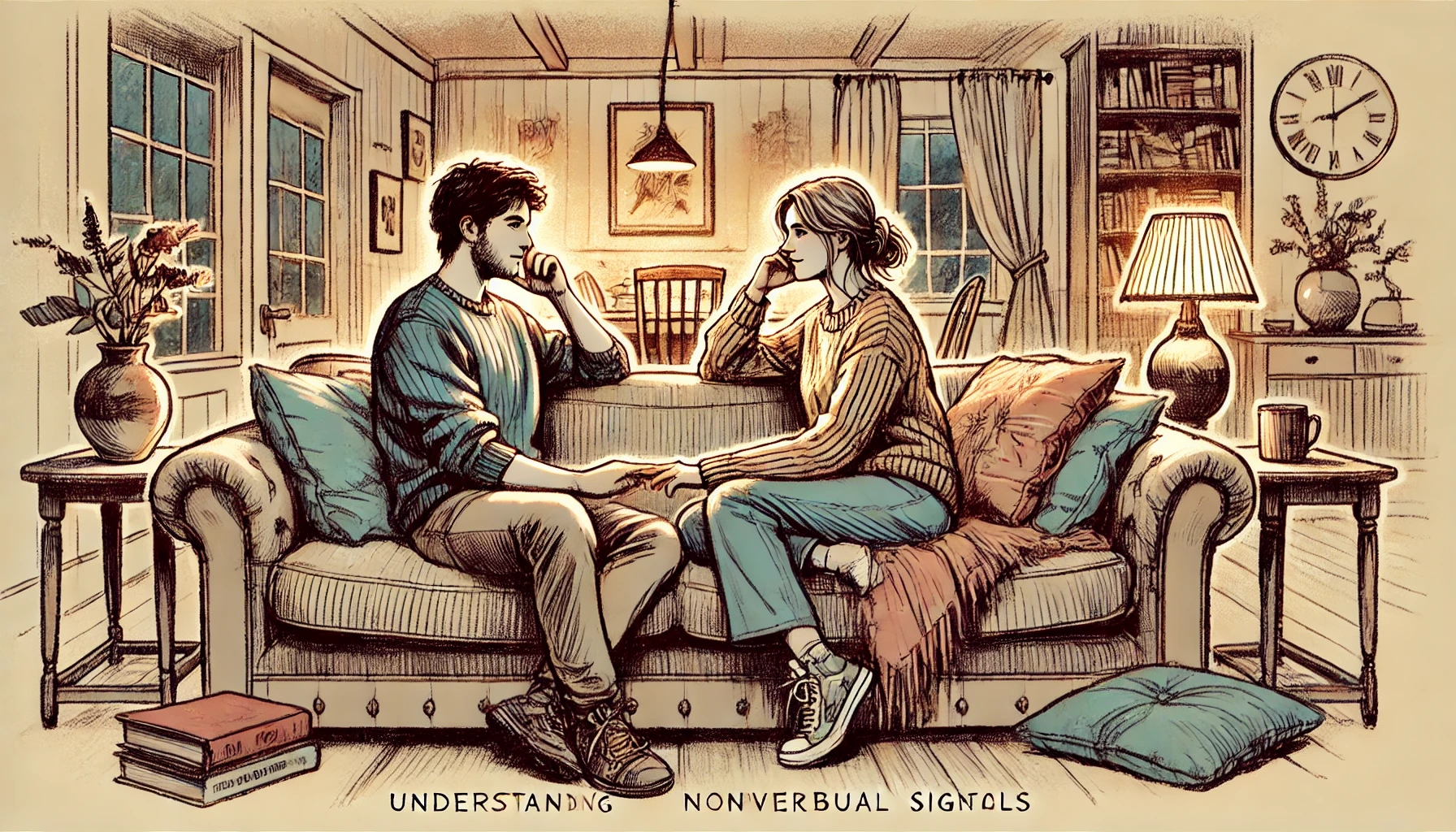
In any relationship, communication extends far beyond words. Nonverbal signals, such as facial expressions, gestures, posture, and eye contact, play a crucial role in conveying emotions and intentions. These subtle cues often reveal more about a person’s true feelings than what they say out loud. Understanding and accurately interpreting your partner’s nonverbal signals can enhance your emotional connection, improve communication, and help navigate the complexities of your relationship. By becoming more attuned to these signals, you can respond more empathetically and create a deeper, more supportive bond.
Nonverbal communication encompasses a wide range of behaviors that can indicate how your partner is feeling or what they might be thinking. Whether it’s a reassuring touch, a distant gaze, or a tense posture, these cues provide valuable insights into their emotional state. However, reading nonverbal signals requires careful observation and consideration of context. This blog will explore practical strategies for recognizing and interpreting your partner’s nonverbal communication, helping you better understand their needs and emotions.
1. Observing Facial Expressions
- Happiness and Joy: A genuine smile, characterized by crinkling around the eyes and raised cheeks, often indicates happiness and contentment.
- Sadness: Downturned lips, drooping eyelids, and a lack of energy in the face can signal sadness or disappointment.
- Anger: Furrowed brows, clenched jaw, and tight lips are common indicators of anger or frustration.
- Surprise: Wide eyes, raised eyebrows, and an open mouth can suggest surprise or shock.
- Confusion: Furrowed brows and a tilted head may indicate confusion or uncertainty.
How to Respond: When you notice your partner’s facial expressions, consider the context and ask open-ended questions to explore their feelings. For example, “You seem a bit down today. Is everything okay?”
2. Interpreting Eye Contact
- Direct Eye Contact: Maintaining direct eye contact often shows interest, attentiveness, and sincerity.
- Avoiding Eye Contact: Avoidance can indicate discomfort, anxiety, or a desire to hide something.
- Frequent Blinking: Increased blinking can be a sign of stress, nervousness, or discomfort.
- Looking Away: Looking away or down might suggest shyness, guilt, or disinterest.
- Pupil Dilation: Dilated pupils can indicate attraction or arousal.
How to Respond: If your partner is avoiding eye contact or showing signs of discomfort, approach the topic gently and offer reassurance. For instance, “I noticed you’re not making much eye contact. Is there something on your mind?”
3. Reading Gestures and Hand Movements
- Open Palms: Open palms facing upwards typically indicate honesty and openness.
- Fidgeting: Fidgeting with hands or objects can signal nervousness, impatience, or discomfort.
- Crossed Arms: Crossed arms can indicate defensiveness, resistance, or a need for self-protection.
- Touching the Face: Touching the face, such as rubbing the chin or covering the mouth, can suggest deep thought or uncertainty.
- Pointing: Pointing can be perceived as assertive or even aggressive, depending on the context.
How to Respond: Acknowledge your partner’s gestures and address any concerns they might be expressing nonverbally. For example, “I see you’re fidgeting a lot. Is something bothering you?”
4. Understanding Posture and Body Language
- Open Posture: An open posture, with relaxed shoulders and uncrossed arms, indicates openness and receptivity.
- Closed Posture: A closed posture, such as crossed arms or legs, can suggest defensiveness or discomfort.
- Leaning In: Leaning towards you can show interest and engagement, while leaning away may indicate disengagement or discomfort.
- Mirroring: Subconsciously mirroring your posture can indicate rapport and mutual understanding.
- Slouching: Slouching may signal boredom, fatigue, or a lack of interest.
How to Respond: If you notice closed or defensive body language, create a safe and comfortable environment for open communication. You might say, “You seem a bit tense. Would you like to talk about what’s on your mind?”
5. Decoding Touch and Physical Contact
- Gentle Touch: A soft touch on the arm or back can be reassuring and comforting.
- Holding Hands: Holding hands often conveys affection, unity, and support.
- Hugging: Hugs can provide comfort, warmth, and a sense of security.
- Kissing: The type and intensity of a kiss can communicate various emotions, from affection to passion.
- Withdrawing: Pulling away or avoiding physical contact can indicate discomfort, stress, or a need for space.
How to Respond: Respect your partner’s comfort level with physical contact and respond appropriately. For instance, if they pull away, you might ask, “Would you prefer some space right now?”
6. Recognizing Signs of Discomfort or Anxiety
- Nervous Laughter: Laughter in uncomfortable situations may indicate nervousness or an attempt to diffuse tension.
- Pacing: Pacing or restlessness can signal anxiety or agitation.
- Rapid Breathing: Rapid or shallow breathing can be a sign of stress or anxiety.
- Sweating: Excessive sweating, especially in non-physical situations, may indicate nervousness.
- Clenched Fists: Clenched fists can signal anger, frustration, or a need for self-control.
How to Respond: Offer support and a calming presence. You might say, “You seem anxious. Is there anything I can do to help you feel more comfortable?”
7. Considering Cultural Differences
- Touch Norms: Understand that cultural norms around touch and personal space can vary widely.
- Eye Contact: In some cultures, direct eye contact is a sign of respect, while in others, it may be considered rude or aggressive.
- Gestures: Certain gestures may have different meanings across cultures, potentially leading to misunderstandings.
- Proximity: Be mindful of cultural differences in comfortable conversational distances.
- Facial Expressions: While some expressions are universal, others can have culturally specific interpretations.
How to Respond: Be aware of your partner’s cultural background and communicate openly about any differences in nonverbal communication. For example, “I know we come from different backgrounds, so please let me know if I’m ever doing something that feels uncomfortable.”
8. Paying Attention to Context
- Situational Factors: Consider the context of the situation, such as the environment and the nature of the conversation.
- Consistency: Look for consistency between verbal and nonverbal communication. Mixed signals may indicate confusion or ambivalence.
- Timing: The timing of nonverbal cues can provide additional context and meaning.
- Setting: Public versus private settings can influence the type of nonverbal communication used.
- Relationship History: Past interactions and experiences can shape how nonverbal signals are interpreted.
How to Respond: Use the context to guide your interpretation of nonverbal signals and tailor your response accordingly. For example, “I noticed you seem quiet today. Is it because we’re in a public place?”
9. Avoiding Misinterpretations
- Don’t Jump to Conclusions: Avoid making assumptions based on a single nonverbal cue.
- Seek Clarification: If you’re unsure about a nonverbal signal, ask your partner for clarification.
- Consider the Whole Picture: Look at the combination of facial expressions, gestures, posture, and tone of voice.
- Be Aware of Your Biases: Personal biases can affect how you interpret nonverbal communication.
- Validate Your Observations: Share your observations and ask your partner to validate or clarify them.
How to Respond: Use open-ended questions to explore your partner’s feelings and avoid making assumptions. For instance, “I noticed you crossed your arms. Are you feeling okay?”
10. Practicing Empathy and Active Listening
- Show Understanding: Demonstrate empathy by acknowledging your partner’s emotions and perspective.
- Reflect and Paraphrase: Reflect on what your partner says and paraphrase to confirm understanding.
- Be Present: Focus on the conversation without distractions, giving your partner your full attention.
- Respond Thoughtfully: Respond with compassion and consideration, taking into account both verbal and nonverbal cues.
- Build Trust: Foster an environment of trust and openness, encouraging honest and authentic communication.
How to Respond: Respond to your partner’s nonverbal cues with empathy and understanding. For example, “It seems like you’re feeling overwhelmed. How can I support you right now?”
Conclusion
Reading your partner’s nonverbal signals is an essential skill for building a deeper, more empathetic relationship. By being attentive to facial expressions, eye contact, gestures, posture, and touch, you can gain valuable insights into their emotional state and respond in a supportive and understanding manner. While nonverbal communication can sometimes be ambiguous, considering the context and cultural differences can help you interpret these signals more accurately. Remember, the key to understanding nonverbal communication lies in empathy, open-mindedness, and active listening.
As you continue to develop your ability to read and respond to nonverbal cues, you’ll likely find that your connection with your partner becomes stronger and more meaningful. This silent language of love can bridge gaps in understanding and provide a deeper sense of intimacy. Let us embrace the art of nonverbal communication, using it to enhance our relationships and foster a more compassionate and loving environment.