
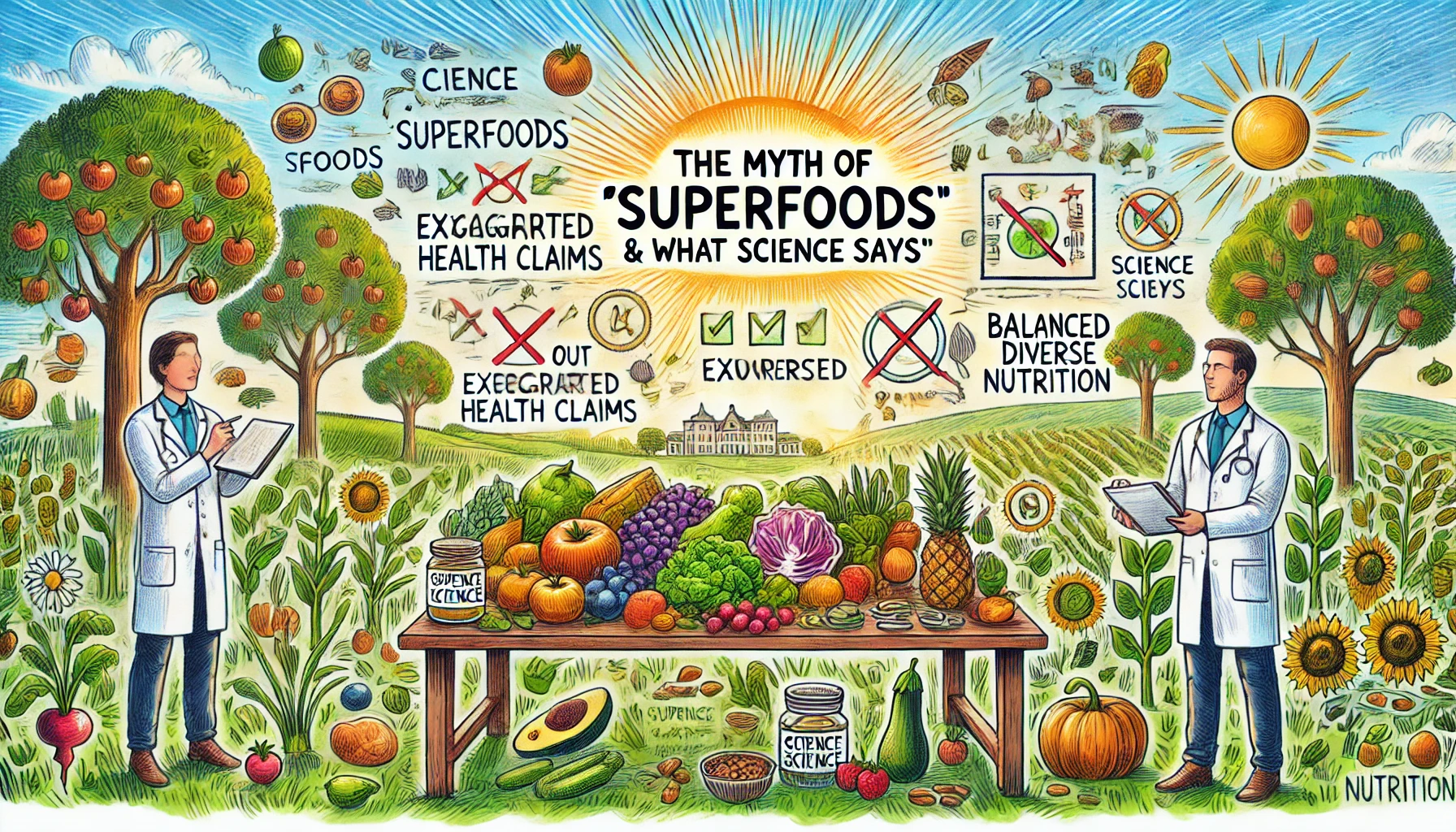
The term “superfoods” has become a buzzword in the world of health and nutrition, often used to describe foods that are exceptionally nutrient-dense and believed to provide various health benefits. These foods are frequently marketed as being capable of preventing diseases, boosting energy, and enhancing overall well-being. However, the concept of superfoods is often exaggerated and can be misleading. In reality, no single food can provide all the nutrients and health benefits needed for optimal health.
The notion of superfoods suggests that certain foods possess miraculous properties that can cure ailments and promote health, but this oversimplification can lead to misconceptions. It’s essential to understand what science says about superfoods and to approach them with a balanced perspective.
1. Myth: Superfoods Can Cure Diseases
- Reality: While some superfoods are rich in antioxidants, vitamins, and minerals, there is no scientific evidence to support the idea that they can cure diseases. A balanced diet that includes a variety of foods is crucial for overall health and disease prevention.
- Complexity of Diseases: Chronic diseases, such as heart disease and cancer, are influenced by a combination of genetic, environmental, and lifestyle factors, not by the consumption of specific foods alone.
- Holistic Approach: Emphasizing a wide range of nutrient-dense foods and maintaining a healthy lifestyle are more effective for disease prevention.
2. Myth: Superfoods Are a New Concept
- Reality: The concept of superfoods is not scientifically recognized and is largely a marketing term. While many foods now labeled as superfoods have been part of traditional diets for centuries, the marketing hype around them is relatively new.
- Traditional Diets: Foods like blueberries, quinoa, and turmeric have long been consumed for their nutritional benefits, but they were not labeled as superfoods until recently.
- Marketing Influence: The superfood label often leads to increased sales and higher prices, despite the fact that many other foods offer similar nutritional benefits.
3. Myth: Superfoods Have Unique Health Benefits
- Reality: While superfoods can be nutritious, they do not possess unique health benefits that cannot be found in other foods. The nutrients found in superfoods, such as vitamins, minerals, and antioxidants, are also present in many other fruits, vegetables, and whole grains.
- Diverse Nutrients: For example, kale is high in vitamins A, C, and K, but so are spinach, broccoli, and other leafy greens. The benefits come from the nutrients, not the specific food.
- Variety Is Key: A diverse diet that includes a wide range of nutrient-dense foods is more beneficial than focusing on a few so-called superfoods.
4. Myth: Superfoods Can Compensate for a Poor Diet
- Reality: No superfood can make up for a poor diet or an unhealthy lifestyle. Eating a balanced diet that includes a variety of foods from all food groups is essential for overall health.
- Nutrient Balance: Relying on superfoods alone can lead to nutrient imbalances and deficiencies. For example, while chia seeds are rich in omega-3 fatty acids, they lack other essential nutrients found in a balanced diet.
- Whole Diet Approach: The focus should be on the overall quality of the diet rather than individual foods. A well-rounded diet that includes proteins, fats, carbohydrates, vitamins, and minerals is necessary for good health.
5. Myth: Superfoods Are Always Better Than Regular Foods
- Reality: Many regular foods, often overlooked, are just as nutritious as superfoods. For example, apples, carrots, and beans provide essential nutrients and can be part of a healthy diet without the superfood label.
- Nutrient-Rich Alternatives: Foods like sweet potatoes, bell peppers, and oranges are nutrient-dense and offer health benefits comparable to more hyped superfoods.
- Cost-Effective Choices: Regular, affordable foods can provide the same or similar nutrients as expensive superfoods, making them accessible to a broader population.
6. Myth: You Need Superfoods to Be Healthy
- Reality: While superfoods can be part of a healthy diet, they are not necessary for achieving good health. A varied diet that includes a range of fruits, vegetables, whole grains, lean proteins, and healthy fats is sufficient.
- Diet Diversity: Eating a variety of foods ensures a more comprehensive intake of nutrients and can help prevent deficiencies.
- Balanced Nutrition: The key to a healthy diet is balance, moderation, and variety, not the inclusion of specific superfoods.
7. Myth: Exotic Superfoods Are Superior
- Reality: Many exotic superfoods, such as acai berries and goji berries, are marketed as superior to more common foods. However, many local and widely available foods offer similar nutritional benefits.
- Local Alternatives: Blueberries, strawberries, and other local berries provide comparable antioxidants and nutrients at a lower cost.
- Sustainability: Choosing locally grown foods can also be more sustainable and environmentally friendly compared to importing exotic superfoods.
8. Myth: Superfoods Are Safe in Any Quantity
- Reality: Even healthy foods can have adverse effects if consumed in excessive amounts. For instance, consuming too much kale can interfere with thyroid function, and excessive intake of omega-3 supplements can increase the risk of bleeding.
- Moderation: It’s essential to consume all foods in moderation, including superfoods, to avoid potential negative effects.
- Balanced Diet: A balanced diet that includes a variety of foods in appropriate portions is crucial for maintaining health.
9. Myth: Superfoods Are the Best Source of Antioxidants
- Reality: While many superfoods are high in antioxidants, they are not the only sources. A variety of fruits, vegetables, nuts, seeds, and whole grains provide a range of antioxidants that can support health.
- Antioxidant Variety: Different foods provide different types of antioxidants, which can work together to support the body’s natural defense systems.
- Comprehensive Nutrition: A diet rich in diverse antioxidant sources is more effective than focusing on a few high-antioxidant superfoods.
10. Myth: Superfoods Can Replace Medications
- Reality: Superfoods should not be seen as a substitute for medical treatments or medications. While a healthy diet can support overall health, it cannot cure diseases or replace prescribed treatments.
- Medical Guidance: Always consult with a healthcare professional before making any significant changes to your diet or relying on foods for medicinal purposes.
- Complementary Approach: A healthy diet can complement medical treatments, but it should not replace them.
In conclusion, while superfoods can be nutritious and beneficial, the concept often oversimplifies and exaggerates their benefits. No single food can provide all the nutrients needed for good health, and the key to a healthy diet lies in variety, balance, and moderation. By understanding the myths and realities of superfoods, you can make informed choices and focus on a well-rounded diet that supports overall health and well-being.