
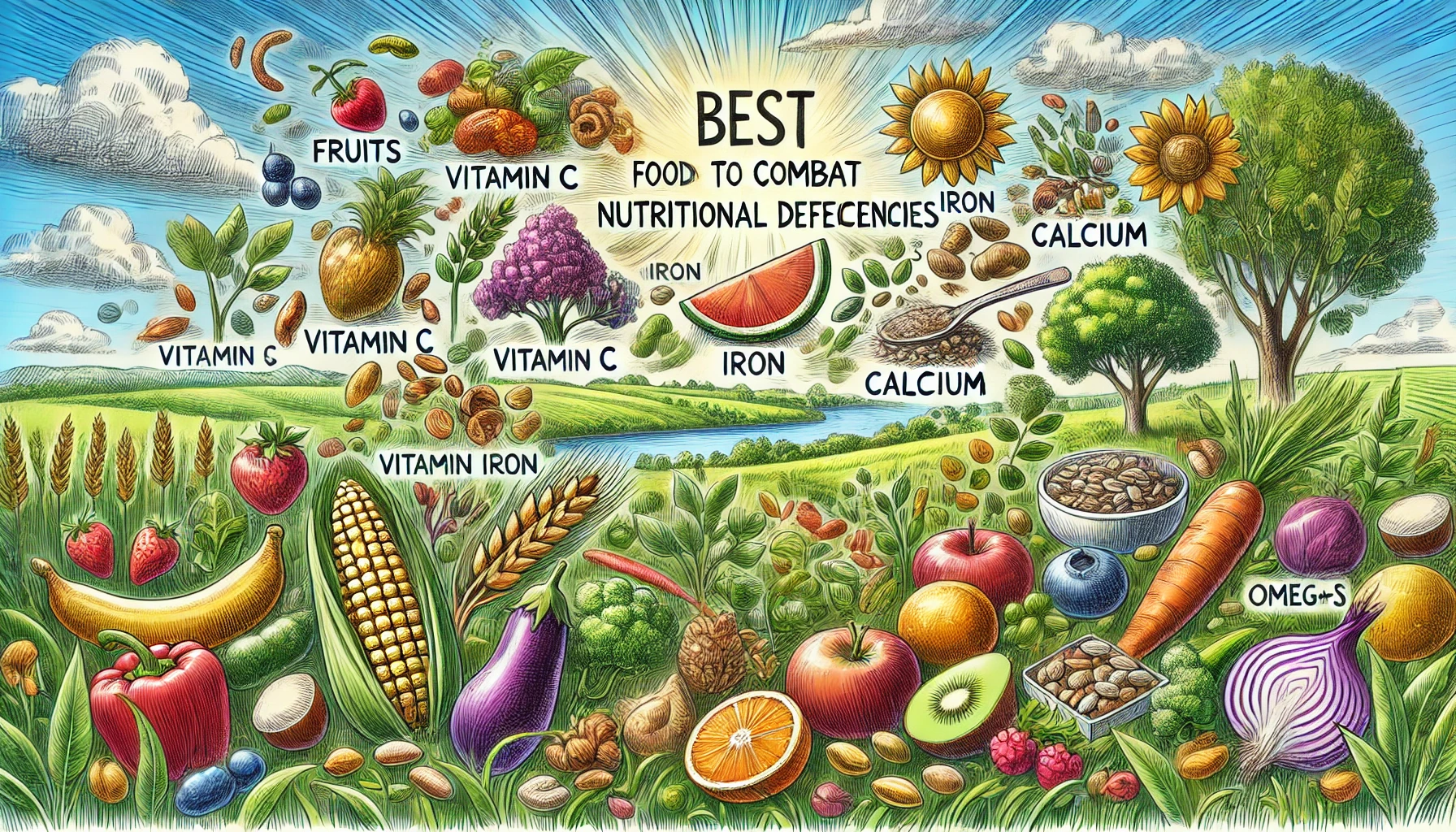
Maintaining a balanced diet rich in essential nutrients is crucial for preventing and addressing nutritional deficiencies. Different foods provide varying vitamins and minerals that support overall health and well-being. This blog explores the best foods to combat common nutritional deficiencies, ensuring you get the nutrients your body needs.
Nutritional deficiencies occur when the body lacks specific vitamins or minerals necessary for optimal functioning. By incorporating a variety of nutrient-dense foods into your diet, you can prevent deficiencies and promote overall health.
1. Iron
- Importance: Iron is essential for producing hemoglobin, which carries oxygen in the blood.
- Symptoms of Deficiency: Fatigue, weakness, pale skin, shortness of breath.
- Best Foods:
- Red Meat: Beef, lamb, and pork are rich sources of heme iron, which is easily absorbed by the body.
- Poultry: Chicken and turkey provide heme iron.
- Fish: Tuna, salmon, and sardines are good sources of heme iron.
- Legumes: Lentils, beans, and chickpeas offer non-heme iron, which is less easily absorbed but still beneficial.
- Spinach: A leafy green vegetable rich in non-heme iron.
- Fortified Cereals: Many breakfast cereals are fortified with iron.
- Tips: Enhance iron absorption by consuming vitamin C-rich foods (e.g., citrus fruits, bell peppers) with iron-rich meals. Avoid consuming calcium-rich foods or caffeine with iron-rich meals, as they can inhibit absorption.
2. Vitamin D
- Importance: Vitamin D is crucial for bone health and calcium absorption.
- Symptoms of Deficiency: Bone pain, muscle weakness, fatigue, depression.
- Best Foods:
- Fatty Fish: Salmon, mackerel, and sardines are excellent sources of vitamin D.
- Fortified Dairy Products: Milk, yogurt, and cheese often have added vitamin D.
- Fortified Plant-Based Milks: Almond, soy, and oat milk are commonly fortified with vitamin D.
- Egg Yolks: Provide a modest amount of vitamin D.
- Mushrooms: Exposed to UV light, they can be a good plant-based source.
- Tips: Spend time in sunlight, ideally 10-30 minutes a few times a week. Consider vitamin D supplements if dietary intake and sunlight exposure are insufficient.
3. Vitamin B12
- Importance: Vitamin B12 is essential for red blood cell formation, neurological function, and DNA synthesis.
- Symptoms of Deficiency: Fatigue, weakness, numbness or tingling in hands and feet, cognitive disturbances.
- Best Foods:
- Meat and Poultry: Beef, chicken, and turkey are rich in B12.
- Fish and Shellfish: Salmon, trout, tuna, clams, and sardines are excellent sources.
- Dairy Products: Milk, cheese, and yogurt contain B12.
- Eggs: Particularly the yolks.
- Fortified Cereals and Plant-Based Milks: Many are fortified with B12.
- Tips: Vegetarians and vegans should consider fortified foods or B12 supplements. Older adults and those with absorption issues may need higher doses, which should be discussed with a healthcare provider.
4. Calcium
- Importance: Calcium is vital for bone and teeth development, muscle function, and nerve signaling.
- Symptoms of Deficiency: Muscle cramps, weak and brittle nails, osteopenia or osteoporosis, dental issues.
- Best Foods:
- Dairy Products: Milk, cheese, and yogurt are rich in calcium.
- Fortified Plant-Based Milks and Juices: Often fortified with calcium.
- Leafy Green Vegetables: Kale, broccoli, and bok choy are good sources.
- Tofu Set with Calcium: Provides a significant amount of calcium.
- Almonds and Sesame Seeds: Nutritious and calcium-rich snacks.
- Tips: Ensure adequate vitamin D intake to improve calcium absorption. Limit intake of high-sodium and caffeine-rich foods, as they can affect calcium levels.
5. Magnesium
- Importance: Magnesium is involved in over 300 biochemical reactions, including muscle and nerve function, blood glucose control, and bone health.
- Symptoms of Deficiency: Muscle twitches and cramps, mental disorders, osteoporosis, fatigue, high blood pressure.
- Best Foods:
- Nuts and Seeds: Almonds, pumpkin seeds, and sunflower seeds are high in magnesium.
- Whole Grains: Brown rice, quinoa, and whole wheat bread.
- Leafy Green Vegetables: Spinach and Swiss chard.
- Legumes: Black beans, chickpeas, and lentils.
- Dark Chocolate: Contains a good amount of magnesium.
- Tips: Include a variety of magnesium-rich foods in your diet and consider supplements if needed. Reduce intake of high-sugar foods, which can deplete magnesium levels.
6. Iodine
- Importance: Iodine is essential for thyroid hormone production, which regulates metabolism, growth, and development.
- Symptoms of Deficiency: Goiter, hypothyroidism (fatigue, weight gain, cold intolerance), dry skin and hair, cognitive impairments.
- Best Foods:
- Seaweed: Nori, kelp, and dulse are excellent sources.
- Fish and Shellfish: Cod, shrimp, and other seafood.
- Dairy Products: Milk, cheese, and yogurt.
- Eggs: Contain iodine in the yolk.
- Iodized Salt: A common and reliable source of iodine.
- Tips: Use iodized salt in cooking. Include a variety of iodine-rich foods in your diet.
7. Zinc
- Importance: Zinc is crucial for immune function, protein synthesis, and DNA synthesis.
- Symptoms of Deficiency: Frequent infections, hair loss, loss of appetite, impaired wound healing, skin rashes.
- Best Foods:
- Meat and Poultry: Beef, pork, and chicken are rich in zinc.
- Shellfish: Oysters, crab, and shrimp.
- Legumes: Chickpeas, lentils, and beans.
- Seeds and Nuts: Pumpkin seeds, cashews, and almonds.
- Dairy Products: Milk, cheese, and yogurt.
- Tips: Include a variety of zinc-rich foods in your diet. Soak or sprout legumes and grains to improve zinc absorption.
8. Folate (Vitamin B9)
- Importance: Folate is vital for DNA synthesis, cell division, and red blood cell formation.
- Symptoms of Deficiency: Fatigue, weakness, mouth sores, megaloblastic anemia, poor growth.
- Best Foods:
- Leafy Green Vegetables: Spinach, kale, and romaine lettuce.
- Legumes: Black beans, kidney beans, and lentils.
- Fortified Cereals: Many cereals are fortified with folic acid.
- Citrus Fruits and Juices: Oranges, grapefruits, and their juices.
- Nuts and Seeds: Sunflower seeds and peanuts.
- Tips: Ensure a diet rich in folate-containing foods. Pregnant women should take prenatal vitamins containing folic acid to prevent neural tube defects in the baby.
9. Vitamin A
- Importance: Vitamin A is crucial for vision, immune function, and skin health.
- Symptoms of Deficiency: Night blindness, dry eyes, increased susceptibility to infections, dry skin.
- Best Foods:
- Carrots: Rich in beta-carotene, which the body converts to vitamin A.
- Sweet Potatoes: Another excellent source of beta-carotene.
- Spinach: Contains beta-carotene and other nutrients.
- Dairy Products: Milk, cheese, and butter.
- Liver: One of the richest sources of vitamin A.
- Tips: Include both animal and plant sources of vitamin A in your diet. Be cautious with supplements, as excessive vitamin A intake can be toxic.
10. Omega-3 Fatty Acids
- Importance: Omega-3 fatty acids are essential for brain function, heart health, and reducing inflammation.
- Symptoms of Deficiency: Dry skin and hair, joint pain, cognitive decline, cardiovascular issues, poor mental health.
- Best Foods:
- Fatty Fish: Salmon, mackerel, sardines, and trout are rich in EPA and DHA.
- Flaxseeds and Flaxseed Oil: High in ALA, a type of omega-3.
- Chia Seeds: Another plant-based source of ALA.
- Walnuts: Provide ALA and other nutrients.
- Algal Oil: A plant-based supplement source of EPA and DHA.
- Tips: Include omega-3-rich foods in your diet regularly. Consider supplements if dietary intake is insufficient.
In conclusion, incorporating a variety of nutrient-dense foods into your diet is essential for combating nutritional deficiencies and maintaining overall health. By understanding the best food sources for essential vitamins and minerals, you can ensure your body gets the nutrients it needs. Regular health check-ups and consultations with healthcare providers can further help maintain optimal nutritional status and well-being.