
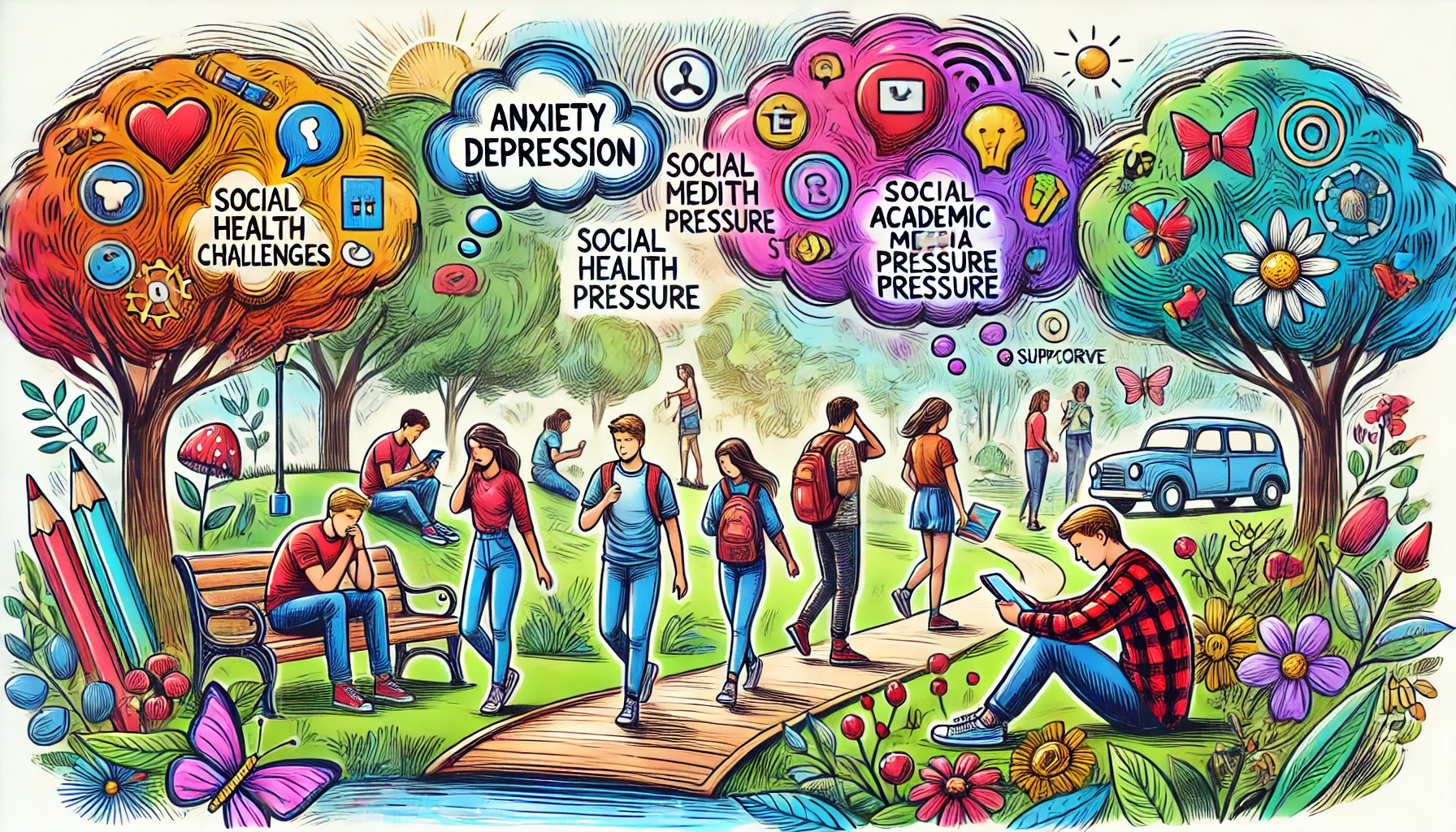
The teenage years are a critical period for mental and emotional development. However, many teens face significant mental health challenges that can impact their well-being, academic performance, and overall quality of life. Understanding these challenges is crucial for parents, educators, and healthcare providers to provide the necessary support and interventions. This blog explores the top 10 mental health challenges facing teens today, shedding light on the factors contributing to these issues and offering insights into how they can be addressed.
1. Anxiety Disorders
- Prevalence: Anxiety disorders are among the most common mental health issues affecting teens, including generalized anxiety disorder, social anxiety, and panic disorder.
- Symptoms: Excessive worry, fear, and nervousness, along with physical symptoms like increased heart rate and sweating.
- Triggers: Academic pressure, social media, family issues, and societal expectations.
- Impact: Can lead to avoidance behaviors, decreased academic performance, and social withdrawal.
- Management: CBT, mindfulness, and relaxation techniques, along with support from mental health professionals.
2. Depression
- Prevalence: A significant number of teens experience depression, with symptoms ranging from mild to severe.
- Symptoms: Persistent sadness, loss of interest in activities, changes in appetite and sleep patterns, and feelings of hopelessness.
- Triggers: Bullying, family conflicts, academic stress, and traumatic events.
- Impact: Affects academic performance, relationships, and can lead to suicidal thoughts or behaviors.
- Management: Therapy (CBT or interpersonal therapy), medication, and support from family and friends.
3. Eating Disorders
- Types: Common eating disorders include anorexia nervosa, bulimia nervosa, and binge-eating disorder.
- Symptoms: Unhealthy eating habits, preoccupation with weight and body image, and extreme behaviors around food.
- Triggers: Societal pressures, media influence, low self-esteem, and trauma.
- Impact: Can lead to severe physical health issues, including malnutrition and heart problems.
- Management: Multidisciplinary approach including medical, nutritional, and psychological interventions.
4. Substance Abuse
- Prevalence: Increasing numbers of teens are experimenting with drugs and alcohol.
- Symptoms: Changes in behavior, academic decline, and physical symptoms like red eyes and frequent illnesses.
- Triggers: Peer pressure, stress, curiosity, and family issues.
- Impact: Can lead to addiction, legal problems, and serious health issues.
- Management: Counseling, family therapy, and participation in support groups.
5. Attention-Deficit/Hyperactivity Disorder (ADHD)
- Prevalence: Affects a significant portion of the teen population.
- Symptoms: Inattention, hyperactivity, impulsivity, and difficulty staying focused.
- Impact: Challenges in school performance, relationships, and self-esteem.
- Management: Behavioral therapy, medication, and educational support.
6. Self-Harm
- Prevalence: Many teens engage in self-harm behaviors such as cutting, burning, or scratching.
- Symptoms: Unexplained injuries, wearing long sleeves in warm weather, and frequent “accidents.”
- Triggers: Emotional pain, trauma, bullying, and feeling overwhelmed.
- Impact: Physical injuries, potential for more serious harm, and underlying emotional distress.
- Management: Therapy (DBT or CBT), developing healthy coping mechanisms, and family support.
7. Bullying and Cyberbullying
- Prevalence: Bullying, including cyberbullying, is a widespread issue affecting teens.
- Symptoms: Anxiety, depression, changes in eating or sleeping patterns, and reluctance to go to school.
- Impact: Leads to low self-esteem, academic problems, and mental health issues.
- Management: School interventions, counseling, and teaching assertiveness skills.
8. Identity and Self-Esteem Issues
- Challenges: Teens struggle with identity formation and self-esteem, influenced by peer pressure and societal expectations.
- Symptoms: Negative self-talk, social withdrawal, and drastic changes in appearance or behavior.
- Impact: Affects mental health, leading to depression, anxiety, and risky behaviors.
- Management: Supportive relationships, positive reinforcement, and therapy focusing on self-esteem.
9. Academic Pressure
- Prevalence: High academic expectations and pressure to succeed are significant stressors for teens.
- Symptoms: Anxiety, sleep problems, physical complaints, and burnout.
- Impact: Leads to mental health issues and decreased academic performance.
- Management: Stress management techniques, time management skills, and a balanced approach to academics and extracurricular activities.
10. Social Media Impact
- Prevalence: Excessive use of social media has been linked to various mental health issues in teens.
- Symptoms: Anxiety, depression, poor self-esteem, and social withdrawal.
- Impact: Contributes to cyberbullying, unrealistic expectations, and addiction-like behaviors.
- Management: Setting healthy boundaries for social media use, promoting in-person interactions, and encouraging digital detoxes.
Teen mental health is a complex and multifaceted issue that requires a comprehensive approach to address effectively. Parents, educators, and healthcare providers play a crucial role in recognizing the signs of mental health challenges and providing the necessary support and interventions. By fostering open communication, creating a supportive environment, and seeking professional help when needed, we can help teens navigate these challenges and develop into healthy, resilient adults.