
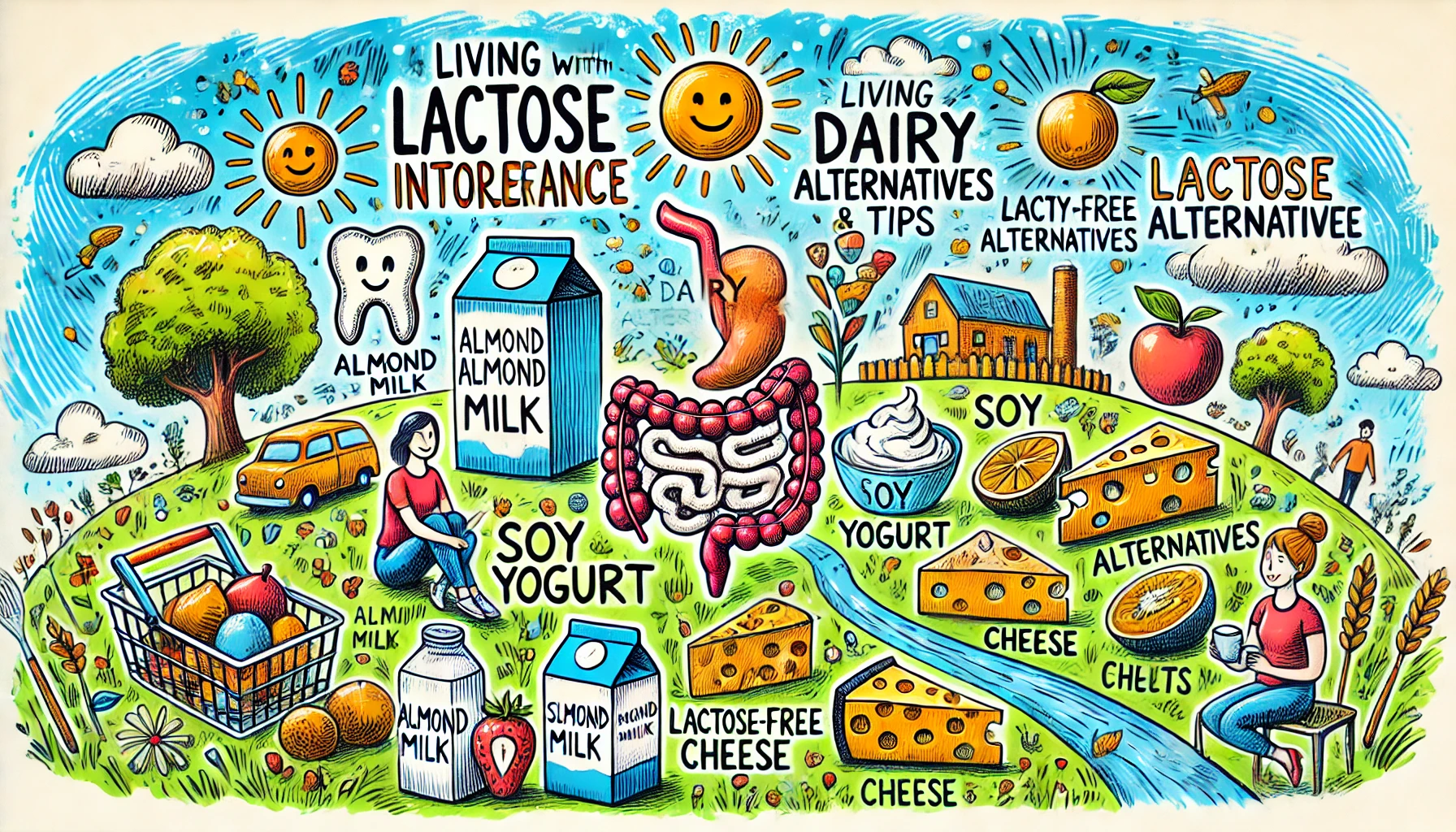
Living with lactose intolerance can be challenging, but it doesn’t mean you have to miss out on delicious and nutritious foods. Lactose intolerance occurs when the body lacks the enzyme lactase, which is needed to digest lactose, the sugar found in milk and dairy products. This can lead to digestive discomfort and other symptoms when consuming dairy. Fortunately, there are many alternatives and tips to help you manage lactose intolerance effectively. In this comprehensive guide, we will explore various lactose-free alternatives and provide practical tips to help you enjoy a balanced diet.
1. Understanding Lactose Intolerance
- What is Lactose Intolerance?: Lactose intolerance is the inability to digest lactose, a sugar found in milk and dairy products, due to a deficiency in the enzyme lactase.
- Symptoms: Common symptoms include bloating, gas, diarrhea, and abdominal pain after consuming dairy products.
- Diagnosis: Lactose intolerance can be diagnosed through a hydrogen breath test, lactose tolerance test, or by eliminating dairy from the diet and monitoring symptoms.
2. Lactose-Free Dairy Alternatives
Plant-Based Milks
- Almond Milk: A popular lactose-free alternative that is low in calories and rich in vitamins D and E. It has a slightly nutty flavor and is great for smoothies, cereals, and baking.
- Soy Milk: High in protein and available in various flavors, soy milk is a versatile dairy substitute suitable for cooking, baking, and drinking.
- Oat Milk: Known for its creamy texture, oat milk is a good source of fiber and can be used in coffee, smoothies, and recipes that require a thicker consistency.
- Coconut Milk: This milk is rich and creamy, making it ideal for curries, soups, and desserts. It has a distinct coconut flavor that adds a tropical twist to dishes.
- Rice Milk: A thinner milk alternative that is naturally sweet and hypoallergenic, making it suitable for those with multiple food intolerances.
Lactose-Free Dairy Products
- Lactose-Free Milk: Regular cow’s milk treated with lactase to break down the lactose, making it easier to digest.
- Lactose-Free Cheese: Available in various types such as cheddar, mozzarella, and Swiss, these cheeses are made using lactase or are naturally low in lactose.
- Lactose-Free Yogurt: Made with lactase enzyme, these yogurts offer the same probiotics benefits as regular yogurt without the lactose.
- Lactose-Free Ice Cream: Many brands offer lactose-free versions of popular ice cream flavors, allowing you to enjoy a sweet treat without discomfort.
3. Non-Dairy Alternatives for Cooking and Baking
- Butter Substitutes: Use plant-based butters made from oils such as coconut, avocado, or olive oil. These alternatives work well in baking and cooking.
- Cream Substitutes: Coconut cream and cashew cream are excellent substitutes for heavy cream in recipes. They add richness and a creamy texture to dishes.
- Cheese Alternatives: Nutritional yeast can provide a cheesy flavor to dishes without dairy. There are also many plant-based cheeses available made from nuts, soy, or coconut.
- Yogurt Alternatives: Plant-based yogurts made from almond, soy, or coconut milk can be used in place of dairy yogurt in recipes.
4. Tips for Dining Out
- Research Menus: Look for restaurants that offer lactose-free or vegan options. Many restaurants now provide allergen information on their menus or websites.
- Communicate Clearly: Inform the server about your lactose intolerance and ask about dairy-free options or possible substitutions.
- Simple Dishes: Choose simple dishes with fewer ingredients to minimize the risk of hidden lactose. Grilled meats, salads, and vegetable-based dishes are often safe choices.
- Bring Your Own: Consider bringing your own lactose-free creamer for coffee or a small snack if you’re unsure about the menu options.
5. Managing Lactose Intolerance at Home
- Meal Planning: Plan your meals to ensure you have lactose-free options available. Batch cooking and freezing meals can save time and stress during busy weeks.
- Reading Labels: Always check food labels for hidden sources of lactose, such as whey, casein, and milk solids.
- Lactase Supplements: Over-the-counter lactase enzyme supplements can help you digest lactose if you choose to consume dairy products occasionally.
- Probiotics: Consuming probiotic-rich foods like lactose-free yogurt, kefir, and fermented vegetables can support gut health and improve digestion.
6. Delicious Lactose-Free Recipes
Breakfast
Overnight Chia Pudding Ingredients:
- 1/4 cup chia seeds
- 1 cup almond milk (or any lactose-free milk)
- 1 tablespoon maple syrup
- 1/2 teaspoon vanilla extract
- Fresh berries for topping
Instructions:
- In a bowl, mix chia seeds, almond milk, maple syrup, and vanilla extract.
- Stir well and let sit for 5 minutes. Stir again to prevent clumping.
- Cover and refrigerate overnight.
- Top with fresh berries before serving.
Dairy-Free Banana Pancakes Ingredients:
- 1 cup almond milk
- 1 cup gluten-free flour
- 2 tablespoons coconut oil, melted
- 1 ripe banana, mashed
- 1 teaspoon baking powder
- 1 teaspoon vanilla extract
- A pinch of salt
Instructions:
- In a large bowl, combine the almond milk, mashed banana, melted coconut oil, and vanilla extract.
- In another bowl, mix the gluten-free flour, baking powder, and salt.
- Combine the wet and dry ingredients, stirring until smooth.
- Heat a non-stick skillet over medium heat and lightly coat with coconut oil.
- Pour 1/4 cup of batter onto the skillet for each pancake. Cook until bubbles form, then flip and cook until golden brown.
- Serve with maple syrup and fresh fruit.
Lunch
Quinoa and Chickpea Salad Ingredients:
- 1 cup quinoa, cooked
- 1 can chickpeas, drained and rinsed
- 1 cucumber, diced
- 1 bell pepper, diced
- 1/4 cup red onion, finely chopped
- 1/4 cup fresh parsley, chopped
- Juice of 1 lemon
- 2 tablespoons olive oil
- Salt and pepper to taste
Instructions:
- In a large bowl, combine the cooked quinoa, chickpeas, cucumber, bell pepper, red onion, and parsley.
- In a small bowl, whisk together the lemon juice, olive oil, salt, and pepper.
- Pour the dressing over the salad and toss to combine.
- Serve chilled or at room temperature.
Lactose-Free Veggie Wraps Ingredients:
- Gluten-free tortillas
- Hummus
- Mixed greens
- Shredded carrots
- Sliced cucumber
- Sliced bell peppers
- Avocado slices
- Lemon juice
- Salt and pepper to taste
Instructions:
- Spread a generous amount of hummus onto each gluten-free tortilla.
- Layer the mixed greens, shredded carrots, cucumber, bell peppers, and avocado slices on top of the hummus.
- Drizzle with lemon juice and season with salt and pepper.
- Roll up the tortilla tightly and slice in half before serving.
Dinner
Baked Lemon Herb Chicken with Vegetables Ingredients:
- 4 boneless, skinless chicken breasts
- 1/4 cup olive oil
- Juice of 2 lemons
- 3 cloves garlic, minced
- 1 tablespoon dried oregano
- 1 tablespoon dried thyme
- Salt and pepper to taste
- 1 pound baby potatoes, halved
- 1 pound Brussels sprouts, halved
- 1 red onion, cut into wedges
Instructions:
- Preheat the oven to 400°F (200°C).
- In a small bowl, whisk together the olive oil, lemon juice, garlic, oregano, thyme, salt, and pepper.
- Place the chicken breasts in a large baking dish and pour half of the marinade over them, turning to coat. Let marinate for at least 30 minutes.
- In a separate baking dish, toss the baby potatoes, Brussels sprouts, and red onion with the remaining marinade.
- Place both the chicken and the vegetables in the oven and bake for 25-30 minutes, or until the chicken is cooked through and the vegetables are tender.
- Serve the chicken with the roasted vegetables on the side.
Gluten-Free Pasta Primavera Ingredients:
- 12 oz gluten-free pasta
- 2 tablespoons olive oil
- 3 cloves garlic, minced
- 1 cup cherry tomatoes, halved
- 1 zucchini, sliced
- 1 yellow squash, sliced
- 1 red bell pepper, sliced
- 1/2 cup peas (fresh or frozen)
- 1/4 cup fresh basil, chopped
- 1/4 cup grated dairy-free Parmesan cheese (optional)
- Salt and pepper to taste
Instructions:
- Cook the gluten-free pasta according to the package instructions. Drain and set aside.
- In a large skillet, heat the olive oil over medium heat. Add the garlic and sauté for 1-2 minutes until fragrant.
- Add the cherry tomatoes, zucchini, yellow squash, and red bell pepper to the skillet. Cook for 5-7 minutes, or until the vegetables are tender.
- Stir in the peas and cooked pasta. Toss to combine and heat through.
- Season with salt and pepper to taste. Sprinkle with fresh basil and dairy-free Parmesan cheese before serving.
Conclusion
Living with lactose intolerance doesn’t mean you have to miss out on delicious and nutritious meals. By exploring lactose-free alternatives and incorporating them into your diet, you can enjoy a variety of foods without discomfort. Use these tips and recipes as a starting point to create balanced, satisfying, and lactose-free meals that suit your taste and lifestyle. With the right approach and a bit of creativity, managing lactose intolerance can be a seamless and enjoyable experience.