
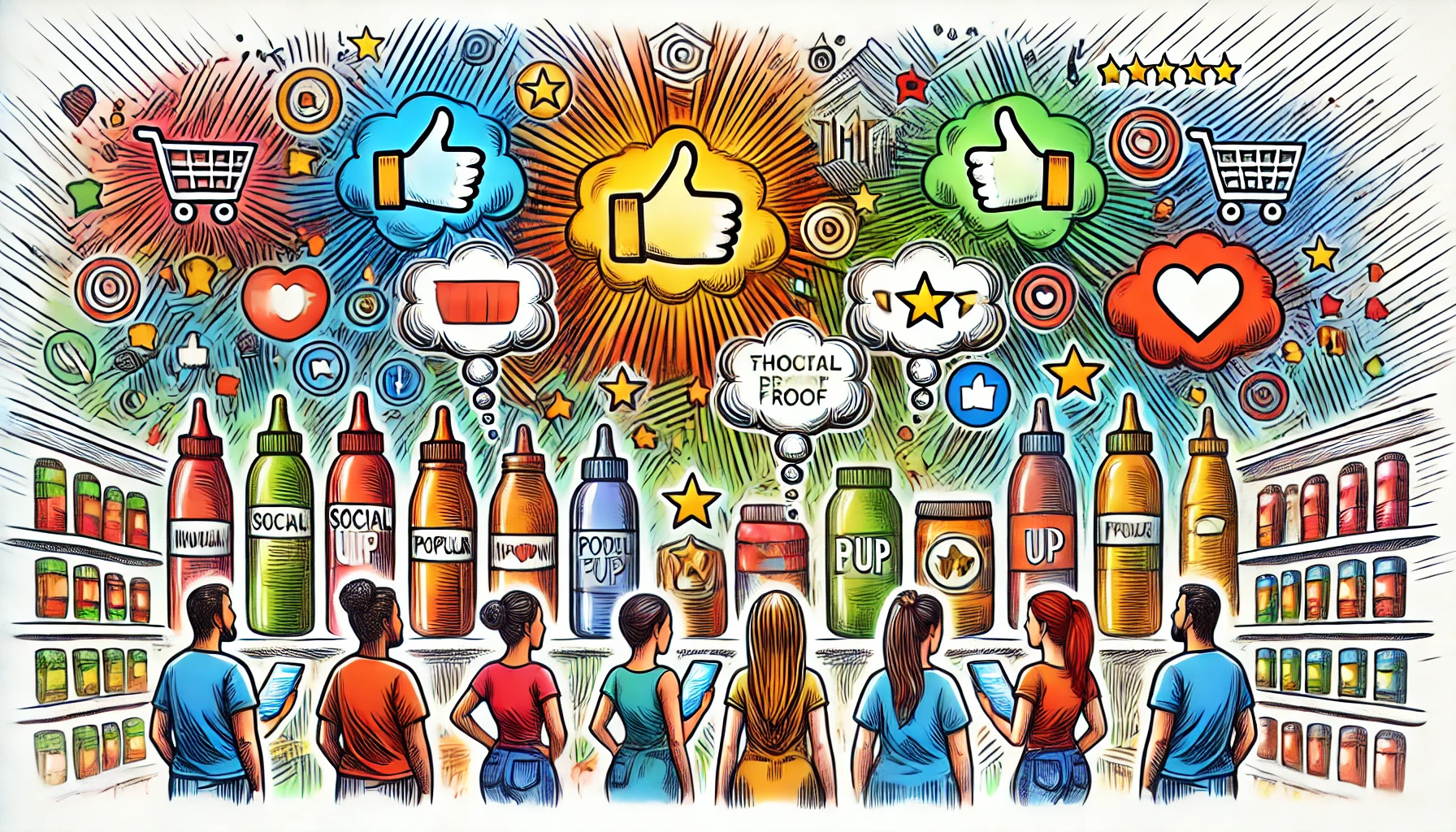
Social proof is a powerful psychological phenomenon that significantly influences consumer behavior and drives market trends. It refers to the tendency of individuals to look to the behavior and opinions of others to determine what is correct, desirable, or popular. This effect is especially prevalent in consumer choices, where people often rely on the actions and recommendations of peers, celebrities, and online communities to make purchasing decisions.
In today’s interconnected world, social proof is amplified by digital platforms like social media, review sites, and influencer marketing. Consumers are constantly exposed to the opinions and preferences of others, which shape their own choices. Whether it’s a new product, a trending fashion, or a popular service, social proof plays a central role in driving what people buy and how brands succeed. This blog explores the various ways social proof affects consumer behavior, its psychological roots, and how businesses can leverage it to influence market trends.
1. The Psychology Behind Social Proof
- Social proof is rooted in social comparison theory, which suggests that people have a natural tendency to compare themselves to others, especially in situations of uncertainty or unfamiliarity.
- When consumers are unsure about a product or service, they look to the behavior of others to guide their decisions. This reliance on others’ choices is known as informational social influence.
- Normative social influence also plays a role, as individuals conform to the actions of others to gain social approval or avoid social rejection. People often feel more comfortable making decisions that align with the majority.
- The fear of making a poor decision, known as loss aversion, intensifies the impact of social proof. Consumers are more likely to follow the crowd to avoid the regret associated with choosing the wrong option.
- Social proof also taps into herd mentality, where individuals are influenced to follow popular trends, believing that the collective wisdom of the group is correct or safe.
2. Types of Social Proof in Consumer Behavior
- Expert social proof: Consumers often rely on the endorsements of industry experts, influencers, or celebrities to validate their purchasing decisions. A product or service backed by a trusted figure is seen as more credible.
- Celebrity social proof: Endorsements from celebrities or well-known public figures can significantly influence consumer choices. Products associated with celebrities tend to gain popularity quickly, as consumers often aspire to emulate them.
- User-generated social proof: This type of social proof involves reviews, testimonials, and ratings from regular consumers. People trust the opinions of others who have already experienced a product, making reviews on platforms like Amazon or Yelp crucial to consumer decision-making.
- Crowd social proof: The idea that a product or service is widely used by others creates a sense of trust and desirability. This can be seen in phrases like “Best Seller,” “Most Popular,” or “Trending Now.”
- Friend social proof: Consumers are highly influenced by the recommendations of their friends, family, and close social circles. Word-of-mouth marketing is particularly effective in driving consumer choices, as people trust those they know personally.
3. The Influence of Online Reviews and Ratings
- Online reviews and star ratings are among the most impactful forms of social proof in today’s digital economy. Consumers often read multiple reviews before making a purchase, using the experiences of others to assess product quality and value.
- Studies show that products with higher ratings and more positive reviews are significantly more likely to be purchased. Conversely, negative reviews can deter potential buyers.
- Verified reviews carry even more weight, as they are seen as more authentic and trustworthy. Platforms like Amazon highlight verified purchases, adding an extra layer of credibility to reviews.
- Ratings thresholds (such as 4.5 stars or above) act as a tipping point for consumer confidence, with many consumers choosing products with higher overall ratings over lower-rated alternatives.
- Negative reviews, while potentially damaging, can also add to a product’s credibility when they are balanced by a majority of positive reviews. A mix of opinions shows that the reviews are authentic, rather than overly curated or fabricated.
4. Social Media and the Amplification of Social Proof
- Social media platforms have dramatically increased the visibility of social proof, as users constantly share their experiences, opinions, and product recommendations with large networks of friends and followers.
- Likes, shares, and comments act as digital markers of popularity, creating real-time feedback that influences how others perceive a product or service. A high number of likes or positive comments on a product post signals that it is desirable and worth purchasing.
- Influencer marketing on social media has become a major driver of consumer trends. Influencers, who often have large, loyal followings, provide social proof by endorsing products and showcasing them in authentic, relatable ways.
- Viral content amplifies social proof, as products or trends that gain widespread visibility on platforms like TikTok, Instagram, or Twitter often experience a surge in popularity due to mass adoption.
- Social media also enables user-generated content (UGC), where consumers share their own experiences with products, creating organic, peer-driven endorsements that influence others’ purchasing decisions.
5. The Bandwagon Effect and Consumer Trends
- The bandwagon effect occurs when individuals adopt a behavior or make purchasing decisions simply because others are doing the same. In consumer markets, this leads to the rapid spread of trends, where products become popular because they are perceived as “must-haves.”
- The bandwagon effect is particularly strong in fashion, technology, and entertainment industries, where consumers seek to stay current with the latest trends.
- Limited-time offers and scarcity marketing leverage the bandwagon effect by creating a sense of urgency. Consumers are more likely to purchase products when they believe that others are quickly buying them, or when they perceive that availability is limited.
- Products labeled as “best sellers” or “most popular” benefit from the bandwagon effect, as consumers are drawn to items that are validated by others’ choices.
- This phenomenon is also evident in the rise of crowdfunding platforms, where potential backers are more likely to contribute to projects that have already gained significant support.
6. How Brands Use Social Proof in Advertising
- Advertising campaigns frequently incorporate social proof to build trust and credibility with consumers. Brands use endorsements from celebrities, industry experts, or satisfied customers to validate their products.
- Testimonial ads that feature real customers sharing their positive experiences can build emotional connections with potential buyers, making the product seem more trustworthy.
- Brands often highlight statistics like “9 out of 10 customers recommend” or “millions sold” to emphasize the popularity of a product and encourage new consumers to follow the crowd.
- Influencer partnerships are a key strategy for leveraging social proof in advertising. By associating their products with trusted figures, brands can tap into the influencer’s social capital and reach their engaged audience.
- Social proof messaging, such as “join thousands of happy customers” or “trusted by professionals,” creates a sense of reliability and confidence in the product.
7. The Impact of Social Proof on Product Launches
- When launching a new product, brands often use early access or beta versions to create an initial group of users who can provide feedback and generate social proof.
- Pre-launch reviews from influencers, bloggers, or experts help build anticipation and credibility before a product is officially released.
- Crowdfunding campaigns rely heavily on social proof, as potential backers are influenced by the number of early adopters and the level of community support for the project.
- Companies may use exclusive offers for early buyers, encouraging people to purchase quickly and leave reviews, which then serve as social proof for future customers.
- Product launches that successfully build strong social proof early on often see faster adoption rates, as consumers are more likely to try a product that has already gained a positive reputation.
8. The Role of Social Proof in FOMO (Fear of Missing Out)
- Social proof is closely linked to FOMO (Fear of Missing Out), where individuals are driven to purchase products or engage in trends to avoid feeling left out.
- When consumers see others participating in a trend or buying a popular product, they often feel compelled to do the same to avoid missing out on the experience.
- Limited-time promotions, exclusive products, and social media challenges capitalize on FOMO, using social proof to suggest that participation is necessary to stay relevant or connected.
- The pressure created by FOMO and social proof can lead to impulsive purchasing decisions, as consumers rush to buy a product before it’s no longer available or before they miss the trend.
- Brands often use FOMO tactics in their marketing strategies, highlighting how popular or exclusive their products are to encourage fast decision-making.
9. The Dark Side of Social Proof: Potential Risks
- While social proof can positively influence consumer decisions, it can also lead to herd behavior, where individuals make choices based on popularity rather than personal preference or research.
- Fake reviews and manipulated ratings are a growing concern, as some businesses attempt to artificially create social proof by inflating the number of positive reviews or hiring people to leave fake testimonials.
- Overreliance on social proof can lead consumers to overlook important details about a product, such as quality, durability, or ethical concerns, simply because the product is popular or endorsed by others.
- The pressure of social proof can also lead to overspending, as consumers may feel compelled to keep up with trends or buy products they don’t need to fit in with their peer group.
- To mitigate these risks, consumers should critically evaluate the social proof they encounter, cross-check reviews from multiple sources, and make informed decisions based on their own needs and values.
10. Strategies for Businesses to Leverage Social Proof
- Encourage customer reviews and testimonials: Businesses should actively seek out feedback from customers and make it easy for them to leave reviews. Highlighting positive testimonials can build trust with potential buyers.
- Partner with influencers: Collaborating with influencers who align with the brand’s values can enhance credibility and reach a wider audience through authentic endorsements.
- Showcase customer success stories: Highlighting how real customers have benefited from the product can create emotional connections and serve as powerful social proof.
- Use social proof in advertising: Incorporate statistics, testimonials, and endorsements in ads to emphasize the product’s popularity and reliability.
- Leverage UGC (User-Generated Content): Encouraging customers to share their experiences on social media and feature this content on company websites or social channels can create organic social proof that resonates with other consumers.
In conclusion, social proof is a central factor in shaping consumer choices and trends. By relying on the behavior and opinions of others, consumers make more confident decisions and are drawn to products that are popular, well-reviewed, or endorsed by trusted figures. Businesses that effectively leverage social proof—through reviews, influencers, and customer testimonials—can build credibility, drive sales, and influence market trends. Understanding the psychology behind social proof allows both consumers and brands to navigate this powerful tool more effectively.