
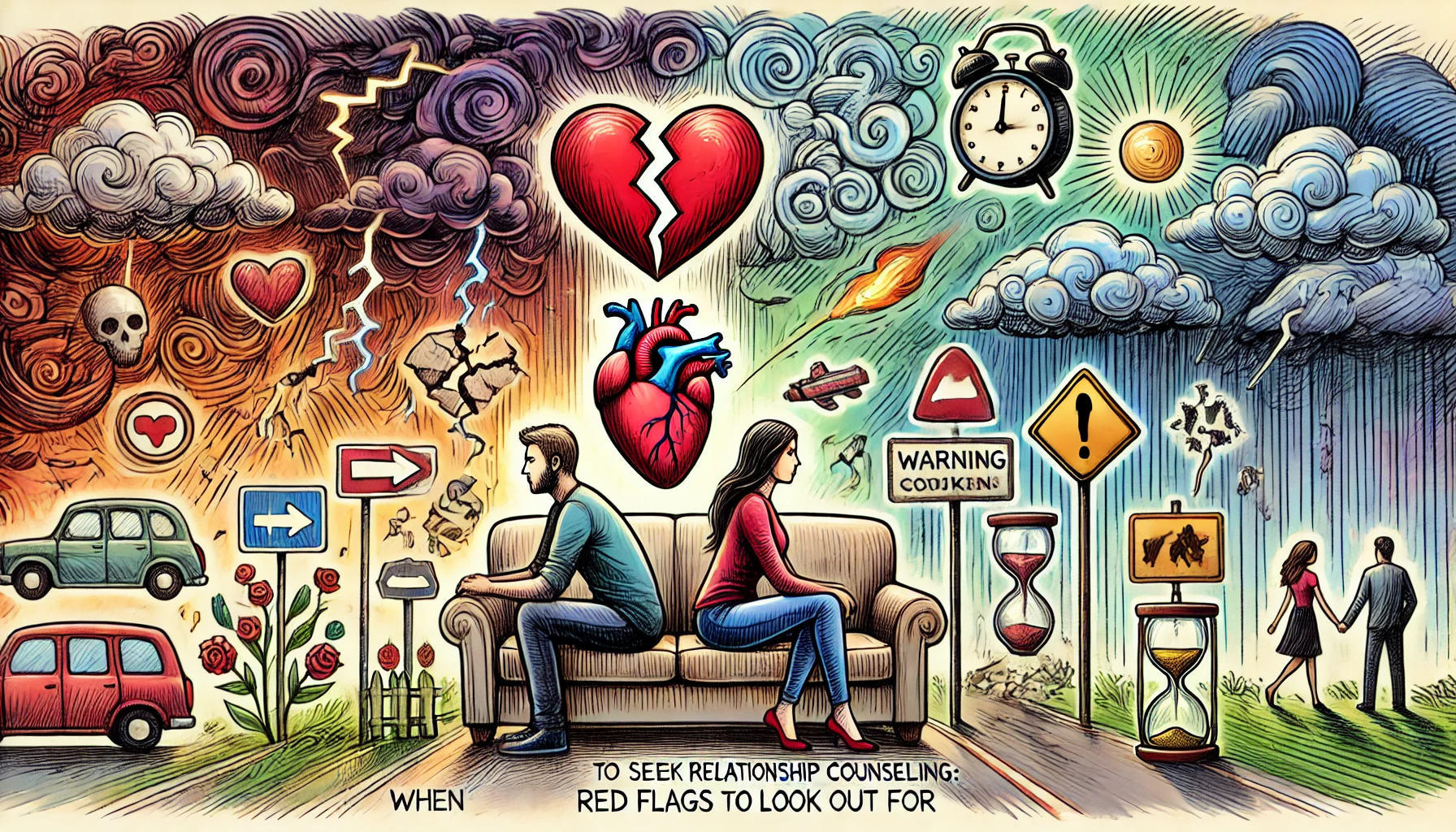
Relationships naturally have ups and downs, but when conflicts and emotional distance become persistent, they can put the future of the relationship at risk. While every couple faces challenges, it’s crucial to recognize when these difficulties may require professional guidance. Relationship counseling provides a space where couples can address issues, improve communication, and rebuild emotional connections. However, many couples delay seeking counseling, hoping problems will resolve on their own, or they may be unsure whether their struggles are serious enough to warrant therapy. Understanding the red flags can help you decide when to seek relationship counseling before the issues become too overwhelming.
There are several signs that indicate when professional intervention could be beneficial for your relationship. These red flags include communication breakdowns, feelings of disconnection, recurring arguments, trust issues, and emotional or physical withdrawal. The earlier these signs are addressed in counseling, the more likely couples can work through their problems and rebuild a healthy, satisfying relationship.
1. Communication Breakdowns
- One of the clearest signs that a couple might benefit from counseling is when communication becomes ineffective or harmful.
- You may feel like your partner doesn’t listen, or conversations quickly devolve into arguments or misunderstandings.
- There may be frequent instances of talking past one another, where important points are missed or dismissed.
- Criticism, sarcasm, or stonewalling (refusing to engage in conversation) are common markers of communication breakdown.
- Counseling can help both partners learn to communicate more clearly, actively listen, and approach conversations with empathy.
2. Recurring Conflicts
- All couples argue, but if the same issues keep resurfacing without resolution, it’s a sign that professional help may be needed.
- Recurring conflicts about finances, intimacy, parenting, or other core issues can create ongoing stress and tension.
- These conflicts can lead to a cycle of arguing, making up, and then repeating the same argument over time without meaningful resolution.
- Couples counseling helps identify the root causes of these recurring disagreements and provides tools for resolving them in a healthy way.
- Addressing these recurring issues early can prevent them from causing deeper emotional damage.
3. Emotional Distance or Disconnection
- If you feel emotionally distant from your partner, counseling can help bridge the gap and restore emotional intimacy.
- A sense of “drifting apart” often manifests as spending less quality time together, decreased interest in each other’s lives, or a lack of emotional support.
- You may feel more like roommates than romantic partners, with little desire to share your thoughts, feelings, or experiences.
- Physical affection and intimacy may also decline, which can further exacerbate feelings of disconnection.
- Counseling provides a safe space to discuss these feelings and helps couples reconnect on an emotional level.
4. Loss of Trust
- Trust is a foundational aspect of any relationship, and once it’s damaged, it can be challenging to rebuild without professional guidance.
- Breaches of trust, such as infidelity, dishonesty, or secrecy, can leave lasting scars on a relationship.
- Even if no major breach has occurred, a general sense of mistrust or suspicion can erode the relationship over time.
- You may find yourself questioning your partner’s motives, checking their phone, or feeling insecure about their commitments.
- Counseling helps couples address the underlying issues causing trust problems and provides strategies for rebuilding trust and fostering transparency.
5. Lack of Intimacy
- Intimacy—both physical and emotional—is a crucial component of a healthy relationship. A significant decrease in intimacy is often a sign that deeper issues need to be addressed.
- Couples may struggle with mismatched sexual desires, feelings of rejection, or avoidance of physical closeness.
- Emotional intimacy can also decline, where partners no longer confide in each other or share their inner thoughts and feelings.
- When left unaddressed, a lack of intimacy can lead to feelings of loneliness, resentment, and frustration within the relationship.
- Counseling helps couples explore the reasons behind the decline in intimacy and provides tools for reigniting both physical and emotional closeness.
6. Constant Criticism or Blame
- Frequent criticism, blame, or negative interactions can erode a relationship’s foundation, leading to emotional harm and resentment.
- One partner may feel constantly criticized for their behavior, personality, or decisions, leading to feelings of inadequacy and hurt.
- This dynamic often involves one person blaming the other for the relationship’s problems without taking accountability for their own actions.
- If criticism and blame dominate your interactions, it’s a sign that professional intervention is necessary to break these unhealthy patterns.
- Counseling can help couples shift from a blaming mindset to one that fosters mutual respect and understanding, allowing both partners to take responsibility for the relationship.
7. Feelings of Resentment
- Resentment is a powerful emotion that can slowly build over time, creating emotional walls between partners.
- It often stems from unmet needs, unspoken frustrations, or feelings of being taken for granted in the relationship.
- You may feel like you’re always giving without receiving, or that your partner doesn’t appreciate your efforts or sacrifices.
- Left unresolved, resentment can poison the relationship, leading to passive-aggressive behavior, emotional withdrawal, or even contempt.
- Counseling helps couples address the root causes of resentment and develop healthier ways to express their needs and expectations.
8. Major Life Transitions
- Significant life changes, such as having a baby, moving to a new city, job loss, or the death of a loved one, can put additional stress on a relationship.
- These transitions can disrupt the balance in the relationship, leading to feelings of overwhelm, uncertainty, or a shift in priorities.
- One partner may feel unsupported during these changes, while the other might struggle to adjust to new roles or responsibilities.
- Counseling helps couples navigate these transitions together, ensuring that both partners feel heard, supported, and able to adapt to the changes.
- Therapy can prevent these stressors from causing long-term damage by providing a framework for managing change collaboratively.
9. Considering Separation or Divorce
- When thoughts of separation or divorce arise, it’s a clear sign that the relationship is in distress and could benefit from counseling.
- Even if you’re unsure whether you want to stay together, counseling can help you and your partner explore the root causes of your unhappiness.
- Counseling provides a space for both partners to discuss their feelings about the relationship and explore whether reconciliation is possible.
- In some cases, couples counseling can prevent divorce by helping partners resolve their issues and reignite their connection.
- Even if separation is the eventual outcome, therapy can help both partners part amicably and with a clearer understanding of their relationship.
10. Difficulty Resolving Differences
- Every couple faces differences in values, opinions, or preferences, but when these differences become a source of ongoing conflict, counseling may be necessary.
- You and your partner may struggle to compromise or find common ground on important issues like finances, parenting, or lifestyle choices.
- Instead of resolving differences, you may find that conflicts over these topics lead to frustration, hurt, or feelings of hopelessness.
- Counseling helps couples navigate these differences in a way that respects both partners’ viewpoints while fostering collaboration and compromise.
- Through therapy, couples can learn to approach differences with empathy and find solutions that work for both parties.
Conclusion
Recognizing the red flags in a relationship is the first step toward seeking the help needed to repair and strengthen the bond between partners. Whether you’re facing communication breakdowns, trust issues, or emotional distance, relationship counseling provides a supportive environment where couples can address these challenges together. The sooner these issues are acknowledged and worked through, the more likely it is that the relationship can heal and thrive. Seeking counseling is not a sign of failure; rather, it’s a proactive step toward improving your relationship and ensuring long-term happiness for both partners.