
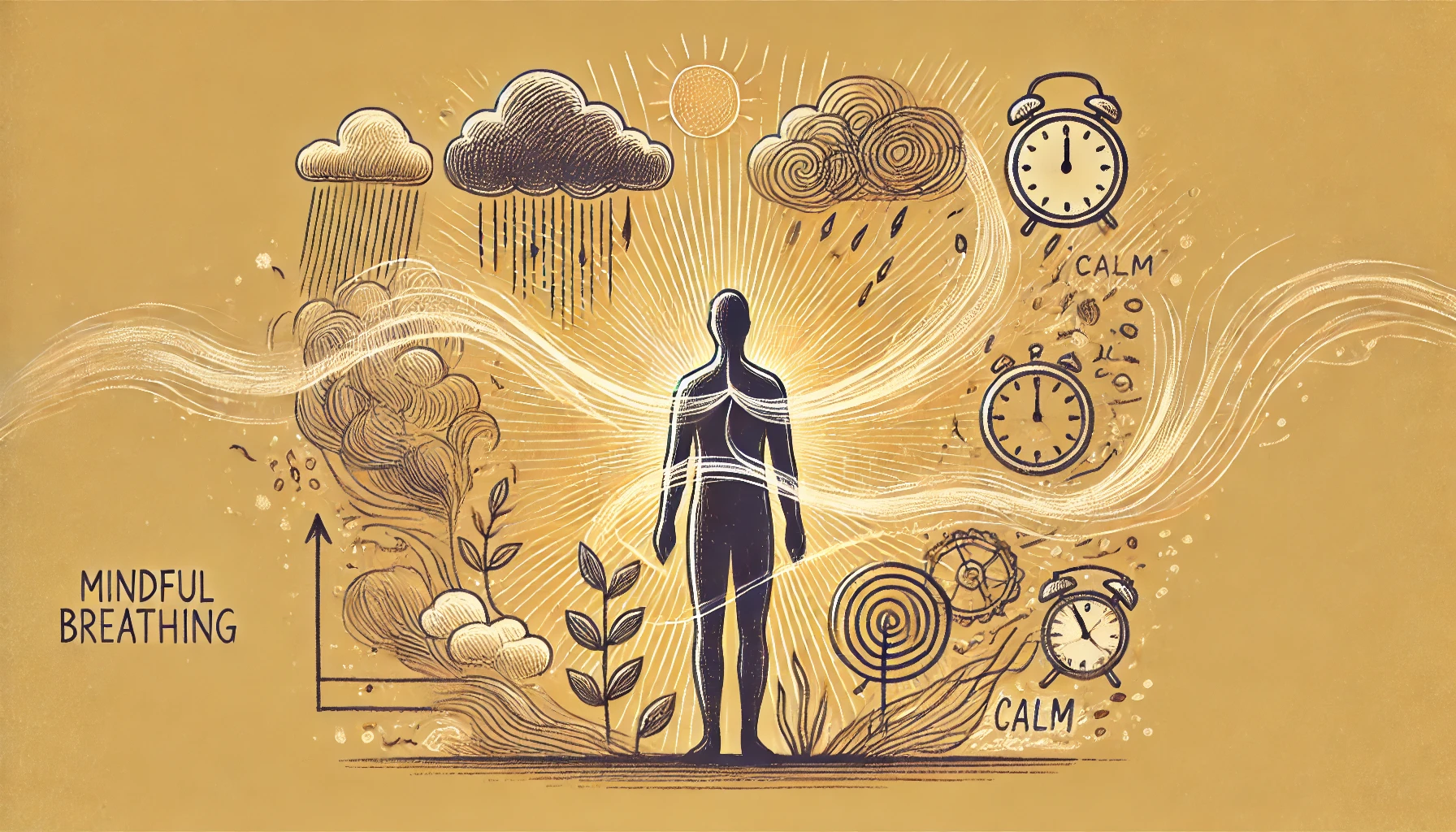
In today’s fast-paced world, stress is inevitable, but how we manage it can make a significant difference in our overall well-being. One of the most effective ways to calm stressful situations is through mindful breathing. Mindful breathing is the practice of paying attention to your breath in the present moment, helping to ground yourself and reduce feelings of overwhelm. Unlike other relaxation techniques, mindful breathing can be practiced anywhere, anytime, and requires no special tools. It’s a powerful way to reset your mind, relax your body, and regain control when stress begins to take over.
The power of mindful breathing lies in its simplicity and its ability to quickly activate the parasympathetic nervous system, which calms the body’s stress response. In moments of high pressure—whether it’s during a tough meeting, a personal conflict, or a hectic day—mindful breathing can serve as a quick and accessible tool to bring your attention back to the present moment. In this guide, we’ll explore how to effectively use mindful breathing to manage and calm stressful situations.
1. Focus on the Breath
- Begin by finding a comfortable position—whether you’re sitting, standing, or even lying down—where you can feel your body fully supported.
- Gently close your eyes or soften your gaze to reduce visual distractions and turn your attention inward.
- Bring your awareness to your breathing, noticing the natural rhythm of your inhale and exhale without trying to change it at first.
- If your mind begins to wander, gently guide your focus back to the sensation of the breath, such as the feeling of air entering your nostrils or your chest rising and falling.
- Focusing on the breath helps center your mind, allowing you to temporarily disconnect from the stressful situation and find a sense of calm.
2. Practice Deep Breathing
- Deep breathing is one of the most effective ways to engage your parasympathetic nervous system, which helps lower your heart rate and reduce stress.
- Begin by inhaling deeply through your nose for a count of four, feeling your belly expand as you take in air.
- Hold your breath for a count of four, allowing your body to absorb the oxygen and prepare for the exhale.
- Slowly exhale through your mouth for a count of six, allowing your body to release tension and stress with each breath out.
- Repeat this deep breathing pattern several times, and notice how each breath brings a greater sense of relaxation and clarity to your mind.
3. Use Box Breathing to Regain Focus
- Box breathing, also known as four-square breathing, is a structured technique that helps you regain focus and calm during stressful situations.
- Inhale slowly through your nose for a count of four, then hold your breath for another count of four.
- Exhale slowly for four counts, and finally, hold your breath again for four counts before starting the cycle over.
- Box breathing helps to regulate your breathing pattern, reduce anxiety, and bring your attention away from the stressor and back to your breath.
- Practice this technique for a few minutes, and you’ll notice a sense of calm and focus returning, even in the midst of a stressful environment.
4. Try 4-7-8 Breathing for Quick Relaxation
- The 4-7-8 breathing technique is designed to help you calm down quickly by lengthening your exhalation, which promotes relaxation.
- Start by inhaling quietly through your nose for a count of four, allowing your belly to expand as you breathe in.
- Hold the breath for a count of seven, giving your body time to fully oxygenate and relax.
- Slowly exhale through your mouth for a count of eight, letting out all the air and allowing your body to release tension.
- This technique can be repeated up to four times, making it a great tool for calming nerves before important events or during moments of high anxiety.
5. Focus on Physical Sensations
- While breathing, bring your attention to the physical sensations that accompany your breath, such as the coolness of the air as it enters your nostrils or the warmth as it exits.
- Pay attention to how your chest or abdomen rises and falls with each breath, noticing the subtle changes in your body as you breathe.
- If you notice tension in specific areas, such as your shoulders or neck, breathe into those areas, imagining that your breath is soothing and releasing the tension.
- Focusing on these physical sensations helps to deepen your connection to the present moment and distracts your mind from stress-inducing thoughts.
- As you practice, you’ll find that your body begins to relax naturally, and your mind becomes quieter, reducing the impact of stress.
6. Engage in Breath Counting
- Breath counting is a simple yet effective mindfulness technique to help focus your mind and reduce stress by bringing attention to your breath.
- As you inhale, mentally count “one,” and as you exhale, count “two.” Continue counting each breath in this way up to five, then start over again at one.
- If your mind wanders and you lose count, gently bring your attention back to your breath and start counting again from one.
- Breath counting helps to quiet a busy mind and redirect your attention away from stressful thoughts, bringing a sense of control and calm.
- This technique can be practiced for several minutes, providing a quick mental reset whenever you feel overwhelmed.
7. Use Visualization Alongside Breathing
- Visualization can enhance the calming effects of mindful breathing by adding an element of imagination and positive imagery.
- As you breathe in, imagine that you are inhaling calm, peaceful energy, and as you exhale, visualize stress and tension leaving your body.
- You can also imagine your breath as a soothing color, such as blue or green, spreading relaxation throughout your body with each inhale.
- Visualization helps shift your mind away from the immediate stressor and creates a mental space for relaxation and tranquility.
- By combining mindful breathing with visualization, you deepen your ability to calm yourself quickly, even in stressful environments.
8. Try Alternate Nostril Breathing
- Alternate nostril breathing, also known as Nadi Shodhana, is a technique that balances the body’s energy and calms the mind.
- Start by sitting comfortably and closing your eyes. Use your right thumb to close off your right nostril, and inhale deeply through your left nostril.
- After inhaling, close your left nostril with your ring finger, release your right nostril, and exhale through the right nostril.
- Inhale again through your right nostril, close it with your thumb, and exhale through the left nostril. This completes one cycle.
- Repeat this alternating pattern for several cycles. This practice helps to balance the nervous system, reduce anxiety, and bring clarity during stressful moments.
9. Practice Mindful Exhalation
- When we are stressed, our breathing often becomes shallow, and we focus more on inhaling than exhaling. Mindful exhalation helps reverse this pattern.
- Focus on lengthening your exhale to be longer than your inhale, which helps activate the body’s relaxation response.
- As you exhale, imagine that you are releasing all tension, worries, and stress from your body with each breath out.
- This simple practice can be done throughout the day, especially during moments when you feel tension building in your body.
- By focusing on the exhale, you remind your body to relax, making it easier to stay calm and composed during stressful situations.
10. Incorporate Mindful Breathing into Daily Activities
- Mindful breathing doesn’t have to be limited to formal meditation sessions—it can be easily integrated into your daily routine.
- Practice mindful breathing while commuting, during a work break, or even while waiting in line, using these moments as opportunities to reset your mind.
- Bring awareness to your breath during stressful situations at work or home, helping you stay grounded and calm.
- Regularly incorporating mindful breathing into daily activities helps build resilience, making it easier to manage stress as it arises.
- Over time, mindful breathing becomes a habit, giving you a constant tool to turn to when stressful situations occur.
In conclusion, mindful breathing is an accessible and highly effective technique for calming stressful situations. By focusing on your breath, practicing deep breathing, and incorporating techniques like visualization or alternate nostril breathing, you can quickly regain control of your emotional state. Whether you’re in the middle of a challenging workday, handling a personal conflict, or just feeling overwhelmed, mindful breathing offers an instant way to find peace and balance. The more you practice, the easier it becomes to use your breath as a powerful tool for managing stress in your everyday life.